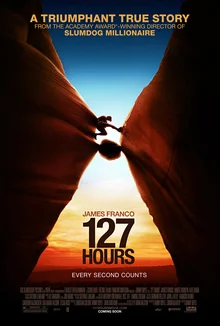
Danny Boyle's 127 Hours stands as a striking testament to human resilience and the primal instincts that guide us in moments of unimaginable adversity. Released in 2010, the film is adapted from the true story of adventurer Aron Ralston, who became trapped by a boulder in a remote canyon in Utah. Boyle, known for his versatility and ability to weave visceral narratives, captures this harrowing experience with remarkable intensity. The film can be seen as a continuation of Boyle's exploration of the human experience, paralleling works such as Trainspotting and Slumdog Millionaire that delve into the extremes of human nature and spirit.
The critical consensus around 127 Hours centers on its immersive storytelling and emotional depth. Viewers are transported into Ralston's world through a gripping blend of visual style and raw performance by James Franco, who embodies the character's descent into isolation and desperation. Critics have noted that Boyle's directorial choices transform the film into an engaging narrative, marked by a magnificent use of cinematography that renders the vast and unforgiving landscape both beautiful and oppressive. This duality underscores the film's central themes of survival and the indomitable will to live, as Ralston confronts his own mortality in tangible ways.
Isolation serves as a powerful motif throughout 127 Hours, driving the narrative as Ralston, faced with a life-or-death situation, grapples with his choices and reflects on his life. This isolation, while intensely personal, speaks to broader questions of human nature. The film invites viewers into Ralston's inner world, revealing a juxtaposition of vulnerability and strength that resonates universally. Critics have praised how effectively Boyle captures this duality, making the experience both specific to Ralston and relatable to anyone who has faced their own struggles.
As the film progresses, it becomes a visceral exploration of the limits of endurance, fostering a remarkable connection between the audience and Ralston's ordeal. The intensity of the story is unflinchingly portrayed, creating moments that are at once entertaining and heart-rending. While some critiques suggest that certain elements of the storytelling may feel muddled or superficial, the overarching narrative draws viewers into a space where they cannot help but root for Ralston as he battles through despair.
Ultimately, 127 Hours encapsulates a profound message about the human spirit's capacity to endure and overcome. Boyle's unique vision brings to life a harrowing journey that is personal yet universally recognizable, reminding us of the resilience found within even the most desperate of circumstances. In reflecting on this film, one is left with the enduring question of what it truly means to survive, a theme that resonates deeply in cinema and our collective narratives.