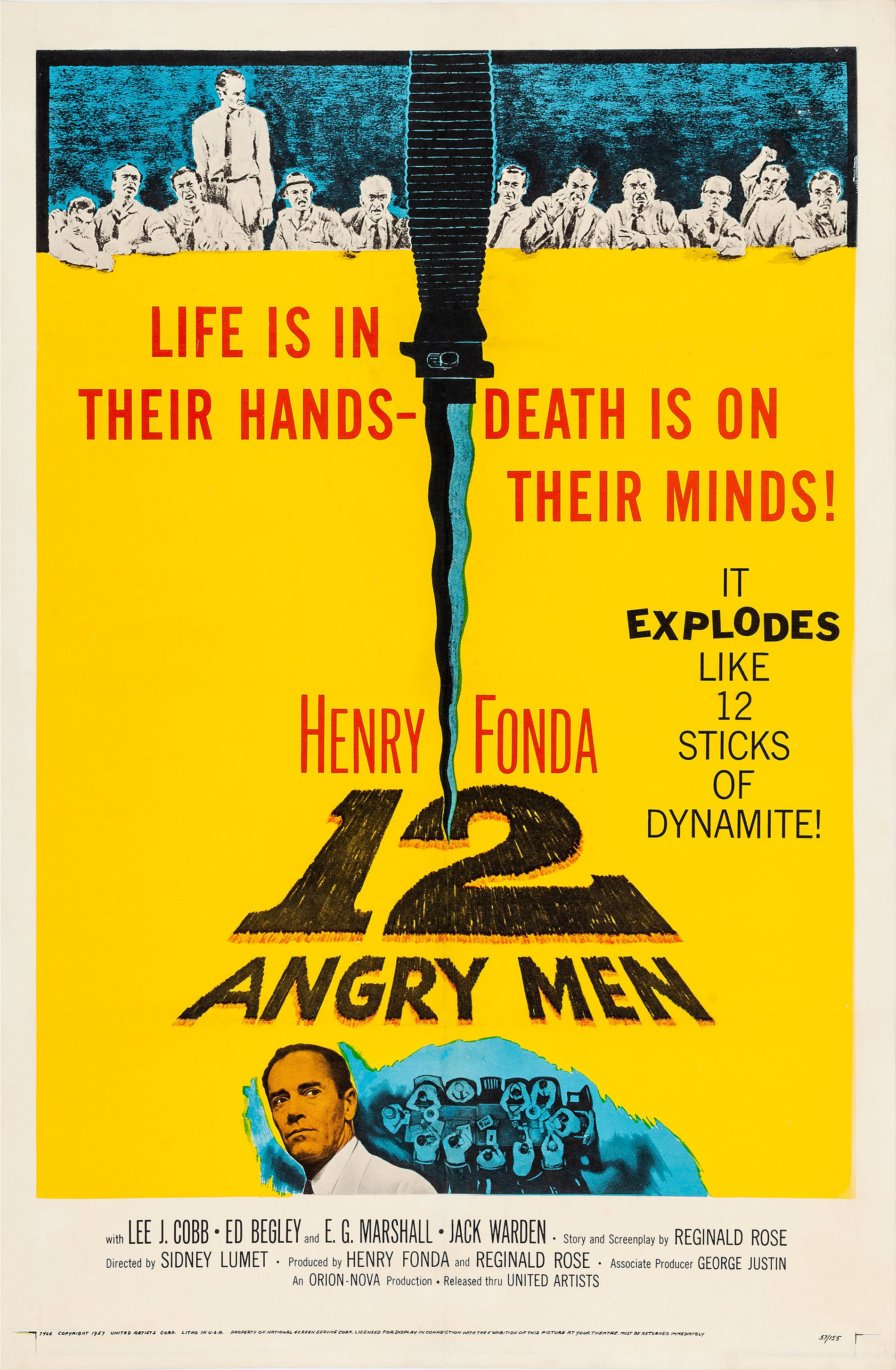
Sidney Arthur Lumet’s 12 Angry Men, released in 1957, stands as a seminal work in American cinema, expertly illustrating the challenges and complexities inherent in the judicial system. Set almost entirely within the confines of a jury deliberation room, the film showcases Lumet's masterful ability to create tension and drama through precision in dialogue and an unyielding focus on character interactions. This stark, claustrophobic setting reflects the broader societal themes of justice, prejudice, and democracy, making it not only a captivating narrative but also a relevant commentary on the moral obligations of citizenship in a democratic society.
Critics consistently laud 12 Angry Men for its taut and absorbing storytelling. The narrative revolves around the deliberation of a seemingly open-and-shut murder case, where the tension escalates as one juror becomes obsessed with ensuring a fair discussion. This character-driven exploration delves into the prejudices and biases that each juror harbors, which often cloud their judgment. Lumet’s direction emphasizes the dynamic interplay among the men, reinforcing how personal experiences and societal conditioning can impact the quest for justice. Through a series of compelling arguments and counterarguments, the film dissects the human condition, inviting the audience to reflect on their own preconceptions regarding guilt and innocence.
At its core, 12 Angry Men is a towering critique of societal norms, particularly how deeply ingrained biases can disrupt justice. The film’s structure elegantly accumulates tension, urging viewers to consider the sanctity of human life and the weight of the jury's responsibility. As the jurors’ true personalities emerge, the dialogue becomes more than mere exposition, it transforms into a powerful examination of democracy in action, where dissent can be both a strength and a vulnerability. In an era rife with social upheaval and civil rights movements, the film resonates with the notion that justice is not a mere outcome but a process that demands perseverance and moral integrity.
The consensus among critics positions 12 Angry Men as a masterpiece of American cinema that remains relevant even decades after its release. Its efficient storytelling, combined with a stellar ensemble cast, makes for an engaging viewing experience that encourages active participation and critical thinking. This compelling narrative not only entertains but also challenges audiences to confront their own biases and moral convictions.
Lumet’s skillful direction and focus on social issues have cemented his place in film history, and 12 Angry Men serves as a pivotal entry in his oeuvre. The film’s blend of strong characterizations and thought-provoking themes creates a resonant impact that echoes through contemporary discussions around justice and equality. As we witness a society grappling with its own prejudices, 12 Angry Men remains a potent reminder of the delicate balance between morality and the law, urging us towards a more humane and just future.