Keir Dullea, Gary Lockwood, William Sylvester, Douglas Rain
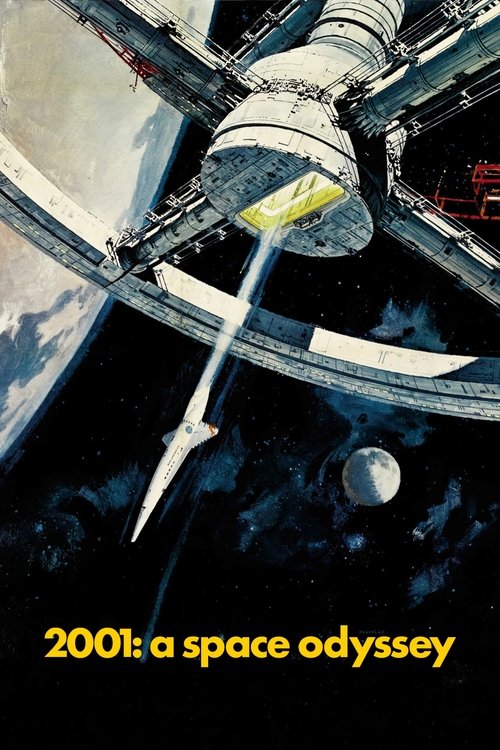
After discovering a mysterious artifact buried beneath the Lunar surface, mankind sets off on a quest to find its origins with help from intelligent supercomputer HAL 9000.
19 critical concepts · 13 source reviews
Key concepts and themes extracted from professional criticism
Where critics find common ground in admiration
Recurring hesitations and reservations
The integration of musical and visual composition is regarded as unrivaled, contributing greatly to the film's mood.
praiseThe pacing and repetitive effects are seen as self-indulgent and detract from the initial impact.
criticismKubrick’s direction is praised for making a philosophical and profound sci-fi film rather than a conventional 'thrill ride'.
praiseSome reviews note issues with a 'sketchy narrative' and 'overblown abstraction'.
criticismThe voice of HAL 9000 is particularly effective, adding depth and pathos to the film's narrative.
praiseThe special effects are seamlessly integrated into the artistic vision of the film, making the effects feel organic and part of the whole experience.
praiseThe film is beloved for its scrupulous scientific accuracy and vast exploration of human evolution.
praiseThe movie can feel 'immensely boring' due to its deep focus on details and self-absorption.
criticismSelect an aspect to explore critical perspectives
How reviewers are contextualising this film within cinema history
Professional criticism informing this consensus
“The movie is so completely absorbed in its own problems, its use of color and space, its fanatical devotion to science-fiction detail, that it is somewhere between hypnotic and immensely boring.”
“Beloved for many different reasons, including its scrupulous scientific accuracy, its vast reach from 'The Dawn of Man' to the next stage of human evolution, its unrivaled integration of musical and visual composition, its daring paucity of dialogue and washes of silence, its astonishingly creative psychedelic sequence and its still-gorgeous pre-digital special effects.”
“Watching this film demands two qualities that are sadly lacking in all but the most mature and sophisticated audiences: patience and a willingness to ponder the meaning of what's transpiring on screen. 2001 is awe inspiring, but it is most definitely not a 'thrill ride.' It is art, it is a statement, and it is indisputably a cinematic classic.”
“With 2001, Stanley Kubrick proved that a sci-fi movie could be philosophical rather than pulpy, profound rather than pedantic.”
“Still the grandest of all science-fiction movies.”
“Its faults - sketchy narrative, overblown abstraction - are counterbalanced by its gripping engagement between man and machine, and its rhapsodic wonder at heaven and earth and the infinite beyond.”
“A masterpiece that can still leave you dizzy with wonder. As much as any movie ever made, this visionary science-fiction tale of space travel and first contact with extraterrestrial life is a spellbinding experience.”
“Only a few films are transcendent, and work upon our minds and imaginations like music or prayer or a vast belittling landscape... Alone among science-fiction movies, 2001 is not concerned with thrilling us, but with inspiring our awe.”
“Its special effects are used so seamlessly as part of an overall artistic strategy that, as critic Annette Michelson has pointed out, they don't even register as such, and thus are almost impossible to trivialize, a feat unmatched in movies.”
“This is the way this ground-breaking monument was meant to be seen: in mind-boggling 70mm.”
“Kubrick’s 2001: the film that haunts our dreams of space”
“Certainly, both are beautiful to look at. Much of Kubrick’s £3 millions went for special effects, and, for the first time ever, a science fiction film looks plausible: the spaceships with complex exteriors like early Paolozzi sculptures, the surrealistic surface of the moon, and the fantastic prehistoric landscapes.”
“Stanley Kubrick’s epochal sci-fi epic returns to the big screen as part of the BFI’s Days of Fear and Wonder series, and after all these years it remains a trip well worth making.”
“Expanding on Arthur C Clarke’s short story The Sentinel, this leaps from the dawn of mankind to the space-age (via one of cinema’s most striking editing juxtapositions) and beyond, transporting viewers from the world of science into a stargate full of symbolism and spectacle.”
“Clarke’s “2001” novel was published a few months after the movie’s release in 1968.”
“The film concerns the “Dawn of Man” and a mysterious black monolith and a mission to Jupiter with a deadly, on-board talking computer named HAL.”