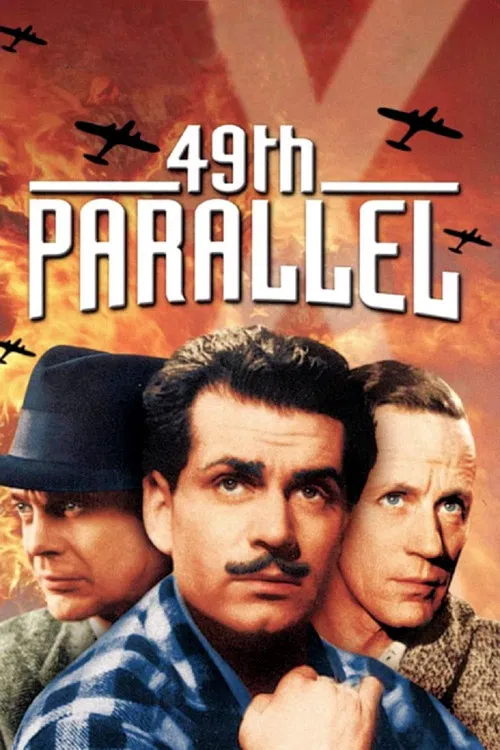
Released in 1941, 49th Parallel represents a significant moment in both the career of director Michael Powell and the landscape of wartime cinema. As Britain found itself embroiled in World War II, cinema was increasingly mobilized as a medium not only for entertainment but also for propaganda. Powell and his co-director Emeric Pressburger crafted this film, which is both a gripping adventure and a piece of patriotic rallying aimed at bolstering morale against German aggression. This film rests within the broader context of Powell's work, marking an early assignment that would lead to their later collaboration on iconic films celebrated for their visual storytelling and emotional depth.
The critical consensus on 49th Parallel highlights its engrossing narrative filled with suspense and thrilling episodes. Critics have noted how the film weaves a tapestry of heroism against the backdrop of World War II, focusing on a group of German U-boat crew members who find themselves stranded in Canada. What unfolds is not merely a chase film but a nuanced exploration of nationalism, showcasing how individuals from diverse backgrounds come together to confront a common enemy. The film deftly balances excitement with a moral undertone, portraying the ruthless nature of wartime while also shining a light on the devotion of ordinary citizens who aid in the struggle against totalitarianism.
Throughout 49th Parallel, themes of heroism and tragedy permeate the film’s structure, giving rise to fully-rounded characters that viewers can connect with. Reviewers have praised the depth of the portrayals, particularly how the film manages to evoke empathy for its characters, even those on the opposing side. There is a palpable tension as the German sailors navigate the rural Canadian landscape, encountering various characters that symbolize different facets of resistance and resilience. This dramatic juxtaposition amplifies the film's undercurrent of flag-waving yet nuanced advocacy for freedom and unity in the face of adversity.
The visual accomplishments in 49th Parallel also deserve attention, with Powell's signature cinematography capturing the stunning Canadian landscape. Reviewers have hailed the film's aesthetic as both glittering and stark, providing a rich backdrop for the unfolding drama. The cinematographic choices augment the film’s thrilling nature, immersing audiences in the perilous journey while highlighting the beauty of its setting. From sweeping landscapes to intimate character moments, the film’s imagery complements the narrative’s exploration of heroism and nationalism in a wartime context.
In hindsight, 49th Parallel can be seen as a microcosm of its era, an engaging piece of propaganda that successfully entertains while also delivering poignant messages about courage and the human spirit amid turmoil. As cinema continues to evolve and reflect contemporary issues, the film stands as a testament to the power of storytelling in shaping public sentiment during critical moments in history. Michael Powell’s early work with this film not only set the stage for his illustrious career but also left an indelible mark on the war film genre, showcasing the intricate dance between art and ideology in the face of global conflict.