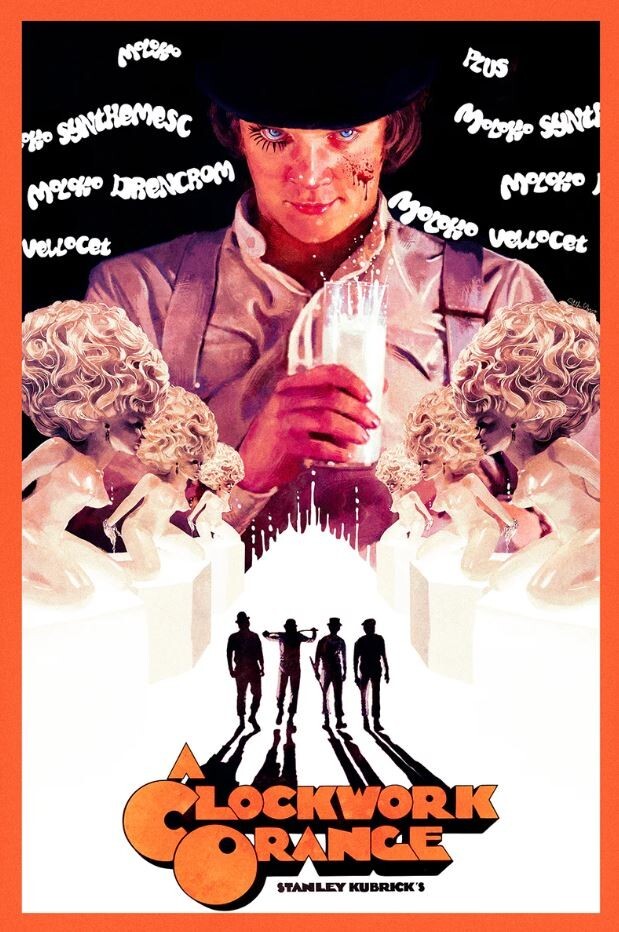
When examining the landscape of 1970s cinema, A Clockwork Orange emerges as a seminal work by Stanley Kubrick, known for his provocative and meticulously crafted films. Adapted from Anthony Burgess's novel, this dystopian narrative unfolds in a near-future society where youth violence reigns supreme and the boundaries of free will are tested. Released in an era marked by social upheaval and changing cultural norms, Kubrick's film stands out not only for its aesthetic innovations and technical brilliance but also for the unsettling questions it raises about morality, agency, and the human condition. The film's operatic style and vibrant visuals contribute to its status as a landmark in the history of cinema, solidifying Kubrick's reputation as a master of the medium.
Critics have long noted the thematic complexity present in A Clockwork Orange, highlighting the film's unsettling exploration of violence and its implications for free will. The protagonist, Alex, embodies a paradox; he is both a charming antihero and a brutal delinquent, ultimately serving as a reflection of a society grappling with its dark impulses. Kubrick presents violence as an integral aspect of human nature, provoking viewers to question the implications of societal attempts to eliminate it through conditioning and control. The film's disturbing imagery and scabrous commentary resonate powerfully, leaving an indelible mark on audiences and contributing to its status as an ideological touchstone in cinematic history.
The critical consensus surrounding A Clockwork Orange often emphasizes its innovative narrative structure and provocative themes. While some reviewers celebrate the film’s mesmerizing quality and operatic flair, others acknowledge its indulgent nature, suggesting that the excesses of violence may alienate or distance viewers. However, this very discomfort is crucial to understanding the film's impact, forcing audiences to confront their own perceptions of morality and justice. Kubrick's artistic choices, including the use of classical music juxtaposed with brutal scenes, enhance the film's unsettling atmosphere, creating a memorable experience that challenges the viewer's sensibilities.
Importantly, A Clockwork Orange arrives at a time when the concepts of free will and societal control were at the forefront of philosophical debate. Kubrick poses critical questions regarding the essence of autonomy versus the temptation of a controlled existence, further complicating the viewer's relationship with Alex and his journey. The film is not simply a narrative about crime and punishment; rather, it serves as an exploration of the human psyche and the moral complexities that accompany power and choice. In this light, A Clockwork Orange can be interpreted as both a cautionary tale and a chilling commentary on the future of humanity, where the erosion of individual freedoms in the name of societal order may lead to a mechanized hell devoid of genuine choice.