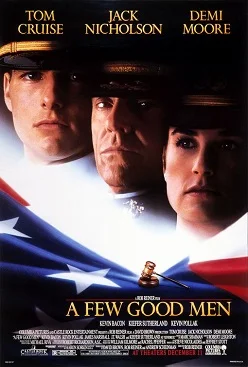
In the landscape of 1990s cinema, A Few Good Men, directed by Rob Reiner, stands as a hallmark of courtroom drama that deftly examines themes of military justice and the moral complexities of honor, loyalty, and truth. Emerging from Reiner's prolific career, which spans genres from comedy to serious drama, this film is emblematic of his ability to blend sharp dialogue with emotionally charged narratives. The film adapts Aaron Sorkin's stage play, showcasing his iconic, rapid-fire writing style and meticulously crafted scenarios that engage audiences on both intellectual and emotional levels.
Critics widely acclaim A Few Good Men for its intense and compelling courtroom scenes that reveal the fraught power dynamics at play within the military justice system. The lead characters are embroiled in a gripping trial that explores the thin veneer of loyalty among soldiers while questioning the ethics of following orders versus moral responsibility. The performances, particularly those of Tom Cruise, Jack Nicholson, and Demi Moore, are highlighted as integral to the film's success, bringing to life the characters' emotional struggles and ethical dilemmas through a well-crafted narrative arc.
At its core, the film grapples with the age-old conflict between honor and truth, posing profound questions about what it means to serve in the military and the sacrifices that accompany such a calling. The famous line delivered by Nicholson's character encapsulates the essence of this struggle: the necessity of facing uncomfortable truths in the pursuit of justice, even when loyalty to one’s comrades is at stake. This thematic exploration resonates deeply and positions A Few Good Men not just as a courtroom drama but as a reflection on integrity and accountability, confronting viewers with the implications of systemic authority.
As audiences are drawn into the intense courtroom battles, Reiner’s direction ensures that the stakes never feel diminished. The pacing, combined with powerful performances, creates a palpable tension that is engaging throughout the film’s runtime. Each scene is meticulously constructed to not only entertain but to provoke thought regarding the balance of power and the ethics of leadership within the military establishment. This combination results in a film that remains compelling years after its release, solidifying its status as a classic in American cinema.
In conclusion, A Few Good Men continues to resonate, offering insights that are as relevant now as they were at its release. The film stands as a testament to Reiner’s skill as a director and Sorkin’s exceptional writing, culminating in a narrative that challenges viewers to consider the true cost of loyalty, the quest for truth, and the often-tangled web of military justice. Its legacy endures as a reflection not only on the individual struggles of its characters but also on the broader implications of honor and ethical conduct in society.