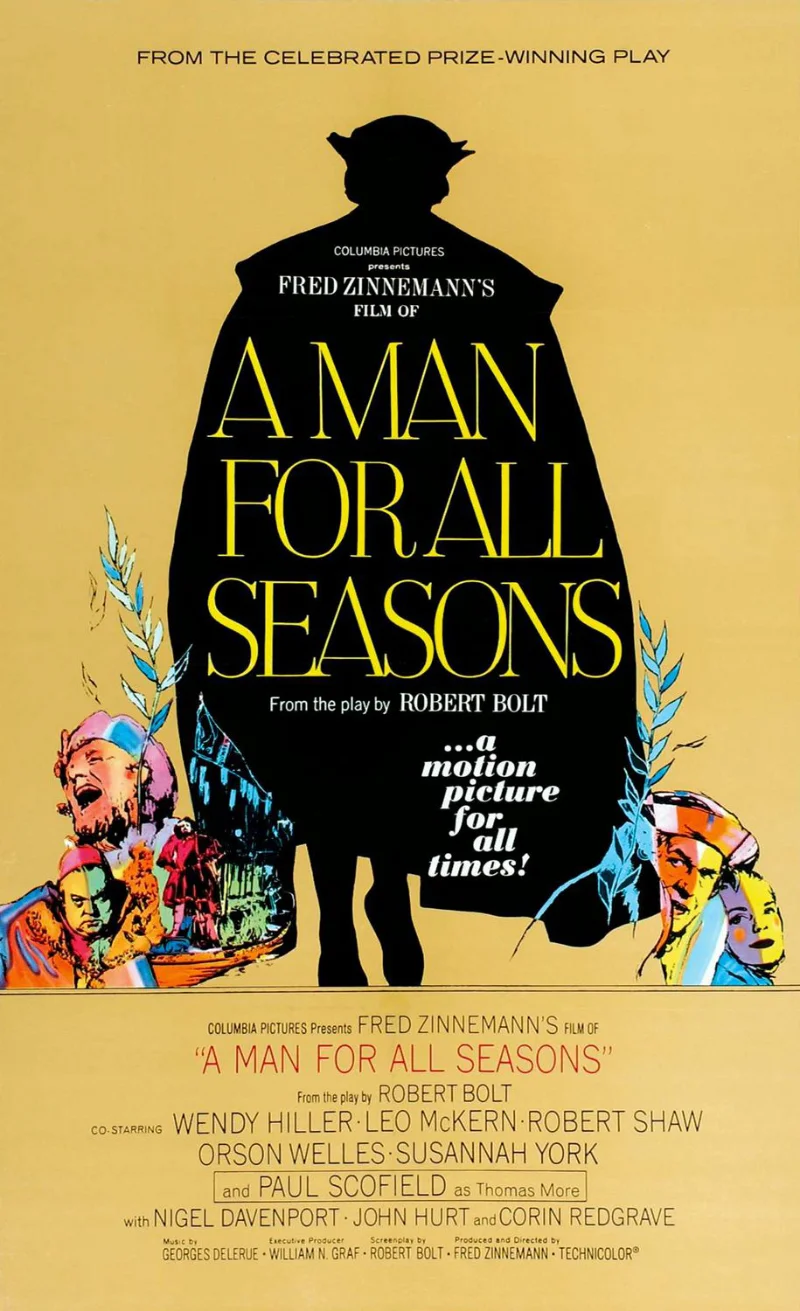
Directed by Fred Zinnemann, A Man for All Seasons (1966) stands as a significant entry in the landscape of historical cinema, melding biographical storytelling with deep philosophical inquiry. The film adapts Robert Bolt’s play about Sir Thomas More, a man caught in the turbulent political waters of 16th-century England as he chooses to uphold his moral integrity in the face of King Henry VIII’s ambitions. Zinnemann, known for his ability to convey moral complexity in films like From Here to Eternity and High Noon, masterfully navigates the interplay between personal conviction and societal pressure, making this film a touchstone for discussions on human rights and ethical leadership.
Critics laud A Man for All Seasons for its thought-provoking exploration of moral integrity in the face of relentless political conflict. More, portrayed by Paul Scofield, embodies principled resistance against the encroaching authority of the crown, opting to remain true to his religious convictions rather than conforming to the demands of the state. This tension between individual conscience and governmental power remains timeless, allowing modern audiences to resonate with More's plight as they reflect on their own ethical boundaries.
Religious conviction serves as the backbone of the narrative, where More's steadfastness challenges not only the monarch but also the sociopolitical structures that uphold the status quo. His adversary, Thomas Cromwell, represents the political pragmatism that often compromises moral integrity for the sake of expediency. Through this dichotomy, Zinnemann asks viewers to consider the cost of truth and the sacrifices necessary to uphold one's beliefs, making the film as relevant today as it was at its release.
The film's cinematography captures the richness of its historical setting while drawing audiences into More's internal struggles. Each frame, filled with meticulous detail, serves as a visual metaphor for the conflicts boiling beneath the surface of Tudor England. The performances, particularly by Scofield, are nuanced and compelling, allowing the film to transcend mere historical reenactment and delve into the moral quandaries that define the human experience.
Public and critical acclaim for A Man for All Seasons positioned it as a literary adaptation that simultaneously examines the universal theme of integrity in personal and public life. As a historical drama, it invites audiences to engage with the past, prompting reflections on contemporary political landscapes where moral dilemmas ignite passionate debate. Zinnemann's ability to evoke empathy for a figure betrayed by power calls for a reassessment of how we view leadership and integrity in our own times.
Ultimately, A Man for All Seasons serves as a reminder of the enduring struggle between moral integrity and political conflict. Zinnemann’s film, anchored by a powerful narrative and compelling performances, offers a timeless commentary on the sacrifices required for one’s beliefs. It stands as a critical piece of cinema that not only tells a story of the past but also challenges us to confront the complexities of our present, urging us towards courage in the face of overwhelming opposition.