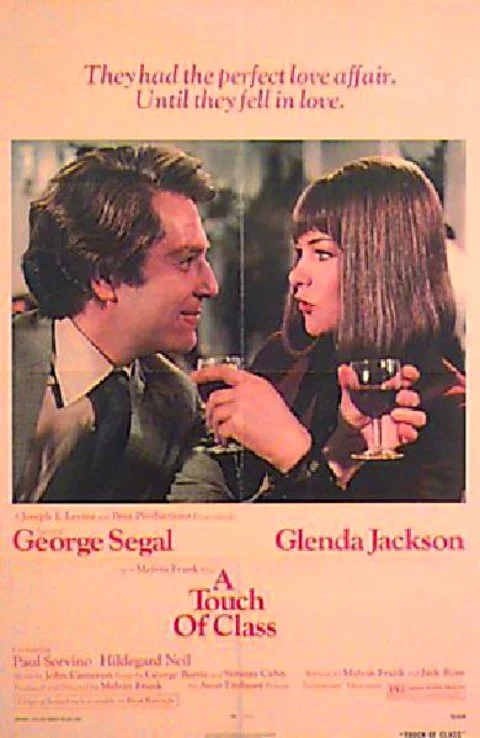
A Touch of Class, directed by Melvin Frank in 1973, stands as a noteworthy entry in the landscape of romantic comedies that flourished during the 1970s. This film showcases Frank's deft hand at blending humor with incisive social commentary, a hallmark of his career. Known for his sharp-edged wit and insightful observations on human relationships, Frank captures the essence of the era's evolving notions of love and compatibility. The film reflects a unique juxtaposition between class and romance, offering a glimpse into the complexities of personal connections amid societal expectations.
At its core, A Touch of Class revolves around the affair between the characters played by George Segal and Glenda Jackson, both of whom embody distinct yet complementary qualities. Critics have noted the film’s exploration of the intricacies of a love affair that flirts with both spontaneity and restraint. The film's humor emerges from the witty repartee and clever banter that characterizes their interactions, showcasing a compatibility that transcends their differing social backgrounds. As these characters navigate their relationship, the film expertly delves into broader themes of desire, vulnerability, and the sometimes superficial nature of societal conventions.
Critical consensus around A Touch of Class centers on its clever narrative structure and the intelligent execution of its humor. Many have praised its blend of comedy with genuine emotional depth, allowing for both laughter and reflection. The wit embedded in the screenplay serves not just to amuse, but also to critique, making the film resonate with audiences who may find themselves questioning traditional norms of love and partnership. The performances are enhanced by thoughtful direction that highlights the subtleties in each character's evolution throughout the story.
Fashion also plays an understated yet significant role in A Touch of Class, acting as a visual metaphor for the cultural divide between the characters. Elegant attire highlights their distinct social standings, creating an atmospheric backdrop that complements the thematic exploration of class dynamics in romance. This attention to detail not only enriches the narrative but also reflects Frank's thorough observation of cultural trends during the 1970s. Thus, the film becomes a canvas that portrays the era's shifting attitudes toward love and relationships, encapsulated within a format that remains engaging and entertaining.
In conclusion, A Touch of Class remains a significant exploration of romance interwoven with humor and social critique. Melvin Frank's ability to craft a narrative that is both sharp and relatable allows audiences to engage with the film on multiple levels. It prompts reflection on the complexities of love and the sometimes arbitrary boundaries of class distinction. As such, this film is not merely a romantic comedy but a rich portrayal of the enduring human experience, marked by its clever wit and observant storytelling.