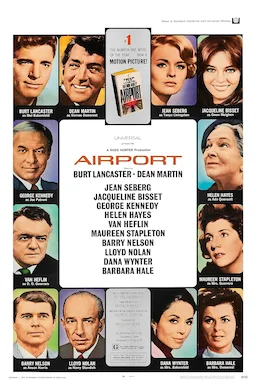
Released in 1970, Airport directed by George Seaton marked a significant turning point in the landscape of American cinema, effectively launching the disaster film genre that would dominate much of the 1970s. As one of the earliest blockbusters, it blends melodrama with intense moments of crisis, relying heavily on an ensemble cast that includes notable performances from the likes of Burt Lancaster, Dean Martin, and an Oscar-winning turn from Helen Hayes. The film's exploration of airport operations and emergency response highlights the intricacies of running a modern airport while simultaneously delving into the personal relationships and dramas woven into the lives of the characters caught in the midst of a catastrophic crisis.
Critics have often pointed out the film's formulaic structure, laden with clichés that, while predictable, create a sense of nostalgia for audiences. The plot unfolds with earnestness, presenting a variety of interpersonal relationships that mirror the larger theme of heroism under pressure. At its core, Airport encapsulates the melodramatic peaks and valleys of human emotion, proving that even in chaotic circumstances, individuals can rise to the occasion. Yet, the predictability of its arcs often leads critics to label it as uninspired and cheesy, making it a mixed bag in terms of critical reception.
Despite its flaws, Airport remains watchable, appealing not only to fans of classic cinema but also to those who appreciate the historical context of its release. This film was a bold venture into a new genre, bringing together an all-star cast to help audiences navigate through the melodrama and disaster management challenges presented on screen. Its impact sparked a wave of sequels, each attempting to capture the same blend of personal and collective crises within the confines of aviation disasters, but few have been able to replicate the initial charm and nostalgic draw of the original.
In examining Airport, one cannot overlook its role as a reflection of the times, portraying societal concerns about air travel amidst a backdrop of personal turmoil. While it may fall into the realm of the predictable and formulaic, it serves as an archetype of its kind, a testament to the era's penchant for escapism through over-the-top scenarios and a focus on heroic endeavors in the face of disaster. Whether viewed as a nostalgic piece of entertainment or as a commentary on airplane travel and relationship dynamics, Airport stands as a cultural artifact worth revisiting for both its flaws and its charm.