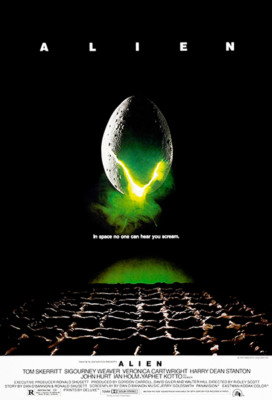
Ridley Scott's Alien (1979) stands as one of the seminal works in the science fiction genre, marking a pivotal moment in cinematic history. Released during a period ripe with innovation, Alien established itself as a cornerstone of both horror and science fiction, carving a niche that influenced countless films that followed. With its atmospheric tightness and masterful direction, Scott not only showcased his affinity for building tension but also laid the groundwork for a horror subgenre synonymous with the vast emptiness of space, where anxiety is magnified by isolation and the unknown.
Central to Alien is the exploration of survival against overwhelming odds, a theme heightened by the film's claustrophobic settings aboard the Nostromo. As the crew members become increasingly paranoid about an unseen threat, the film delves deep into the psychological toll of their predicament. The terrifying xenomorph, an embodiment of biological horror, serves as a chilling reminder of the unpredictability of nature when influenced by corporate greed. The Weyland-Yutani corporation, driven by a singular focus on profit and advancement, epitomizes corporate malfeasance, sacrificing human lives for the sake of scientific progress and financial gain. This critique of corporate ventures in the pursuit of profit resonates deeply and remains relevant today, echoing broader fears about technology and exploitation.
The film's innovative visual and sound design further complements its narrative, generating an immersive experience that invites the audience to confront their own fears of isolation and annihilation. The tension in Alien is palpable, largely due to its measured pacing which takes time to cultivate a foreboding atmosphere. Scott's meticulous attention to detail contributes to the unsettling ambiance, transforming the Nostromo into a character unto itself, an oppressive metallic womb in which human life hangs precariously in the balance. The visceral scares, amplified by H.R. Giger's haunting creature designs, force the viewers not merely to spectate but to feel the dread of what it means to be hunted.
Critics have widely acknowledged Alien as a timeless classic, fusing elements of horror and science fiction in a way that resonates across generations. Its enduring impact is evident, as it continuously sparks discussions on themes of human vulnerability, the ethics of scientific exploration, and the chilling effects of dehumanizing corporate systems. The film's ability to evoke deep-seated fear through its atmosphere and expert storytelling underscores its lasting significance in both genre cinema and the broader landscape of film. As we revisit Alien, it is clear that its legacy lies not only in its technical brilliance but also in the profound questions it raises about our future and what lurks in the dark.
Ultimately, Alien transcends its genre boundaries to serve as a cautionary tale about ambition unchecked by morality, a theme that holds sway in contemporary society. As audiences continue to be captivated by its blend of horror and science fiction, Ridley Scott's masterwork remains a quintessential exploration of the inner human psyche against the vast, unknown void that space represents. In a universe filled with existential threats, Alien invites us to ponder our place within it and the terrifying possibilities that await beyond the stars.