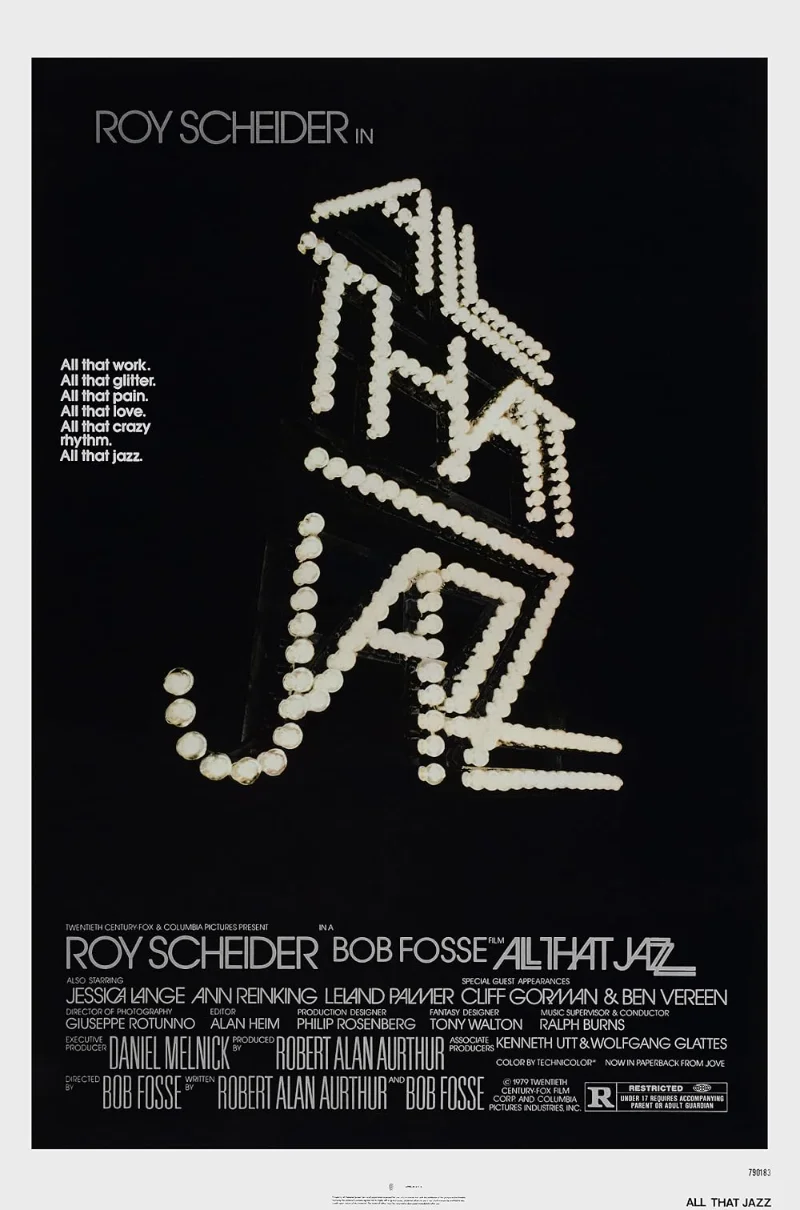
Bob Fosse's All That Jazz stands as a seminal work that blends autobiographical elements with a vivid portrayal of the musical theater world. Released in 1979, this film occupies a unique space in cinema history as a bold reflection of Fosse's own struggles and triumphs as a choreographer, director, and ultimately, a human being grappling with mortality. The film serves not only as a creative expression of Fosse's artistic obsession but also as a poignant exploration of the costs associated with that obsession, making it a significant forebear in the genre of musical drama.
Critics consistently describe All That Jazz as fascinating and imaginative, immersing viewers in a backstage life that is as alluring as it is savage. At its core, the narrative juxtaposes the glitz and glamour of theatrical production with the harsh realities of health issues and self-destruction. Fosse’s main character, Joe Gideon, is a reflection of the director himself, a manic, chain-smoking, Dexedrine-addicted artist whose relentless pursuit of perfection leads him to confront the specter of death. This intimate portrayal of a tortured soul reveling in creative chaos presents a bracing examination of the fine line between artistic genius and self-sabotage.
The film’s aesthetic bravura is equally matched by its foreboding themes of mortality and existential dread, creating a mood that is at once exhilarating and eerie. As Gideon juggles multiple aspects of his life, directing a new Broadway show while struggling with his health, the narrative unfolds in a series of surreal, dream-like sequences that reflect Fosse's trademark style. This cinematic boldness captivates audiences while provoking a squirm-inducing introspection, often striking viewers with a sense of painful familiarity. Through its rich tapestry of musical numbers and striking visuals, All That Jazz invites audiences to ponder the price of creative ambition.
In summation, All That Jazz captures the essence of Fosse’s artistic journey, characterized by a fierce commitment to self-exploration and a ruthless critique of the entertainment industry. It serves as an audacious confession, filled with moments of both dark humor and poignant sadness that resonate with anyone who has ever grappled with their own aspirations. Its lasting impact on both cinema and musical theater cannot be overstated, solidifying Fosse's legacy as an innovator unafraid to delve into the depths of his own psyche while offering a universal commentary on the nature of creativity and obsession.
As a must-have for cinema aficionados, All That Jazz enriches our understanding of both the artist and the art itself. It is a film that continually invites dialogue, a reflection of the tumultuous life of its creator, steeped in the rich yet perilous world of show business. With its perverse delight in the tragic and its unflinching gaze upon the creative process, Fosse's masterwork remains an essential touchstone in the exploration of what it means to strive, suffer, and ultimately, to express.