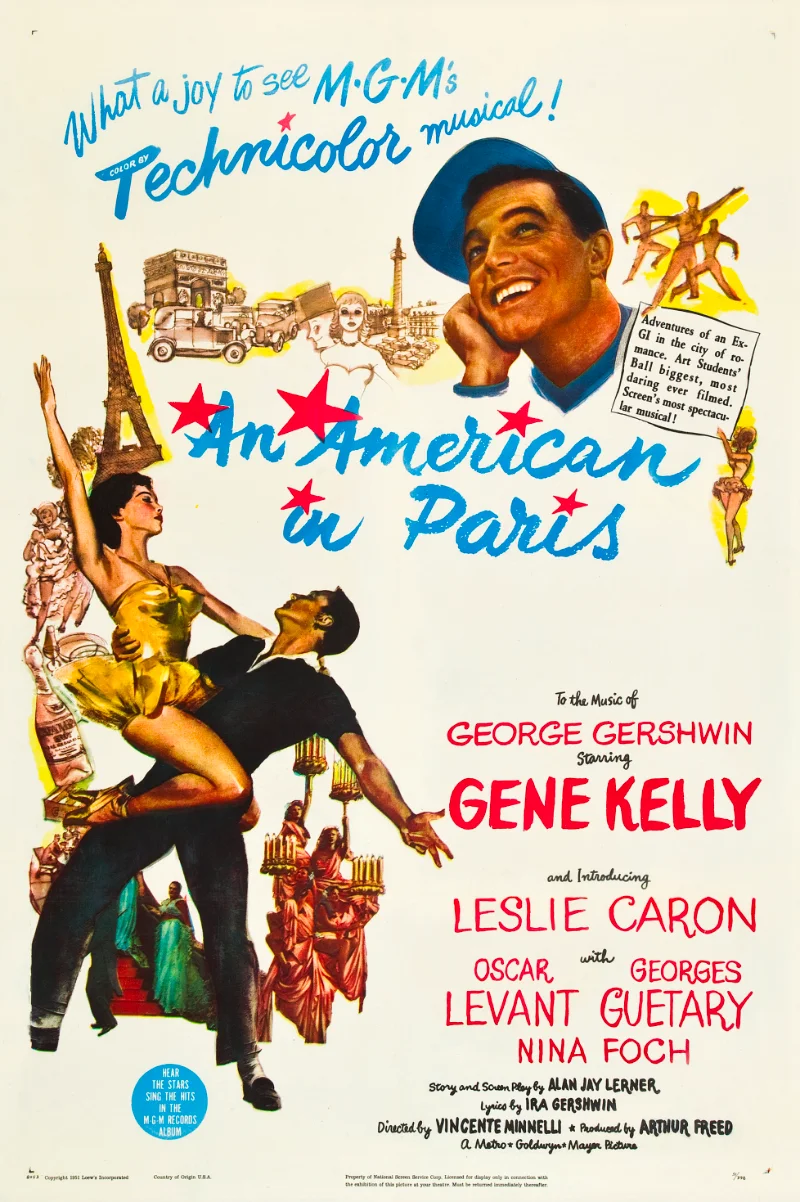
Set against the picturesque background of post-war Paris, An American in Paris stands as a hallmark of classic American musicals and a testament to the directorial brilliance of Vincente Minnelli. Released in 1951, the film emerges during a golden age of cinema, characterized by lavish productions that sought to transport audiences into realms of beauty, romance, and the idyllic, against the backdrop of a world still healing from the scars of war. Minnelli, known for his keen visual style and emotional depth, expertly crafts a film that resonates not only as a visual feast but as a poignant exploration of artistic ambition and romantic entanglement within the vibrant streets of Paris.
The film centers on Jerry Mulligan, played by Gene Kelly, an aspiring American painter who finds himself torn between dreams of artistic success and his romantic affections for two women, the enchanting Lise (Leslie Caron) and the wealthy Milo (Nina Foch). Through Jerry's journey, critics have noted that An American in Paris encapsulates the essence of romantic love intertwined with a fervent desire for artistic achievement. This duality not only creates tension in Jerry's life but also reflects the broader post-war sentiment of search for purpose and belonging, which resonated with audiences of the time. Furthermore, the film's rich portrayal of Paris serves as an enchanting backdrop that evokes an almost dreamlike quality, amplifying both the allure of love and artistic expression.
Critics have consistently described the film as charming, elegant, and melodic, emphasizing how these qualities manifest not only in its stunning visuals but also in its memorable musical numbers, including the iconic "I Got Rhythm" and the whimsical ballet sequence that culminates the film. Through masterful choreography and sweeping cinematography, Minnelli invites viewers into Jerry's world, immersing them in his aspirations and desires. This union of music, dance, and narrative underpins the emotional landscape of the film, creating an experience that is both hypnotic and uplifting.
As a cinematic work, An American in Paris stands out not only for its aesthetic brilliance but also for its exploration of timeless themes of love and ambition that continue to resonate across generations. In the context of Minnelli's body of work, the film represents a pinnacle of his ability to fuse visual art with narrative depth, reminding us of the transformative power of creativity and human connection. It captures a unique moment in history, illustrating how art and love can flourish even amid the remnants of conflict.
Ultimately, An American in Paris is more than just a romance or a musical; it embodies a yearning for beauty and fulfillment that transcends time and space. Through Jerry's heartfelt journey in the City of Light, viewers are gently reminded of the dreams that beckon us, the loves we pursue, and the artistic endeavors that reflect our innermost selves. This enduring classic resonates not just as a product of its era but as a universal story that invites reflection on the nature of desire, creativity, and the enduring magic of Paris.