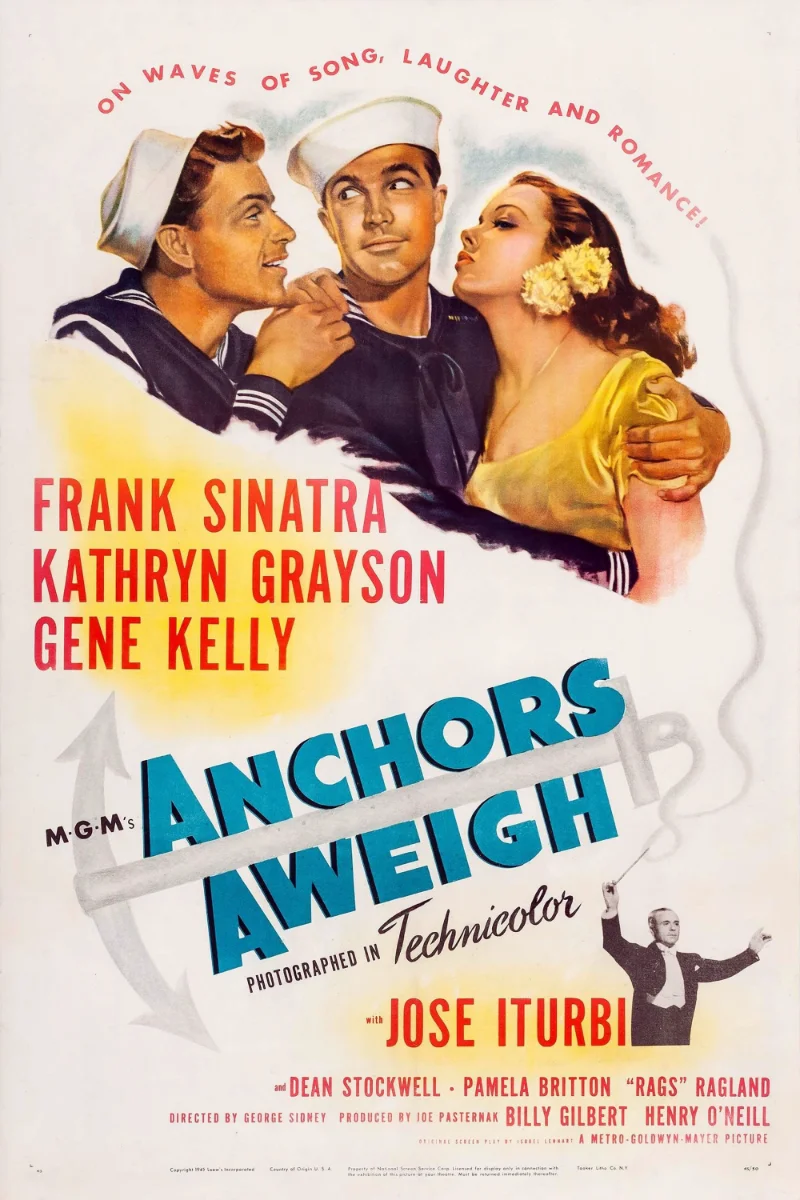
Anchors Aweigh, directed by George Sidney in 1945, stands as a vibrant exemplar of classic cinema, skillfully intertwining the charm of Hollywood musicals with the exuberance of wartime camaraderie. This film not only showcases the peak talents of its leading stars, Gene Kelly and Frank Sinatra, but also serves as a benchmark in Sidney's illustrious career. Set against the backdrop of World War II, Anchors Aweigh articulates themes of friendship and collaboration that resonate profoundly within the context of a nation yearning for connection and joy amid the turmoil of war.
The film's energetic musical numbers and standout performances have earned Anchors Aweigh a revered spot in the pantheon of musical excellence. Its most famous sequence, featuring Kelly dancing with a whimsical cartoon character, solidifies the film’s legacy as a hallmark of entertainment that transcends mere escapism. Critics have praised its delightful blend of narrative and choreography, which not only highlight the remarkable talents of its stars but also enhance the film's liveliness and charm. This synthesis of live-action and animation was groundbreaking for its time, showcasing Sidney's innovative directorial vision.
The collaborations depicted in Anchors Aweigh are emblematic of a deeper message about the bonds formed through shared experiences in show business. The friendship between Kelly and Sinatra's characters mirrors the genuine rapport between the actors themselves, a synergy that brings a palpable authenticity to the film. The camaraderie portrayed on screen reflects the ideals of unity and cheerfulness, critical elements in a post-war society that yearned for a return to normalcy and joy.
This film also represents a crucial point in Sidney's trajectory as a director renowned for his ability to create works that are both entertaining and artistically significant. Anchors Aweigh not only delivers an enjoyable cinematic experience, but also contributes to the larger conversation about the role of entertainment during significant historical moments. Sidney's work in this film exemplifies the potential of musicals to act as a form of social cohesion, fostering friendship and comfort through engaging performances.
In summation, Anchors Aweigh continues to charm audiences decades after its release, illustrating the timeless appeal of its themes and the brilliance of its execution. The film stands as an affirming tribute to the power of musical storytelling, eloquently capturing the essence of friendship and collaboration in a beautifully entertaining package. As we reflect upon film history, it becomes clear that Anchors Aweigh remains not just a delightful diversion but a significant contribution to the legacy of American cinema.