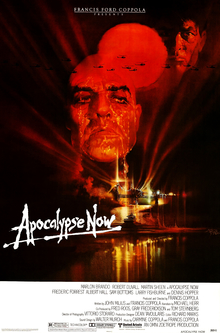
Released in 1979, Apocalypse Now stands as a monumental achievement in cinema and an essential part of Francis Ford Coppola's illustrious body of work. Following the innovative success of The Godfather films, Coppola's third installment in the cinematic pantheon is far more than just another narrative about war; it is a haunting exploration of the deepest recesses of the human psyche, framed against the backdrop of the Vietnam War. With visuals that are both grandiose and disturbing, Apocalypse Now immerses viewers in an experience that transcends traditional storytelling, morphing into a visceral commentary on the madness of war and imperialistic ambition.
The film's critical consensus rests upon its relentless examination of war's inherent insanity, where a straightforward military mission devolves into a harrowing journey into madness. As Captain Willard, played brilliantly by Martin Sheen, travels deeper into the Cambodian jungle to find the renegade Colonel Kurtz, portrayed hauntingly by Marlon Brando, viewers are drawn into a psychological abyss that reflects the trauma and disillusionment surrounding the Vietnam War. Critics have noted that this journey is symbolic not just of the physical trek through a war-torn landscape, but also of a descent into the madness that is part of human nature when confronted with moral ambiguity and the chaos of violence.
Themes of imperialism and human nature loom large throughout Apocalypse Now, as Coppola crafts a narrative that questions the rationale behind such conflict. The film does not shy away from displaying the horror and inhumanity inspired by ideologies of conquest and domination. This imperialistic critique resonates deeply, as it highlights the devastating impact of war on both soldiers and civilians alike. The psychedelic visual style, combined with a powerful score, serves to elevate the film from mere commentary to a profound cinematic experience, revealing the disarray and psychological toll inflicted on those involved.
Yet, Apocalypse Now is not without its detractors. Some critics describe the film as self-indulgent, with its sprawling runtime and intricate narrative choices leaving some viewers exasperated. However, the overwhelming artistry on display, characterized by striking imagery and profound thematic richness, remains undeniably brilliant, offering layers of meaning that continue to provoke discussion. Opinions may vary on the effects of this cinematic journey, but few would dispute that it is, at its core, a moving portrayal of man pitted against the abyss.
In sum, Apocalypse Now is a film that challenges not only its characters but also its audience, dispensing with comfortable truths in favor of a brutal examination of war and the human condition. It is a cinematic experience that stays with viewers long after the credits roll, serving as a reminder of the heavy toll of conflict and the ever-present specter of madness that accompanies such endeavors. Beyond its status as a war film, it is a grand exploration of the darker facets of humanity, marking it as a critical linchpin in both Coppola's artistic legacy and the annals of film history.