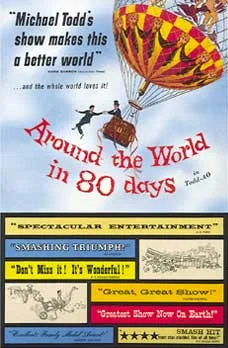
In the landscape of mid-20th century cinema, Around the World in 80 Days stands as a vivid testament to the cultural fascination with travel and adventure. Directed by Michael Anderson, the film adapted Jules Verne's classic novel for a star-studded audience, deftly marrying humor, action, and the spectacle of global exploration. Anderson, known for his ability to blend ambition and accessibility in storytelling, offers a lavish cinematic feast that, despite its uneven pacing, engages viewers with its energetic charm and clever comedic moments.
Critics commonly commend Around the World in 80 Days for its ability to transport audiences across diverse landscapes, from the deserts of Egypt to the bustling streets of London. The movie’s humor shines through the camaraderie between its leads, with David Niven’s Phileas Fogg and Cantinflas’s Passepartout forming a buddy duo that encapsulates the essence of friendship amidst the chaos of their ambitious quest. This relationship, portrayed with both goofiness and warmth, invites audiences to share in the thrill of adventure while reflecting the timeless theme of the human connection, even among the most unlikely companions.
The film’s incredible array of cameos adds a playful layer that enriches the viewing experience, providing brief interludes filled with star power that keeps the narrative lively. Though its pacing may falter at points, sometimes leaning toward a conveyor-belt style of storytelling, the visual grandeur and spirited performances ensure that the film remains amusing and engaging throughout. This adaptation captures not just the essence of Verne’s tale, but also the zeitgeist of the period, appealing to an audience that craved escapism and laughter.
Anderson’s vision transforms the simple notion of travel into a grand theatrical spectacle, one that is rich with vibrant visuals and lively set pieces. The comedy brought forth in this adaptation, while lighthearted, also resonates with deeper themes of exploration and adventure, reflecting humanity's innate desire to discover the unknown. It is a film that embodies the joyful spirit of mid-century cinema, blending action and humor in a way that feels both contemporary and timeless.
Reviewers often describe the film as big and lively, effectively masquerading as a lighthearted romp while offering a clever critique on the era's cultural attitudes towards travel and exploration. While not every viewer may resonate with its uneven narrative rhythm, the film's charm and vivacity leave a lasting impression. In the annals of cinematic history, Around the World in 80 Days is remembered not merely for its bold aspirations but for the laughter and joy it brought to audiences eager for adventure.