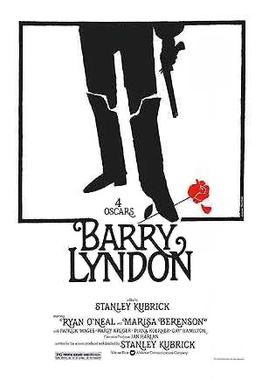
Stanley Kubrick’s Barry Lyndon stands as an intriguing outlier within his illustrious filmography, a work that meticulously captures the zeitgeist of 18th-century Europe through an unconventional lens. Released in 1975, it marked a departure from the director’s earlier masterpieces characterized by psychological intensity and visceral excitement. Instead, Barry Lyndon embodies a more detached, observational style, drawing viewers into a world both visually stunning and unflinchingly bleak. In the context of cinema history, the film is a major achievement in the art of storytelling, illustrating Kubrick's ongoing exploration of human nature and the social constructs that govern behavior, while remaining a powerful commentary on the futility of ambition and the inherent absurdity of life.
Central to the critical consensus surrounding Barry Lyndon is its examination of opportunism as a driving force in the protagonist’s life. The film presents the rise and fall of Barry Lyndon, adapted from William Makepeace Thackeray’s novel, in a way that feels both timeless and achingly familiar. Barry, portrayed with a sly charm by Ryan O'Neal, navigates the socio-economic landscape with cold calculation, reflecting a universality in human ambition and folly. However, Kubrick's lens remains emotionally distant, forcing the viewer to confront the discomfort of Barry's increasingly ruthless choices without the comfort of empathy or understanding. This emotional detachment resonates deeply throughout the narrative, casting a pall over what could have been a traditional tale of personal triumph.
Visually, Barry Lyndon is nothing short of a masterclass in cinematography. Kubrick’s innovative use of natural light, combined with the rich, opulent design of locations, crafts a sense of authenticity that immerses the audience in the setting. Each frame is meticulously composed, resembling a painting that speaks to the visual language of the era but is uncompromisingly ugly and magnificently beautiful at once. The choice to utilize exclusively natural light, particularly in indoor scenes, showcases a remarkable technical achievement, creating a palpable atmosphere that resonates with both humor and discomfort. The beauty on screen is often juxtaposed with the harsh reality of human ambition and moral decay, prompting viewers to reckon with the stark contrast between appearances and the truth of Barry’s existence.
The film’s narrative unfolds with a dispassionate rhythm, mirroring the inevitability of fate and the cyclical nature of life. Kubrick employs a slow, methodical pace that some may find challenging, yet the result is an immersive experience that captures the viewer's attention on an intellectual level. Critics have noted that while the film appears conventionally narrative-driven, it ultimately subverts such expectations, presenting a story that invites contemplation over passive viewing. As Barry rises and falls, Kubrick’s slyly sharp commentary reveals the absurdity of social ambition and the often-painful pursuit of happiness.
Ultimately, Barry Lyndon resonates as a pivotal film not just within Kubrick’s oeuvre, but also within the realm of cinema at large. It is a work that invites discussion and analysis, challenging viewers to reconcile its visual splendor with the moral complexities depicted. The film’s uncompromising nature, both in its storytelling and aesthetic choices, serves as a reminder of Kubrick’s mastery of cinematic expression, one that can provoke discomfort while illuminating the intricacies of human nature through a beautifully crafted lens.