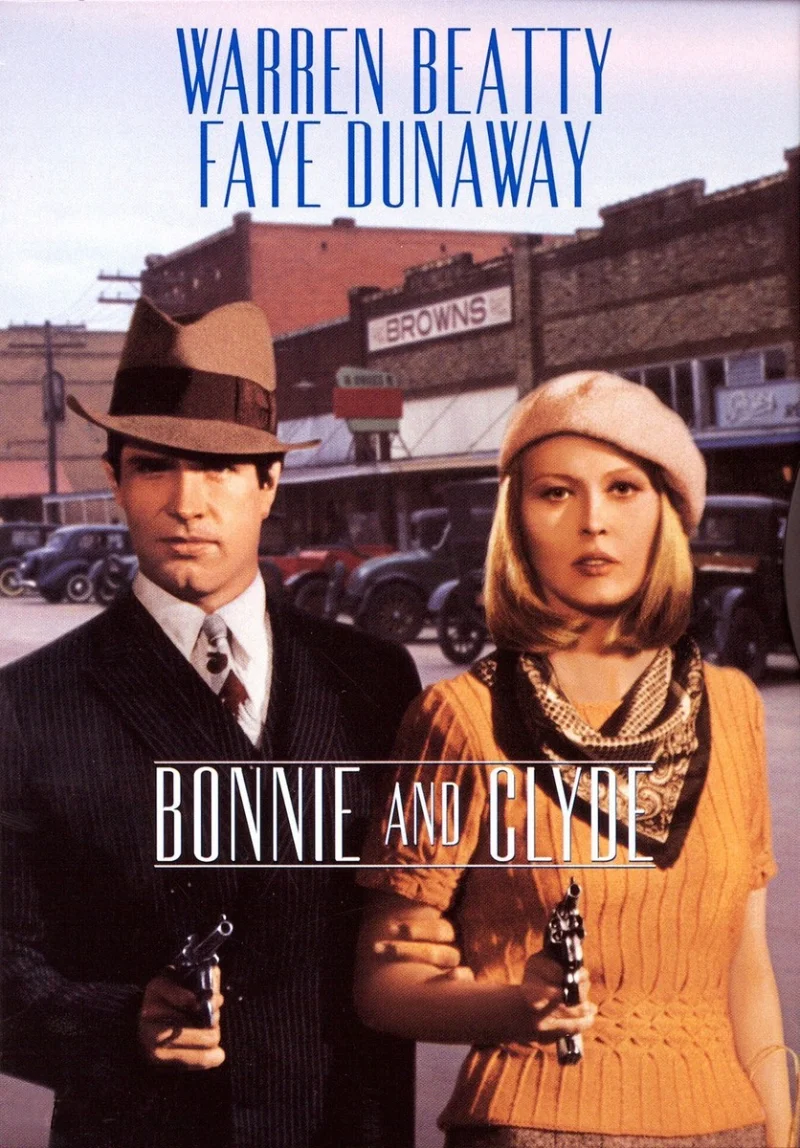
Directed by Arthur Penn, Bonnie and Clyde (1967) remains a landmark film in American cinema, emblematic of a pervasive cinematic revolution that emerged in the late 1960s. Breaking away from the conventions of classical Hollywood storytelling, it offers a visceral portrayal of its infamous protagonists and encapsulates the spirit of rebellion against societal norms. Penn’s brooding, yet emotionally charged direction pairs perfectly with the era’s filmmaking shift, reflecting both the personal and national crises that permeated the era of the Great Depression. This film is not only a bold retelling of the lives of American outlaws but a mirror reflecting the disillusionment that characterized a tumultuous period in U.S. history.
The violent and often bloody imagery in Bonnie and Clyde is central to its narrative, presenting viewers with an ecstatically bloody tableau that forces audiences to confront the darker aspects of American folklore. The film has been described as "gorgeously-photographed," showcasing its characters in scenic landscapes while simultaneously highlighting their moral decay. Bonnie Parker and Clyde Barrow, portrayed with a kind of smoldering charisma by Faye Dunaway and Warren Beatty, emerge as symbols of a counterculture that romanticizes the outlaw lifestyle. Critics have noted how their complex, almost tragic love story unfolds against the backdrop of a hopeless economy, inviting viewers to empathize with these flawed characters trapped in a relentless cycle of violence.
Critical consensus recognizes Bonnie and Clyde as a pivotal exploration of American identity, intertwining themes of love, violence, and the pursuit of freedom. While the film's portrayal of bank robbers as anti-heroes invites scrutiny, it also pays homage to the harsh realities of the Great Depression. The social context serves as both a canvas and a catalyst, reflecting the desperation and disillusionment of a generation. In this way, Penn's masterpiece transcends mere entertainment, delving into the dark human psyche and presenting the outlaws as figures of tragic nobility rather than merely criminals.
The film also signifies a creative revolution, challenging viewers' perceptions of morality and heroism through its fast and loose narrative style. It skillfully blends humor with tragedy, creating a tonal complexity that was daring for its time. Critics have praised how the film looks great, not just in terms of cinematography, but also in its fashion, Bonnie and Clyde’s killer wardrobe adds another layer to their alluring personas. This riveting juxtaposition between aesthetic beauty and brutal realities ignites an emotional response that remains deeply resonant, inviting modern audiences to reflect on the implications of violence in cinema and society at large.
Ultimately, Bonnie and Clyde serves as both a folk tale of American outlaw culture and a cinematic challenge to normative storytelling. Its flawed performances are not weaknesses but rather a testament to the realism and truthfulness that Penn aimed to achieve. The film's legacy cannot be overstated; it provoked conversation around violence in cinema, reshaped the genre, and permanently influenced generations of filmmakers, making it an enduring classic that continues to smolder in the consciousness of American cinema.