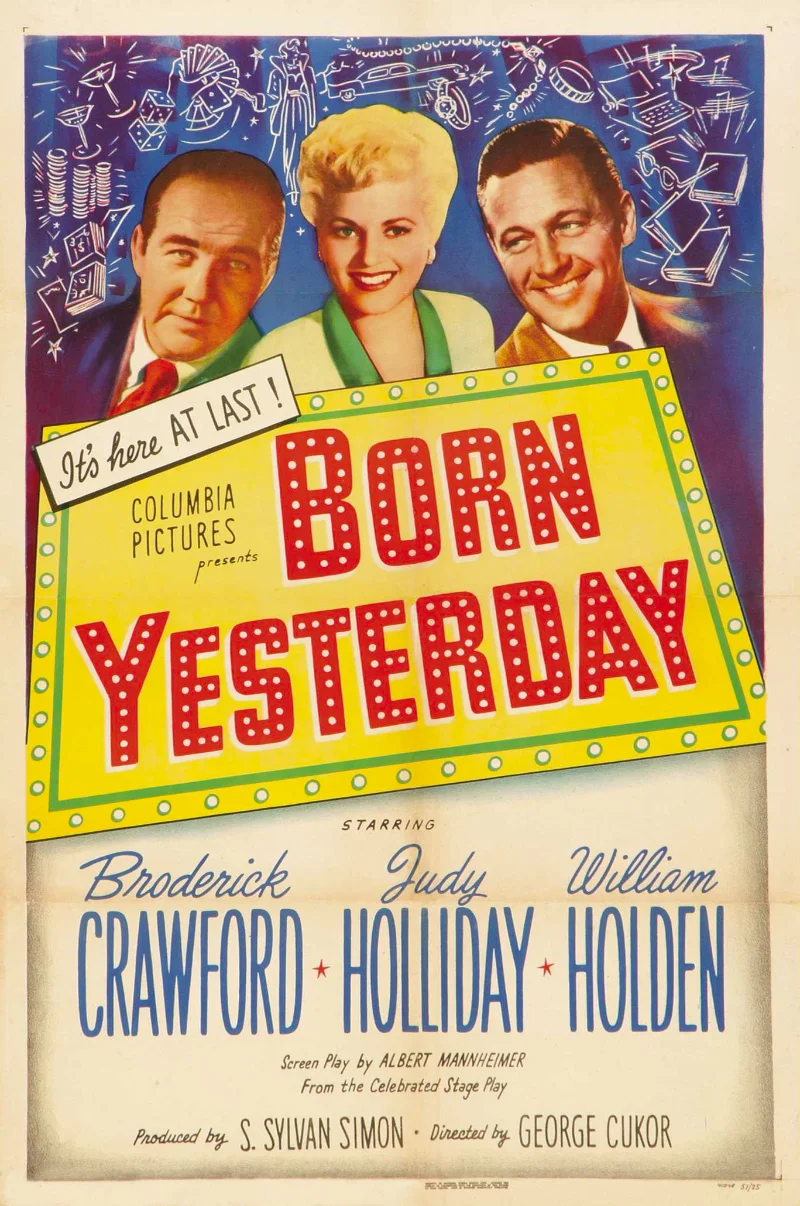
Born Yesterday (1950), directed by George Cukor, occupies a unique place in cinema history as a film that deftly combines elements of romantic comedy with pointed social commentary. It emerged during a period characterized by post-war conservatism and burgeoning awareness of political corruption in America. Featuring Judy Holliday in a career-defining role, the film showcases the complexities of love, societal values, and personal growth. Cukor's adept direction emphasizes the dynamics of power, particularly in romantic relationships, and he presents a critical lens on the moral ambiguities of political life.
Critics have consistently highlighted the film's exploration of a romantic triangle involving Holliday's character, Billie Dawn, alongside her wealthy but dull-witted boyfriend, Harry Brock (Broderick Crawford), and the idealistic reporter, Paul Verrall (William Holden). This triangle not only serves as a catalyst for humor but also as a narrative vehicle for Billie's transformation from a naive socialite to a politically aware individual. Through the tension of the romance and growing political awareness, Born Yesterday critiques the corruption inherent in politics, linking personal evolution with broader societal issues. The balance struck between charming romance and the uncomfortable truths of political life creates a disjointed yet engaging narrative that reflects the transitional social landscape of the 1950s.
The critical consensus presents mixed feelings about the film, underscoring its charm while acknowledging certain tedious aspects, such as its pacing and occasional colorlessness in execution. However, these perceived flaws do little to detract from the overarching message of personal growth and the pursuit of integrity in a corrupt world. Judy Holliday's performance is often described as both hilarious and captivating, earning her acclaim and an Academy Award for Best Actress. Her portrayal is central to the film’s emotional resonance and sheds light on the underlying themes of empowerment and the awakening of social consciousness.
Cukor’s contribution to Born Yesterday can be seen as both a continuation of his affinity for strong female leads and an embrace of modern themes of individuality and autonomy. While some critics may describe the film as colorless or fair in execution, others champion its classic status and its modern relevance, especially in light of ongoing discussions about political ethics. The candidness of Holliday's character development within the film promotes a rare blend of comedy and critique that resonates as a timeless message.
Ultimately, Born Yesterday stands as a remarkable showcase of both Cukor’s cinematic prowess and Holliday’s incredible talent, crafting a narrative that is equal parts charming and politically astute. In reflecting on themes of romantic development and political corruption, the film remains a relevant commentary on the societal constructs that shape personal relationships and individual growth. As audiences today revisit this classic, the film’s layered narrative continues to provoke thought and elicit laughter, proving that its reflections on character and society are anything but tedious.