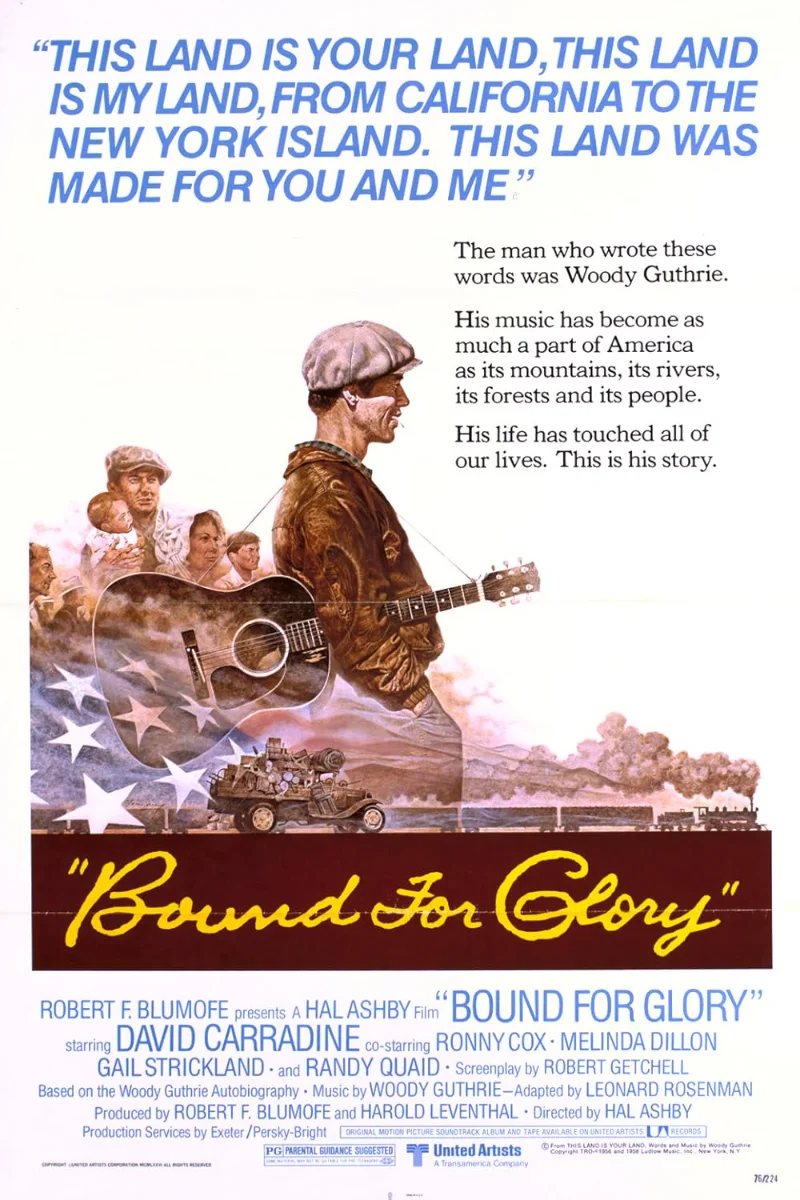
Released in 1976, Bound for Glory, directed by Hal Ashby, represents a significant intersection of American cinema and social consciousness during a politically charged era. As a biopic about folk singer Woody Guthrie, the film serves as a reflective exploration of the Great Depression, a period characterized by profound social upheaval and economic despair. Ashby, who is known for his sensitive portrayals of marginalized voices and countercultural narratives, uses this film as a platform to highlight not only Guthrie's music but the struggles of ordinary Americans. This film fits within Ashby's broader body of work that often champions the human spirit amid adversity, and it stands as a testament to his ability to weave poignant social commentary with a respect for individuality.
Critical consensus around Bound for Glory points to its authentic portrayal of a storied American figure while delving into the broader themes of identity, escape, and the quest for social justice. The film is imbued with a poetic quality that captures the essence of folk music as both a form of artistic expression and a vehicle for societal change. Critics have noted its impressive visual style, which echoes the raw, authentic feel of the era it depicts. The cinematography by Haskell Wexler is often lauded as visually splendid, creating striking imagery that enhances the narrative of Guthrie’s journey across a landscape laden with hardship yet rich in cultural heritage.
At its core, Bound for Glory transcends mere biography; it serves as a road movie mapping the physical and emotional landscapes of its characters. The film invites audiences to journey alongside Guthrie as he travels through the American heartland, confronting the realities of abuse, poverty, and the search for identity. It cleverly layers feminist themes within the narrative, introducing a complex female perspective that challenges traditional gender roles during the Depression. This nuance positions the film not only as a reflection of one man’s life but also as a commentary on the lives of women who played essential yet often overlooked roles in these historical narratives.
The film's exploration of social issues is both grave and dignified, presenting a nuanced and authentic view of a decaying America grappling with its soul. While some critics describe the storytelling as scattershot at times, the overall sense is that Ashby achieves a balance between the fluky moments of life and the profound. This ambivalence allows viewers to connect with the struggles depicted, creating an emotional resonance that persists beyond the film’s concluding frames. Ultimately, Bound for Glory stands as an impressive work in the pantheon of American cinema, revealing not only the beauty of Guthrie's songs but the indomitable spirit of those who seek to voice their stories amid adversity.