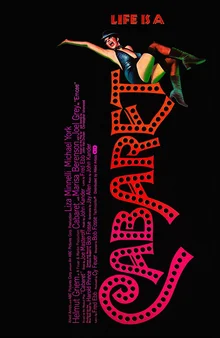
When Bob Fosse's Cabaret was released in 1972, it emerged at a pivotal moment in cinema history, blending bold storytelling with provocative themes that still resonate today. Fosse, known for his innovative choreography and stylish direction, crafted a film that drew heavily from John Van Druten's play and Christopher Isherwood's writings. This adaptation not only showcased his signature visual flair but also underscored a crucial societal commentary, encapsulating the decadence of 1930s Berlin alongside the looming specter of political unrest. Through meticulous production design, vibrant musical numbers, and a daring narrative, Fosse established Cabaret as both a reflection of its time and an exploration of identity and freedom.
At the heart of Cabaret is the Kit Kat Club, a symbolic microcosm of societal turmoil, where characters navigate their desires against a backdrop of rising Nazism. The film's critical consensus underscores its ability to encapsulate despair and hope within the framework of love and personal identity. At its core, Cabaret invites viewers to explore the dual nature of human experience, where joy and tragedy coexist. The captivating performances, especially by Liza Minnelli as Sally Bowles, give life to themes of escapism and the pursuit of happiness, revealing the heartbreaking reality behind the glittering façade of cabaret life.
Notably, this film stands out not only for its vibrant aesthetics but also for its depth, as Fosse integrates social commentary with personal narratives. The juxtaposition of the club's gaiety and the harsh realities outside its walls serves as a reminder of the fragility of freedom. Critics have praised the film's innovative structure, where musical numbers enhance the storytelling rather than serve merely as entertainment. This approach heightens the emotional stakes and imbues the narrative with an urgency that resonates with contemporary audiences, making Cabaret a significant touchstone in cinematic history.
The themes of love and identity are poignantly intertwined throughout Cabaret, with each character representing a unique facet of the human condition. From Sally Bowles' pursuit of freedom to the complex relationship between her and the American writer, Clifford, the film takes viewers on an introspective journey into self-discovery. It reveals that love, while beautiful, can be fraught with pain and uncertainty, echoing the tumultuous socio-political landscape of the time. Similarly, the film’s exploration of identity confronts societal expectations and the search for authenticity amidst external chaos, further emphasizing its relevance across generations.
In concluding this reflection, Cabaret remains a beacon of innovative cinema, capturing the delicate threads between decadence and despair. Fosse's stylish direction, combined with the film's captivating performances and complex themes, ensures it retains a significant place in both film history and cultural discourse. As it unfolds, the narrative encourages audiences to question what lies beneath the surface of their own lives, making the experience both timeless and hauntingly poignant.