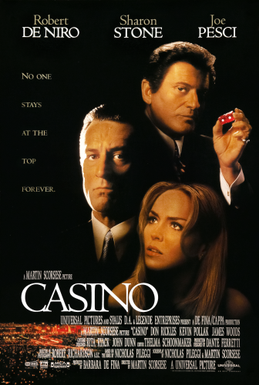
Martin Scorsese's Casino stands as a quintessential entry in the canon of American cinema, reflecting the intricate and often darkly romantic view of Vegas as a microcosm of desire and destruction. Released in 1995, the film serves as a vivid palette for Scorsese's exploration of the rise and fall of the mob, the glitzy allure of Las Vegas, and the personal dramas that unfold amidst this backdrop. Drawing from true events, Casino delves into the symbiotic yet contentious relationship between organized crime and the development of Las Vegas, revealing how ambition and betrayal fuel the flames of both success and demise. This film is not just a historical narrative; it is a character study that places moral decay at the forefront of the American Dream, illustrating the relentless pursuit of wealth and power.
Critics have universally praised Casino for its exhilarating energy and dazzling aesthetics. Scorsese employs a style that is both immersive and glorifying, presenting Las Vegas as a playground for the ambitious and a graveyard for the foolish. The film is replete with moments that leave the viewer breathless, be it through its thrilling storytelling, the impeccable performance of its cast, or the meticulous attention to detail in recreating the era. With uniformly excellent portrayals from Robert De Niro, Sharon Stone, and Joe Pesci, the characters emerge as representatives of a morally ambiguous world, where trust is fleeting, and betrayal is a constant threat.
At its core, Casino is a film about ambition. It depicts the unyielding desire for success that drives its characters to astonishing heights, while simultaneously illustrating the precariousness of their achievements. Scorsese's storytelling reveals how the glimmer of success often masks the underlying violence and treachery that accompany such a lifestyle. The rise of Ace Rothstein (De Niro) and the turbulent life of Ginger McKenna (Stone) serves as a cautionary tale about the impact of personal ambition in a landscape that rewards ruthlessness. Here, the glamour of Las Vegas becomes a facade, covering the chaos that lies beneath the surface.
In many ways, Casino parallels Scorsese's previous works in its thematic exploration of morality, power, and identity. Like Goodfellas, this film encapsulates the stories of individuals ensnared by their aspirations, yet it also offers a far more expansive view of systemic corruption. The narrative structure weaves together the personal and the political, depicting not only individual tragedies but also the broader historical context of mafia involvement in Las Vegas. This intersection of the personal with the historical allows viewers to glean insights into the intricate mechanisms that enable the cycle of rise and fall.
Ultimately, Casino serves as a lens through which to examine not only the idiosyncrasies of its characters but also the allure of a world built on deception and ambition. In capturing the essence of the Las Vegas underworld and the consequences of betrayal, Scorsese crafts a mesmerizing narrative that resonates deeply, even decades later. Through its impressive craftsmanship and thoughtful examination of human nature, Casino remains an essential commentary on the complexities of success in a world marred by moral ambiguity.