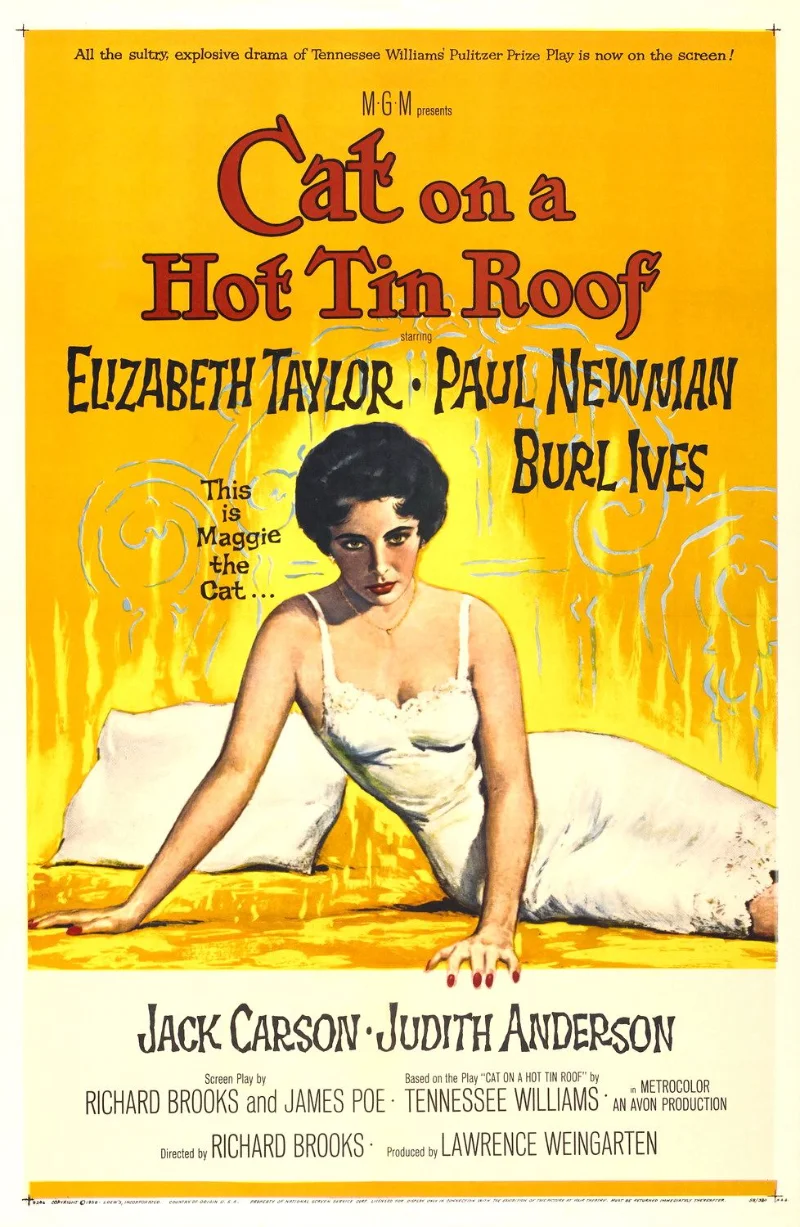
Cat on a Hot Tin Roof, a film directed by Richard Brooks in 1958, stands as a distinguished entry in the pantheon of American cinema, echoing the complexities of Tennessee Williams' original play. This adaptation captures the intricacies of familial relationships and the societal norms of the era, addressing issues that have perennial relevance. As one of Brooks' most impactful works, it showcases his ability to translate the raw emotional tension of Williams’ narrative to the screen, bridging the gap between stage and film with masterful precision. Additionally, the film is steeped in a historical context that reflects mid-20th century America's struggle with sexual identities and repressions, further amplifying its resonance today.
The critical consensus surrounding Cat on a Hot Tin Roof encapsulates its potent exploration of themes such as family conflict, truth versus illusion, and the painful nuances of sexual repression. At its core, the narrative revolves around the Pollitt family, where buried secrets and unspoken sorrows surface during the grappling with the patriarch's illness. This family conflict serves as the engine driving the film, revealing deeply-rooted dynamics, both passionate and toxic. Reviewers have noted the film's compelling portrayal of self-hatred and homosexuality, elements that underscore the broader societal pressures that characters endure, ultimately rendering their struggles more impactful and relatable.
Visceral performances by leads Elizabeth Taylor and Paul Newman elevate the material, as each character grapples with their own truth and illusions. Taylor’s depiction of Maggie captures the desperation of a woman seeking connection in a world of denial and despair, while Newman’s Brick embodies a complex interplay of vulnerability and bravado, showcasing self-recrimination that resonates with audiences. The interplay between these masterful performances serves to highlight the film's exploration of sexual tension and family dysfunction, allowing viewers to grapple with their own perceptions of truth and authenticity.
In the tapestry of film history, Cat on a Hot Tin Roof is not merely an adaptation of a play but a powerful cultural commentary that challenges audiences to confront uncomfortable truths about their own lives. The film’s ability to navigate themes of repression and conflict, while remaining rooted in the emotional experiences of its characters, cements its status as an iconic piece of cinema. Furthermore, its historical context amplifies its relevance, offering a critical lens through which contemporary audiences can examine ongoing conversations about identity, acceptance, and the human condition. As such, this film remains a compelling and effective exploration of the conflicts that define us, making it a memorable and necessary watch.