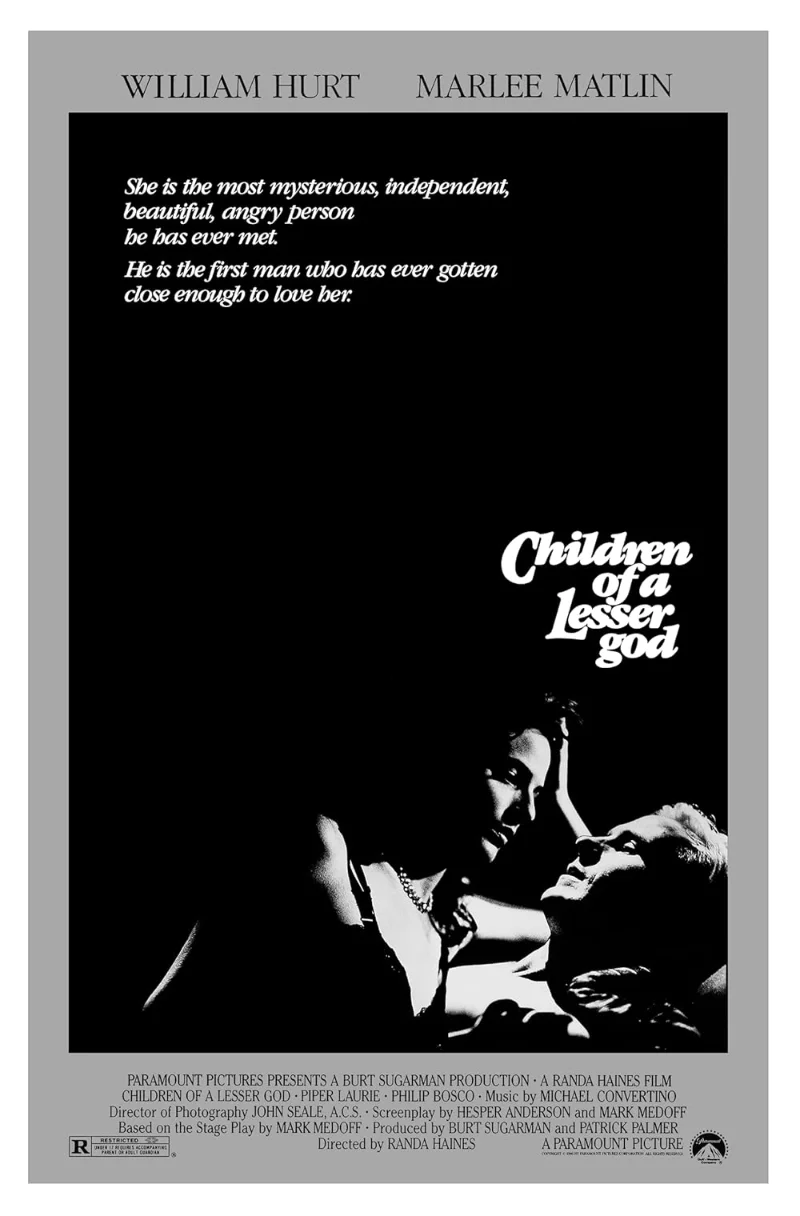
Children of a Lesser God, directed by Randa Haines in 1986, stands as a significant landmark in cinema history, particularly in its representation of the deaf experience and culture. This film marks a poignant moment where deafness is not merely a background detail, but an integral part of its storytelling, positioning the deaf community at the forefront of a classic love story. The film's success can be attributed to its adroit adaptation from Mark Medoff's acclaimed play, preserving the intimate yet powerful dynamics of its characters while transitioning them from stage to screen. Haines’ beautifully directed vision fosters a nuanced exploration of communication barriers, love across differences, and the deep emotional currents that bind individuals regardless of their differing abilities.
Critics have lauded Children of a Lesser God for its ability to resonate deeply with audiences, highlighting the film’s dramatic intensity and the remarkable performances that encapsulate its vibrant characters. The lead portrayals are both sincere and powerful, offering insights into the complexities of identity and self-determination while navigating the challenges that arise from communication difficulties. The film deftly illustrates personal growth and the forging of relationships in the face of obstacles, suggesting that love can bridge even the most daunting divides. This thematic richness has led to its classification as a classic, echoing the experiences of marginalized communities and emphasizing the necessity of representation in media.
The overarching theme of adaptation challenges is particularly significant, as the film invites viewers to reflect on accessibility within the arts. Haines manages to maintain a sense of artistic responsibility, presenting the deaf experience not as a tragedy but as a vibrant aspect of life, thus altering audience expectations of narratives surrounding disability. The film's emotional depth is further enhanced by its exploration of deaf culture, challenging stereotypes while providing a platform for the voices of those often relegated to the periphery of mainstream narratives.
Decades after its release, Children of a Lesser God continues to resonate in contemporary discourse around representation and inclusivity in cinema. Its cultural impact is undeniable, as it not only captivates through its passionate storytelling but also serves as a call to action for creators to prioritize authentic narratives. The film embodies a struggle for personal and collective identity, making it a remarkably durable entry in film history and ensuring its standing as an anniversary production that speaks to ongoing conversations about accessibility and artistic integrity. In a world that is still grappling with the nuances of communication and connection, the story remains ever relevant, reminding us that the essence of love is found in understanding and mutual respect.