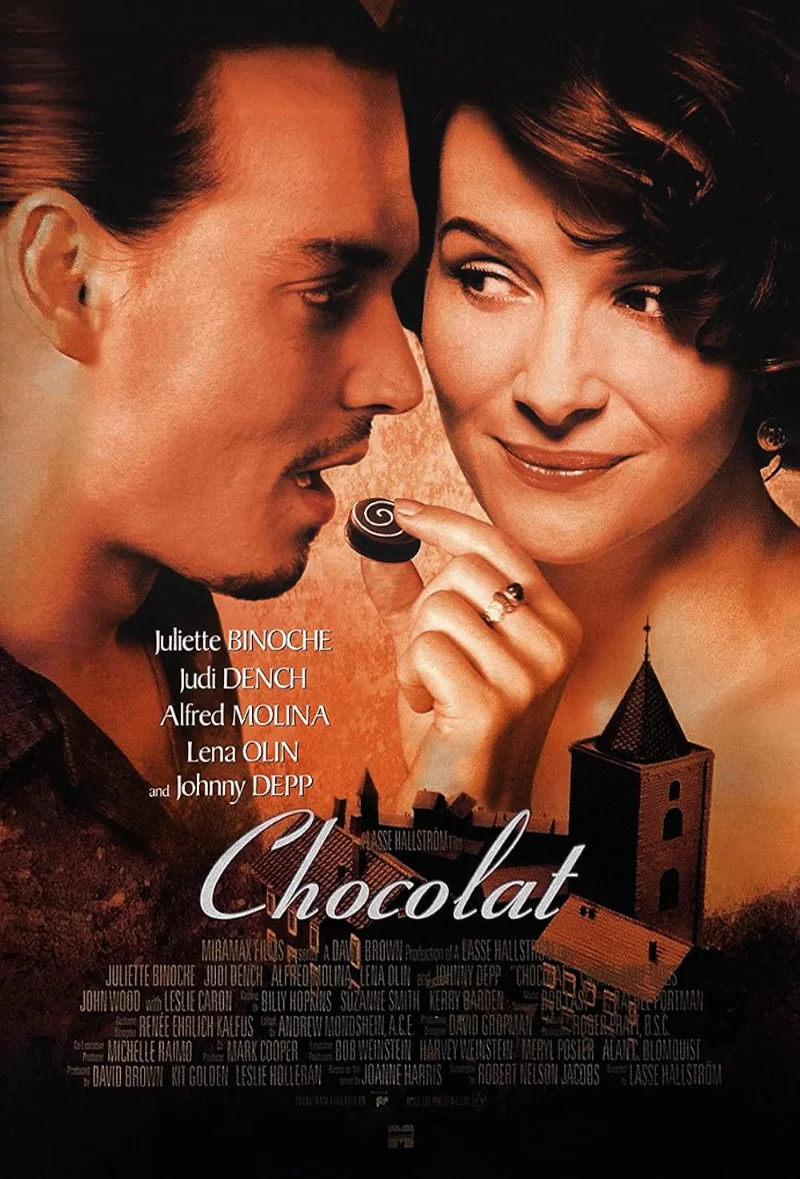
Released in 2000 and directed by Lasse Hallström, Chocolat stands as a compelling exploration of the intersections between personal desire and communal expectation. Set in the quaint French village of Lansquenet-sous-Tannes, the film arrives amidst a cinematic landscape embracing stories of transformation and magical realism. Hallström, known for his ability to capture the human condition with a gentle touch, weaves a narrative that invites audiences to consider the tensions between tradition and modernity, enchantment and reality. Chocolat ultimately serves as a testament to the ways in which a simple act, such as making chocolate, can ignite profound changes in people’s lives and relationships.
At the heart of the film lies the character of Vianne Rocher, played enchantingly by Juliette Binoche, who arrives in the village with her daughter to open a chocolaterie. This unexpected venture acts as a catalyst, challenging the conventions of the town, which is governed by rigid moral codes and largely influenced by its conservative leader, the Comte de Reynaud, portrayed with a complex blend of charm and menace by Alfred Molina. The film's critical consensus praises its intimate portrayal of small-town dynamics, where the arrival of something as whimsical and heartfelt as chocolate incites both resistance and eventual acceptance among its inhabitants. These characters undergo personal transformations, revealing how individual desires clash with societal norms, and how love, friendship, and indulgence can thrive amidst restriction.
Chocolat adeptly utilizes the device of magical realism, inviting viewers into a world where the whimsical flourishes of Vianne's chocolates serve as metaphors for liberation and transformation. The film paints serenity alongside sensual pleasure, elevating the experience of chocolate into something nearly transcendent. It creates a textured narrative landscape where the aroma of cocoa wafts through the air, mingling with deeper themes of paganism and Christianity, as the town grapples with its outdated beliefs. This juxtaposition not only enriches the film's charm but also poses meaningful questions about faith, indulgence, and the nature of personal freedom.
The critical descriptors that frequently accompany Chocolat, charming, whimsical, and heartfelt, are indicative of its overall tone and impact. Audiences are drawn into an inviting atmosphere that balances lightheartedness with poignant moments of human connection. The film’s ability to evoke a sense of nostalgia and warmth is underscored by Hallström's expert direction, underscoring how shared experiences and communal bonds can be both tender and transformative. Through Vianne’s journey, viewers are reminded of the power of love and connection in overcoming stagnation and fear, suggesting that sometimes, a little sweetness is all that is needed to change the world.
In bridging themes of transformation and the interplay of paganism and Christianity, Chocolat not only captivates but also encourages reflection on personal identity in the face of societal pressures. As the villagers evolve alongside Vianne and her chocolates, they illustrate the extraordinary potential for change within the most ordinary of existences. In the landscape of cinema history, Chocolat holds a treasured place, showcasing how a film can evoke joy, provoke thought, and ultimately, inspire audiences to embrace both the delightful and the transformative elements of life.