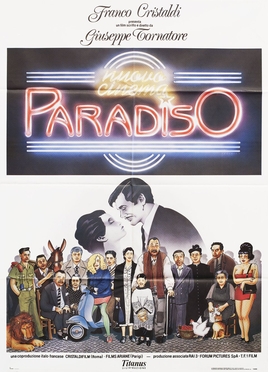
Cinema Paradiso, directed by Giuseppe Tornatore, stands as a heartfelt testament to the power of film and the memories it evokes, securing its place as a lyrical ode that resonates deeply with cinephiles and general audiences alike. Released in 1988, during a time when Italian cinema was on the brink of change, Tornatore's work not only drew from the rich traditions of the past but also paved the way for new narratives within the cinematic landscape. By intricately weaving together nostalgia for a bygone era of cinema and the bittersweet pangs of coming-of-age, Cinema Paradiso captivates viewers with its emotional depth and complex character relationships, marking it as a pivotal work in Tornatore's illustrious career.
The film's central narrative unfolds in the fictional Sicilian village of Giancaldo, where young Salvatore, known as Toto, develops a profound bond with the local projectionist, Alfredo. This mentorship encapsulates themes of friendship and loss, linking the passage of time with the evolution of cinema itself. Toto's journey from innocent child to a jaded filmmaker is underscored by nostalgic reminiscence, as the movie interlaces memories of youth with the painful acceptance of loss and the inevitable transformations of adulthood. In this regard, Cinema Paradiso serves as an evocative exploration of how our experiences shape our passions, particularly in the context of cinema, which Tornatore treats with reverence.
Critics have consistently celebrated Cinema Paradiso for its sentimental portrayal of love, of film, of friends, and of formative experiences. The film conjures an emotional tapestry that allows its audience to reflect on their own relationships with art and memory. With a narrative drenched in nostalgia, Tornatore invites viewers to consider how cinema mirrors life, both capturing moments of joy and articulating the melancholic undertones of loss. This balance between emotional highs and lows reinforces the notion that film is not merely a form of entertainment but a vessel for shared human experiences.
Moreover, Cinema Paradiso amplifies its themes through a masterful soundtrack by Ennio Morricone, whose score elevates the film's poignant moments and amplifies its romantic essence. This musical landscape enriches scenes, allowing the viewer to immerse themselves fully in the emotional pull of Toto's memories. As the film winds through various stages of Toto's life, each moment is underscored by a longing for connection, which is deeply felt in both the narrative and the visual storytelling.
Ultimately, Cinema Paradiso navigates the interplay between nostalgia and the passage of time, illustrating how our past shapes our present and future. Tornatore’s cinematic love letter not only pays homage to the art of film but also encourages a personal reflection on one’s own journey. The film resonates as a bittersweet reminder that while we may lose those we hold dear, the memories we create, much like the films we love, persist, illuminating the halls of our hearts and minds long after the credits have rolled. In this way, Cinema Paradiso remains a timeless classic, inviting generations to reminisce on the universal themes of friendship, loss, and the nostalgic embrace of cinema.