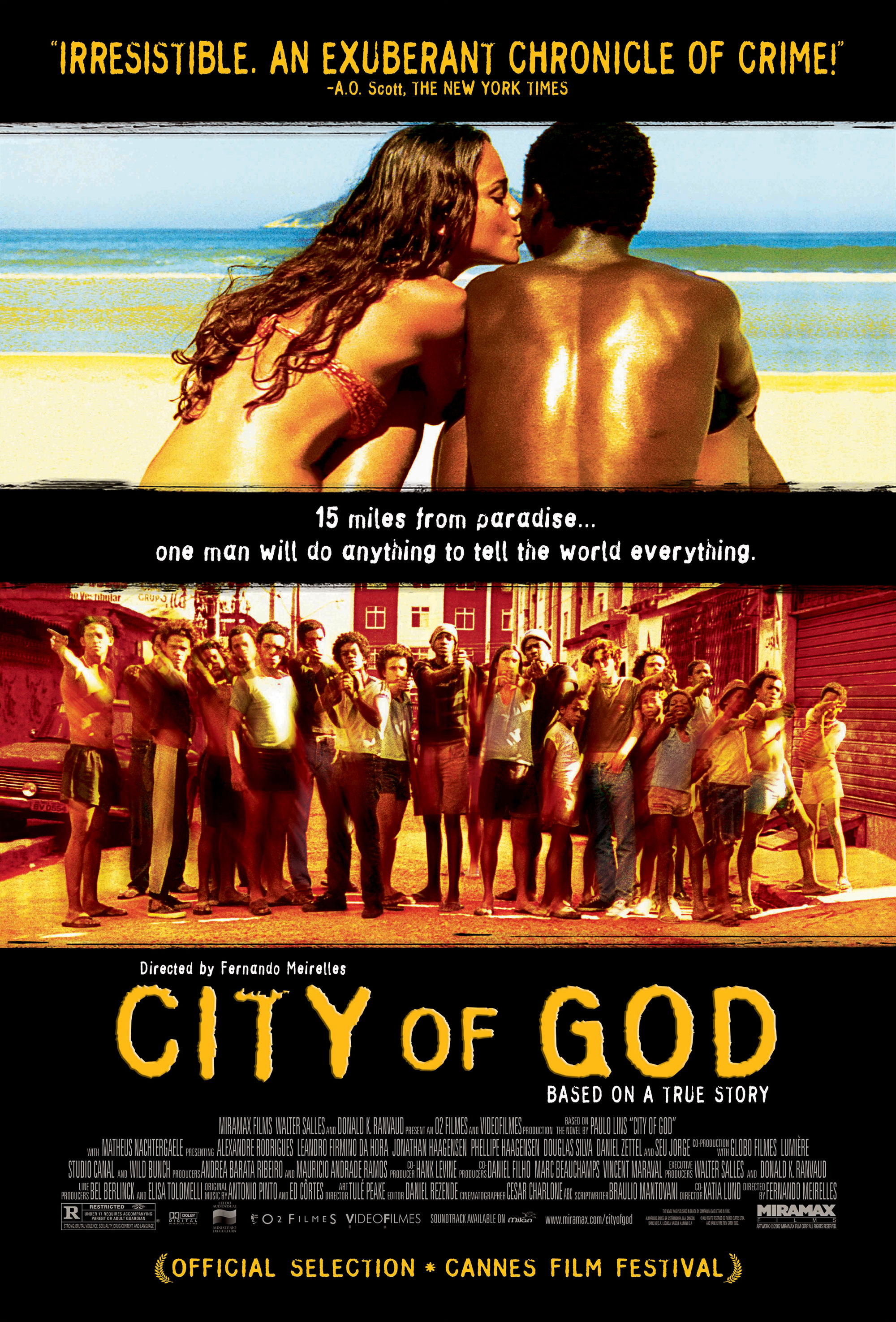
City of God, directed by Fernando Meirelles and co-directed by Kátia Lund, stands as a pivotal film in the canon of South American cinema and a landmark in contemporary film history. Released in 2002, it not only catapulted new Brazilian talent into the international spotlight but also marked a significant moment in the evolution of New Latin American cinema. This film offers an unflinching look at the violent and chaotic environment of the slums of Rio de Janeiro, an urgent narrative that resonates with the intensity and rawness of youth caught in a cycle of poverty and crime. Through its innovative cinematic techniques and deep exploration of moral ambiguities, City of God has earned its place as a gangster masterpiece, capturing the complexities of urban life and survival in a way that is breathtaking in both its visual style and emotional weight.
Critics have universally praised City of God for its electrifying storytelling and vivid portrayal of gang warfare, along with its coming-of-age themes that resonate on a universal level. The film's narrative unfolds with fast cutting and a fluid hand-held camera style, creating a sense of urgency that immerses the audience in the harrowing details of life in the favelas. Viewers are thrust into a world where violence is a constant presence, where choices are driven by a staggering mix of passion, desperation, and survival, making the film not just an engaging story but also a chilling reflection on societal issues. The distinct style, characterized by harsh lighting and an MTV-inspired aesthetic, enhances the film's potency, making the experiences of its characters both thrilling and moving.
At its core, City of God explores the moral ambiguities faced by its characters, young men and women who navigate the treacherous realms of crime, loyalty, and betrayal. The film does not flinch from depicting the brutal realities of gang life, presenting its characters in all their raw humanity. As they grapple with love, ambition, and the relentless pull of their environments, audiences are invited to witness their struggles in a medium that is as intoxicating as it is unsettling. This complexity allows the film to transcend a simple crime narrative, instead presenting a nuanced exploration of the socio-economic factors that foster such violence and chaos.
The critical consensus reflects not only a recognition of City of God as a compelling narrative but also an appreciation for its cinematic innovation. The film employs a sophisticated blend of aesthetics and storytelling that has influenced many filmmakers and has left a lasting legacy in cinema. As a brutal yet beautiful portrayal of life in the Brazilian slums, it appeals to a wide audience, effectively capturing the urgent realities of urban life while also providing poignant commentary on human resilience. Meirelles' careful curation of the film's rhythm and pace produces a thrilling experience, accentuated by the pulsating beat of the city, thus further engaging and provoking its viewers.