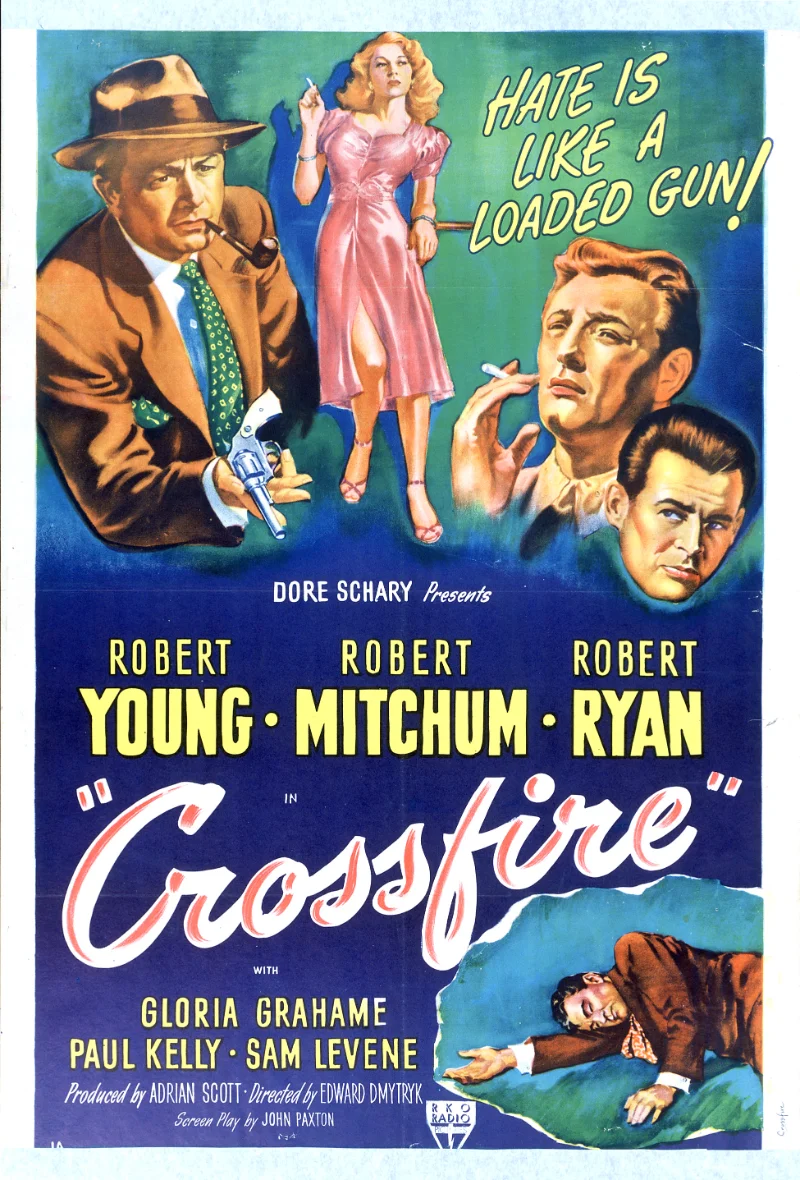
Crossfire, directed by Edward Dmytryk in 1947, stands as a significant work within the landscape of film noir and American cinema in the post-World War II era. As Dmytryk navigates the intricate dynamics of thriller tropes, this film unearths the darker sides of social issues, specifically focusing on anti-Semitism. It emerges from a context where the turmoil of war has transformed societal values and exposed the persisting prejudices lurking beneath the surface of American life. With a tense narrative and a psychological depth often seen in the genre, Crossfire not only reflects the tensions of its time but also cements Dmytryk's reputation as a director willing to examine uncomfortable truths.
Critics have often lauded Crossfire as a classic, and in many respects, it serves as a definitive exploration of the psychopathic manifestations of bigotry. The film's premise revolves around a murder mystery that intertwines with themes of hatred and scapegoating, making it a chilling commentary on the repercussions of prejudice. The characters are deeply flawed, encapsulating the paranoia and moral ambiguity prevalent in 1940s cinema. Audiences are taken on a thrilling ride that reveals the dangers of irrational hatred, showcasing how easily individuals can be turned against one another by their own biases.
In the wake of World War II, sentiments surrounding nationalism and foreign conflicts, such as those associated with Northern Ireland and the IRA, also impacted the filmic discourse of the time. The emotional and societal scars left by the war influenced how characters interacted and responded to societal pressures. Crossfire strips away any glamour typically associated with film noir, exposing a raw and unsettling truth about the darker undercurrents of American society. This visceral engagement with antisemitism not only places the film within a critical location in cinema history but also resonates with viewers who recognize the enduring nature of these issues.
Dmytryk's nuanced direction allows for moments of intense drama while maintaining an underlying critique of societal norms. The film's layout can be understood as a working definition of the thriller genre, bringing the audience into the claustrophobic fears that can pervade communities stricken with paranoia and hate. As the narrative unfolds, viewers are invited to confront their own prejudices alongside the characters, making Crossfire not just a story about murder, but also a reflective examination of collective morality.
As film scholars and critics continue to analyze cinema from this period, Crossfire remains an essential touchstone. It encapsulates the historical and social anxieties of its time, delivering a powerful message against the backdrop of thrilling suspense. Dmytryk's work persists in giving voice to the perils of bigotry and ignorance, forming a critical part of not only film noir but also of a broader social agenda that seeks to unmask hate within society.