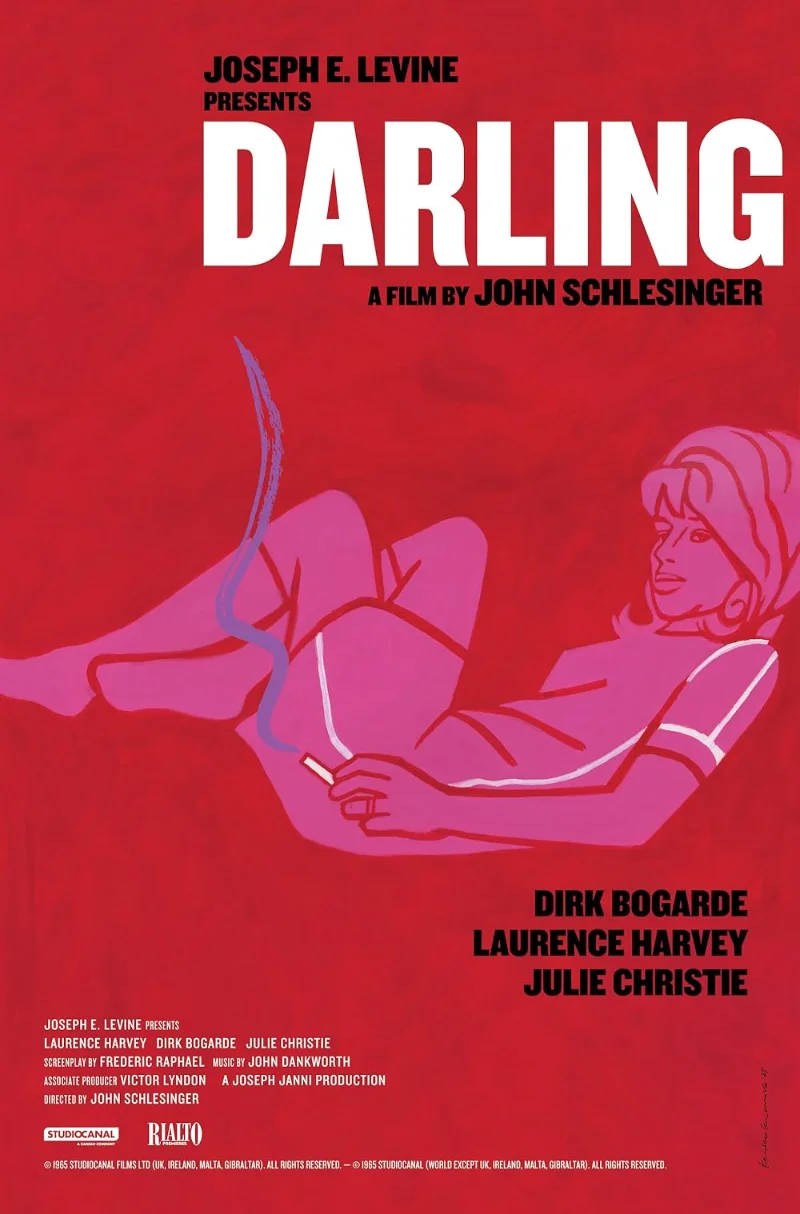
John Schlesinger’s Darling (1965) occupies a significant place in the canon of British cinema, particularly within the framework of the Swinging Sixties. Emerging during a time of cultural upheaval, the film reflects the era's vibrant aesthetic while delving into deeper themes of ambition, survival, and the often illusory nature of fame. Schlesinger, known for his ability to merge social critique with compelling narratives, crafts a near-documentary portrait of a woman navigating the tumultuous landscape of London. Through the lens of his leading actress, Julie Christie, Darling illustrates the shifting dynamics of identity and love against the backdrop of a society in transition.
Critics have widely recognized Darling as a romantic satire that cleverly encapsulates the zeitgeist of its time. Julie Christie’s portrayal of Diana, a working-class model seeking fame and fortune, encapsulates the disillusionment that accompanies the pursuit of glamor. The film navigates her rise to success while simultaneously unveiling the isolation and betrayal that come with celebrity. Schlesinger's depiction of urban decay mirrors the characters' inner turmoil, creating a psychological tension that is both eerie and compelling. This blending of themes resonates strongly, showcasing not only the allure of the Swinging London scene but also the darker undercurrents that accompany it.
The thematic exploration of sexuality and the complexities of interpersonal relationships play a prominent role in Darling. As Diana juggles multiple romantic entanglements, the viewer witnesses the often transactional nature of love in a milieu obsessed with image and societal status. The relationships depicted are fraught with jealousy, manipulation, and betrayal, emphasizing the film's critique of superficiality in an age fixated on external appearances. Schlesinger’s use of black-and-white cinematography heightens this sense of psychological horror, intertwining moments of beauty with a creeping sense of dread, making the audience acutely aware of the fragility of Diana's world.
In Darling, Schlesinger effectively combines the celebration of youth culture with a biting social satire, typical of the Angry Young Men movement in British cinema. The film does not merely reflect society; it scrutinizes it, offering a stark commentary on the relentless pursuit of fame amid the backdrop of a rapidly changing London. It invites viewers to question the cost of ambition and the fleeting nature of success, as well as the impact of an environment that simultaneously elevates and isolates its protagonists.
The legacy of Darling varies from a nostalgic recollection of a vibrant era to a chilling reminder of the personal cost of societal pressures. Julie Christie’s career-defining performance and Schlesinger’s nuanced direction ensure that this film remains a critical touchstone for understanding the interconnected themes of male-female dynamics, individuality versus conformity, and the haunting specter of isolation that often accompanies success. Ultimately, Darling is more than a film about ambition; it is a profound examination of identity, social status, and the darker aspects of human experience that entangle us all.