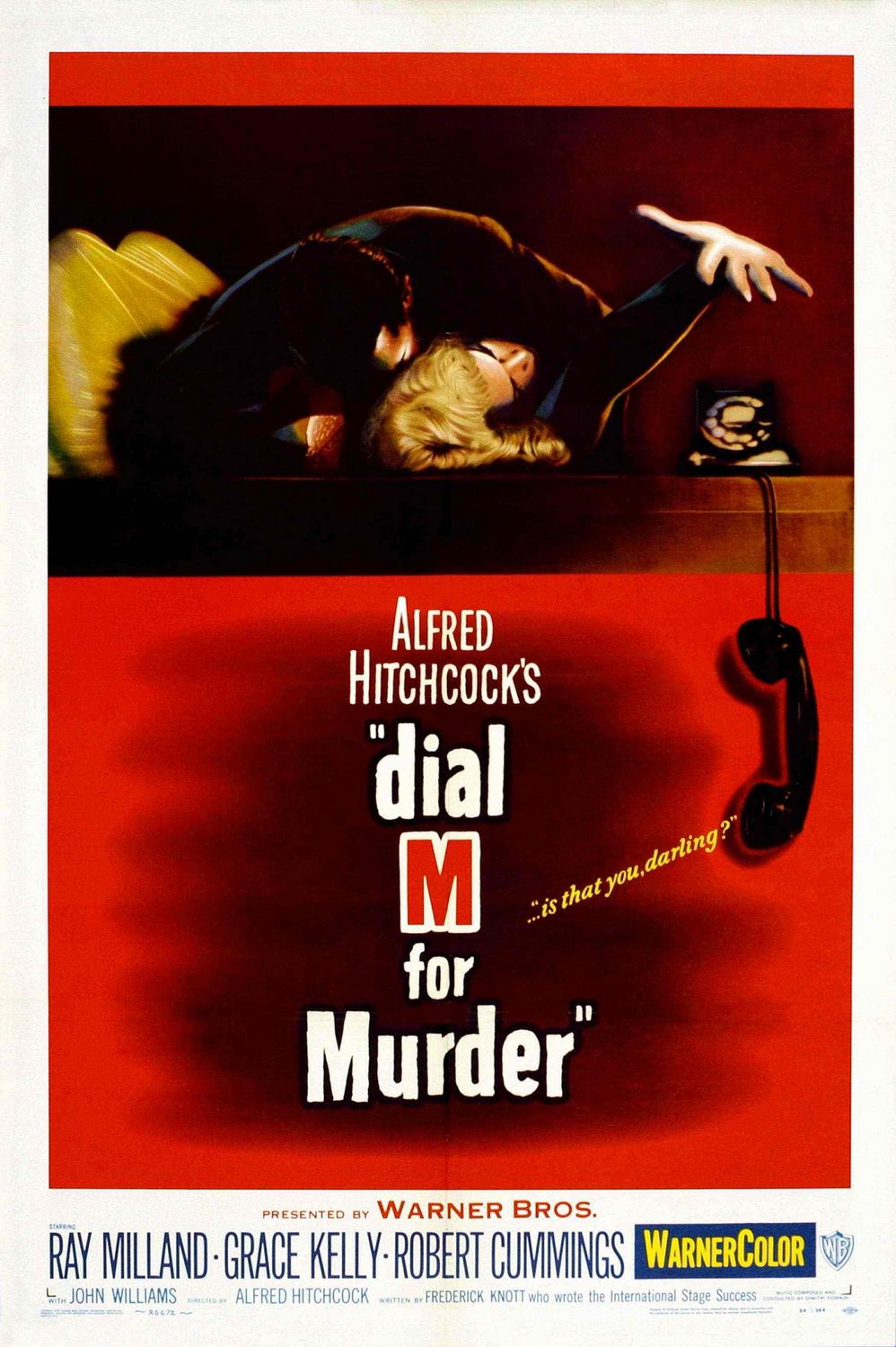
Alfred Hitchcock's Dial M for Murder, released in 1954, stands as a notable entry in the canon of suspense cinema, skillfully highlighting the director’s mastery of tension and intrigue. This film was notable for its transition into 3D filmmaking, a gimmick that was embraced at the time, yet Hitchcock utilized this technology to enhance the claustrophobic atmosphere that is central to the story's themes. Set within the mundane confines of suburban life, the film explores the dark undercurrents lurking beneath the polished surface of domesticity, a recurrent motif in Hitchcock's work. By placing the deceitful nature of relationships at the forefront, Dial M for Murder reinforces the notion that even the most seemingly perfect lives can be riddled with betrayal and treachery.
At the heart of Dial M for Murder is a meticulously crafted murder plot that ensnares audiences with its intricate twists and turns. The narrative revolves around Tony Wendice, whose cold calculation leads him to orchestrate his wife Margot’s murder, revealing his profound sense of betrayal. The tension escalates not only through the threat of violence but through the psychological manipulation inherent in their marriage. Infidelity becomes a catalyst for justice and vengeance, serving as a grim reminder of how far love can deteriorate when marred by secrets. Critics have noted how this bleak portrayal of romantic relationships may elicit discomfort but ultimately serves to amplify the film’s suspenseful nature, culminating in a tense showdown that echoes the unpredictability of human motivations.
Hitchcock's use of confined spaces adds a layer of intimacy and claustrophobia, inviting audiences to witness the chilling interactions among the protagonists. The film’s setting, a limited number of locations, creates an atmosphere that is palpably tense, with each passing moment rich with anxiety and foreboding. Every character is crafted with precision, and there is a darkly humorous edge to the interactions as deception unfolds. As viewers, we are forced to confront the unsettling reality that the world of Dial M for Murder mirrors our own: a landscape filled with hidden agendas, where trust can swiftly pivot to betrayal.
Critically, Dial M for Murder has positioned itself as a clever exploration of human deceit, wrapped in a suspenseful narrative that engages the audience's intellect. The film has been lauded for its intricate plotting, forcing viewers to piece together the elements of the murder plot alongside the characters themselves. However, some reviews note an anti-climactic resolution, which may seem dissonant amid the buildup of tension. Nevertheless, this deliberation on justice can be interpreted as a commentary on the often unpredictably bleak nature of real life, where outcomes do not always align with our expectations. As such, Hitchcock's film invites reflection not just on the events depicted, but rather on the broader implications of morality and consequence in a deceptive world.
What persists in the cultural memory of Dial M for Murder is its blend of clever storytelling and a biting critique of suburban life, as it dissects the disconnection between appearance and reality. The film resonates with audiences familiar with the trope of facades shattering, leaving only disorder in their wake. Through his exploration of betrayal and justice, Hitchcock offers a critique that remains relevant, echoing concerns in contemporary society regarding trust and the darkness that can lurk behind closed doors. This complex interplay of suspense and human emotion solidifies Dial M for Murder as a significant artifact of Hitchcock’s illustrious career, showcasing his unrivaled ability to hold a mirror to the complexities of the human condition.