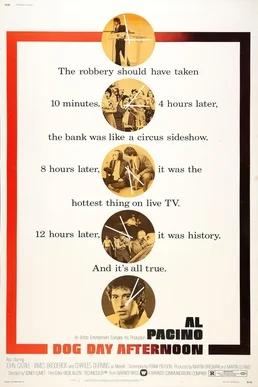
In the canon of American cinema, Sidney Lumet's Dog Day Afternoon stands out as an inventive examination of the intersection between personal crisis and societal scrutiny. Released in 1975, during a transformative period for both film and culture, it weaves together elements of working-class struggle, media sensationalism, and the complexities of identity in a gritty, documentary-like fashion. Lumet's penchant for character-driven narratives shines through as he presents a story that resonates profoundly with audiences while encapsulating the visceral reality of American life.
Critical consensus around Dog Day Afternoon often highlights its masterful blend of comedy and tragedy, a tone that underpins the protagonist, Sonny, played remarkably by Al Pacino in what many consider his best performance. The film delves deep into the complexities of his character, evoking sympathy for his misguided yet earnest attempts to navigate a desperate situation. As the heist unfolds, Lumet invites viewers to contemplate the emotional ambiguities surrounding Sonny’s motivations, challenging the notion of heroism within a chaotic and often unforgiving landscape of fame and public scrutiny.
The film also comments on the nature of celebrity culture and media sensationalism, crafting a narrative that reflects society's obsession with notoriety. As the hostage situation spirals, a cavalcade of spectators and cameras descends upon the scene, transforming a personal ordeal into a spectacle for the masses. This irreverent critique of how American society consumes tragedy and misfortune exposes the voyeuristic tendencies of the media, practically rendering the film as a precursor to contemporary discussions about the ethics of reporting and the public's insatiable appetite for sensationalism.
Moreover, Lumet lovingly renders the everyday life of his characters, infusing the screenplay with a gritty realism that elevates the emotional stakes. The film unfolds with an unpredictable rhythm that oscillates between moments of laughter and poignant introspection. The urgency of the cinematography contributes to this effect, capturing the claustrophobic and chaotic essence of the hostage crisis. By embracing the quirky, idiosyncratic elements of his characters, Lumet crafts a narrative that is as empathetic as it is entertaining, ensuring viewers are vested in the outcome of an otherwise absurd situation.
In retrospect, Dog Day Afternoon encapsulates a pivotal moment in cinema history, as it deftly intertwines social commentary with rich character exploration. It challenges audiences to confront their own perceptions of morality and the complexities of human ambition, all while offering a keen insight into working-class life in America. As both a product of its time and a timeless reflection on the human condition, the film remains a powerful portrait that continues to resonate with contemporary audiences.