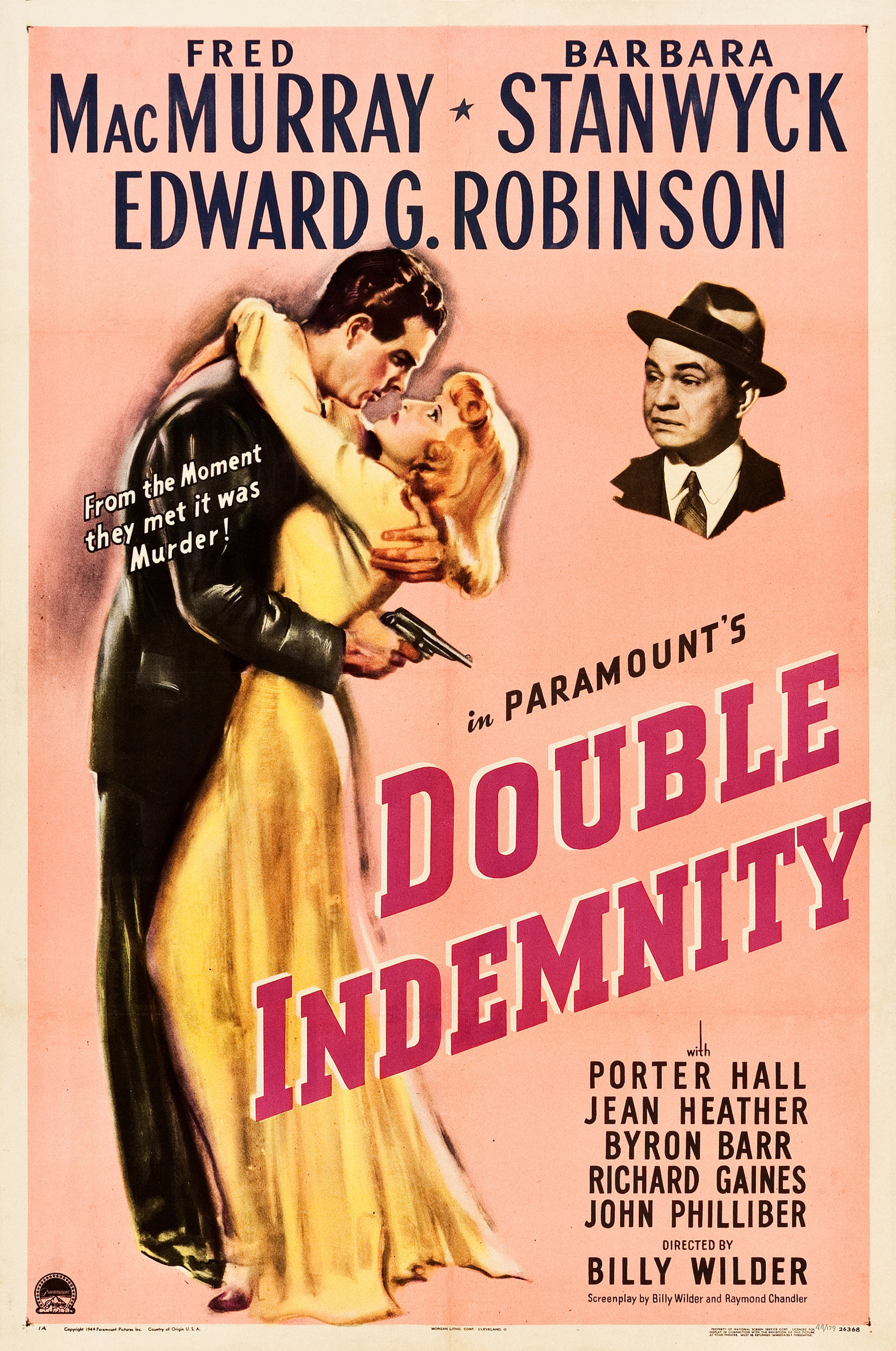
In the pantheon of classic film noir, Billy Wilder's Double Indemnity stands as a towering masterpiece that not only defines the genre but also encapsulates the dark, gritty essence of post-war American cinema. Released in 1944, at a time when the noir aesthetic was coming into full bloom, Double Indemnity showcased Wilder's masterful touch in storytelling and character development. The film, adapted from James M. Cain's novella, dives deep into the murky waters of greed, betrayal, and the moral decay lurking beneath the surface of suburban life, rendering it a timeless tale of crime and its inevitable consequences. Wilder's direction pairs brilliantly with the sharp and incisive screenplay co-written by Raymond Chandler, creating a taut and well-paced narrative that has influenced countless films that followed.
Central to Double Indemnity are its potent themes of greed and deception, embodied by the archetypal femme fatale, Phyllis Dietrichson, played with a killer-cold charm by Barbara Stanwyck. Her character epitomizes the destructive potential of desire and ambition as she entices insurance salesman Walter Neff, portrayed by Fred MacMurray, into a sinister plot of murder and fraud. The film dissects their illicit relationship, deftly illustrating the dynamics of power and manipulation that often characterize noir narratives. Neff's gradual spiral into moral disarray and Phyllis' preposterously evil machinations create a tension that is palpable, transforming their entanglement into a bleak exploration of human nature's darker instincts.
Critics have frequently remarked on the film's striking visuals and atmospheric quality, effectively using shadows and light to enhance the noir aesthetic. The dank, smoky settings serve not only as backdrop but as a reflection of the characters' corrupt souls. Each scene is constructed with a deliberate precision that immerses the viewer in a world that feels at once familiar and deeply unsettling. The film's cinematography, combined with its crackling dialogue, contributes to a story that is both gritty and refined, a hallmark of Wilder's directorial prowess.
At its core, Double Indemnity is a study of the lengths to which individuals will go when driven by their basest desires. The betrayal and moral corruption that permeate the narrative resonate on multiple levels, raising questions about complicity and the human capacity for evil. As the plot unfolds and the characters become increasingly ensnared in their own web of deceit, the inevitability of their fates casts a long shadow over the proceedings. This exploration of moral ambiguity and the consequence of one's choices is not only a defining characteristic of noir but remains relevant in examining contemporary societal issues.
In conclusion, Double Indemnity holds a pivotal place within the cinematic landscape, representing a seamless blending of sharp storytelling, memorable performances, and a profound engagement with enduring themes of crime and human frailty. As one of the all-time standout entries in the film noir canon, Wilder's classic continues to captivate audiences with its dark allure, demonstrating that the allure of greed and betrayal is as potent today as it was over seventy years ago.