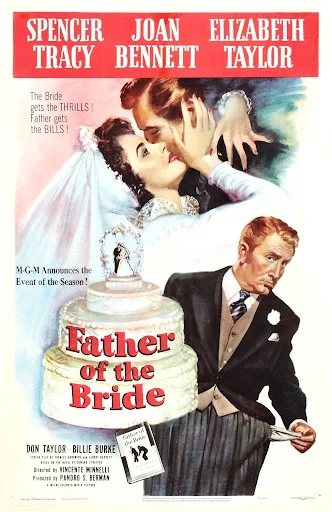
Directed by Vincente Minnelli and released in 1950, Father of the Bride stands as a quintessential depiction of family dynamics and the myriad complexities surrounding wedding preparations. Set against the backdrop of post-World War II America, the film captures a time when familial roles and expectations were being reshaped in both humorous and poignant ways. Minnelli, known for his rich visual style and ability to balance comedy with emotional depth, crafts a narrative that resonates with audiences, touching upon themes of nostalgia, cultural identity, and the tender yet often comedic struggles between parents and their children.
At its core, Father of the Bride explores the heartwarming and often humorous relationship between a father, Stanley Banks, played with charm by Spencer Tracy, and his daughter, who is set to marry. The film captures the whirlwind of wedding preparations, showcasing the clashes of tradition and modernity, as Stanley navigates his feelings of loss, pride, and eventual acceptance. The lighter moments, filled with good humor and relatable frustrations, serve to balance the underlying theme of change that pervades the family dynamic. Through witty dialogue and engaging scenarios, the film paints a picture of familial love, celebrating the joys and absurdities of preparing for a wedding.
Critics have embraced Father of the Bride for its gentle humor and warm portrayal of family life. The film’s comedic elements, underscored by the relatable anxieties of a father relinquishing his daughter to marriage, resonate widely. Reviewers have noted the film's refreshing approach to such a familiar subject matter, using it to shed light on the universal experiences of parenthood and the bittersweet passage of time. With its graceful execution and engaging performances, the film is described as a charming escape, drawing audiences into a world that, while distinctly of its era, feels timeless in its exploration of love and familial bonds.
Furthermore, Father of the Bride invites contemplation of cultural identity as it navigates the expectations placed upon daughters and fathers alike. The film, rich in its portrayals, captures the anxiety of a father faced with relinquishing his traditional role, mirroring broader societal changes without losing its heart. The balance of sunny optimism with hints of discomfort creates a well-rounded narrative that appeals to viewers on multiple levels. It is a film that invites laughter while also prompting reflection on the complexity of family relationships amidst joyful occasions.
Ultimately, Father of the Bride remains a landmark in Minnelli's career, showcasing his ability to blend humor with deep emotional resonance. As entertaining as it is thought-provoking, the film endures as a beloved classic, celebrated for its heartfelt depiction of family dynamics and the tender, yet tumultuous, journey of weddings. Its charm lies not only in the wedding spectacle but in the meaningful connections that emerge when families come together to celebrate love.