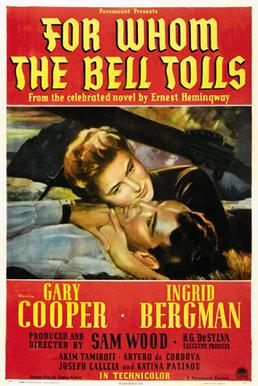
In the annals of Golden Age Hollywood, few films resonate with the depth and complexity of For Whom the Bell Tolls. Released in 1943 and directed by the accomplished Sam Wood, the film navigates the turbulent waters of the Spanish Civil War, creating a rich tapestry that intertwines themes of war, resistance, love, and the harsh realities of political suppression. Wood, known for his sharp direction and ability to draw meaningful performances, manages to transform Ernest Hemingway's poignant novel into a historical drama that both glorifies the human spirit and mourns its fragility.
Critics have lauded For Whom the Bell Tolls for its poetic realism, a narrative style that imbues historical events with a deep emotional resonance. The film's central character, Robert Jordan, played by the charismatic Gary Cooper, embodies the struggle against oppression, reflecting Hemingway's existential musings on the cost of conflict. As Jordan endeavors to blow up a key bridge in support of the Republican cause, his entanglement with Maria, portrayed by Ingrid Bergman, serves as a profound reminder of love's ability to blossom amidst the chaos of war. This romantic tragedy deepens the film's exploration of human connection, illustrating how love can provide solace even in the most harrowing circumstances.
The film's aesthetic achievements further cement its status as an epic within the historical drama genre. Cinematographer Robert Surtees captures the rugged beauty of the Spanish landscape, contrasting it with the stark violence of the ongoing hostilities. This visual storytelling amplifies the emotional weight of the narrative, enabling the audience to engage with both the personal and collective impacts of war. As critics point out, the film not only serves as a reflection of its time but also resonates with contemporary audiences who grapple with the enduring consequences of political unrest.
At its core, For Whom the Bell Tolls invites viewers to contemplate the broader implications of human conflict. The film underscores the sentiment that no one is an island, imposing a shared responsibility toward one another in times of adversity. Its treatment of political suppression resonates profoundly with audiences, framing the narrative as a call to arms against tyranny, both external and internal. This thematic depth, coupled with the luxurious filmmaking characteristic of Hollywood's Golden Age, elevates the film beyond mere entertainment, inviting sophisticated discourse on the very nature of courage and resistance.
In summary, For Whom the Bell Tolls stands as a significant work within Sam Wood's oeuvre and the historical drama canon. It thoughtfully examines the complexities of love amid conflict while addressing the sobering realities of political oppression. With its combination of poetic realism, romantic tragedy, and historical context, the film remains a poignant exploration of the human condition, earning its place in cinematic history as both a compelling narrative and a timeless meditation on resilience.