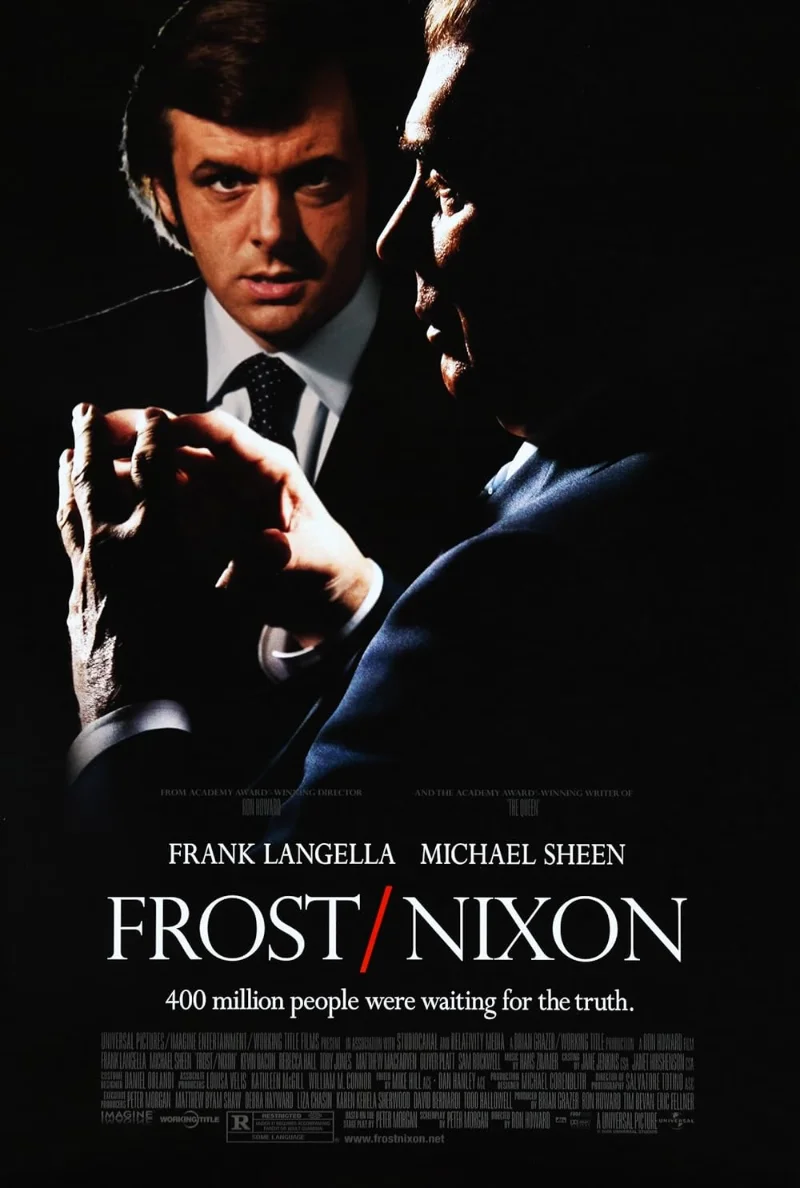
In the context of Ron Howard's distinguished career, Frost/Nixon serves as a compelling entry that melds his artistic sensibilities with historical context, examining the complex interplay between politics and media. Released in 2008, the film offers an engrossing dramatization of the post-Watergate interviews between British journalist David Frost and former President Richard Nixon, set against the larger backdrop of American political history. Howard's meticulous attention to character development is evident here, as he crafts an engaging narrative that illuminates the unique dynamics of power, vulnerability, and redemption.
Critics have lauded the film for its intense performances, particularly by Frank Langella and Michael Sheen, who embody Nixon and Frost, respectively. Their portrayals are not merely recreations of historical figures; they transform into intricate characters shaped by personal and public struggles. This character-driven approach allows for an exploration of larger themes, such as the influence of media on political narratives and the quest for personal redemption within the public eye. The film poses intriguing questions about the moral implications of media coverage and how personal motivations can distort or illuminate the truth.
In addition to its intimate character study, Frost/Nixon also serves as a political drama that critiques the role of media in shaping public perception. The interviews become a battleground where history is not just recounted but actively contested, revealing the fragile and often manipulative nature of truth in the media landscape. Critically, the film suggests that the power dynamics between the interviewer and the interviewee are fraught, with each striving for a form of victory, Frost aiming for credibility and Nixon attempting to reclaim his legacy. This theme speaks to the ongoing relevance of media influence in contemporary politics, highlighting how narratives are constructed and deconstructed in the public domain.
While some have described Frost/Nixon as a historical reenactment, it transcends typical biographical storytelling through its dramatic tension and thoughtful pacing. Howard's direction transforms what might have been a trivial retelling of events into a thrilling encounter that keeps audiences engaged. The film's exploration of the boundary between redemption and accountability resonates deeply in light of current political discourse, showcasing how figures in power continue to navigate their legacies amidst public scrutiny.
Despite some criticisms regarding inflated dramatization, many agree that Frost/Nixon captures a pivotal moment in both media and political history, showcasing Howard's ability to tackle complex topics with finesse. The film emerges as a formidable piece of cinema that reflects on the responsibilities of journalists and politicians alike, appealing to a fiercely loyal audience that appreciates the craft of storytelling. Ultimately, Howard's work is not just a recounting of historical events but a vibrant commentary on the broader implications of truth, trust, and the human desire for redemption in an era of perpetual scrutiny.