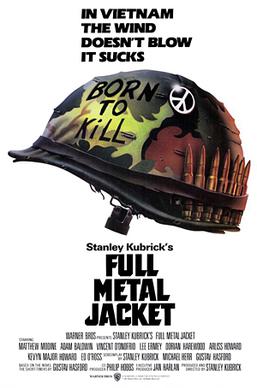
Stanley Kubrick's Full Metal Jacket (1987) stands as a pivotal film within the landscape of war cinema, embodying a distinct critique of military life and its disconcerting effects on the human psyche. Following the trajectory of Kubrick's previous works that delved into the absurdities of existence, such as Dr. Strangelove and A Clockwork Orange, this film explores the brutality of war in a disjointed narrative that reflects the chaotic nature of its subject matter. While it captures the visceral realities of conflict, it often sacrifices character depth for a portrayal of dehumanization that leaves the audience grappling with an unsettling portrayal of the Vietnam War experience.
Critics commonly note the film's fragmented structure, with its first half focusing on the harrowing training of soldiers at Parris Island, led by the relentless drill instructor Gunnery Sergeant Hartman. This segment is powerful yet frustrating, depicting military training as a rigorous process that strips away individuality, reducing recruits to mere shells of their former selves. The film’s second half shifts to the battlefield in Vietnam, where the disconnection between the soldiers’ training and the harrowing realities of war continues the theme of psychological trauma. Viewers are left unengaged with the characters as they become anti-heroes caught in a system that prioritizes violence over humanity.
The emotional impact of Full Metal Jacket is undeniably strong, with its unrestrained depiction of war’s brutality resonating deeply. However, the choice to limit character exploration results in a film that feels unfocused at times. Many characters, including the protagonist Joker, become archetypes rather than fully fleshed individuals, which can frustrate viewers seeking a more profound connection to the narrative and its themes of dehumanization and the impact of violence.
Nevertheless, Kubrick's assured direction showcases a muscular visual style and powerful imagery that encapsulates the horrors of war. The film's gritty realism and unsettling tone compel audiences to confront uncomfortable truths about military life and the psychological scars borne by those subjected to its demands. In doing so, Full Metal Jacket remains a memorable entry in the war genre, provoking discussions about the nature of heroism and the true cost of conflict, ultimately challenging the glorification of warfare often depicted in cinema.
In the broader context of Kubrick's oeuvre, Full Metal Jacket solidifies his legacy as a filmmaker capable of addressing heavy subjects with a rigorous and unflinching gaze. The film's oscillation between the absurdity of training and the chaos of actual combat mirrors the contradictions inherent in human experiences of war. It invites the audience to reflect not only on the disorienting journey of the soldiers but also on the societal constructs that perpetuate cycles of dehumanization. Through this exploration, Kubrick crafts a lasting statement on the harrowing effects of war that continues to resonate in the realms of both film and historical discourse.