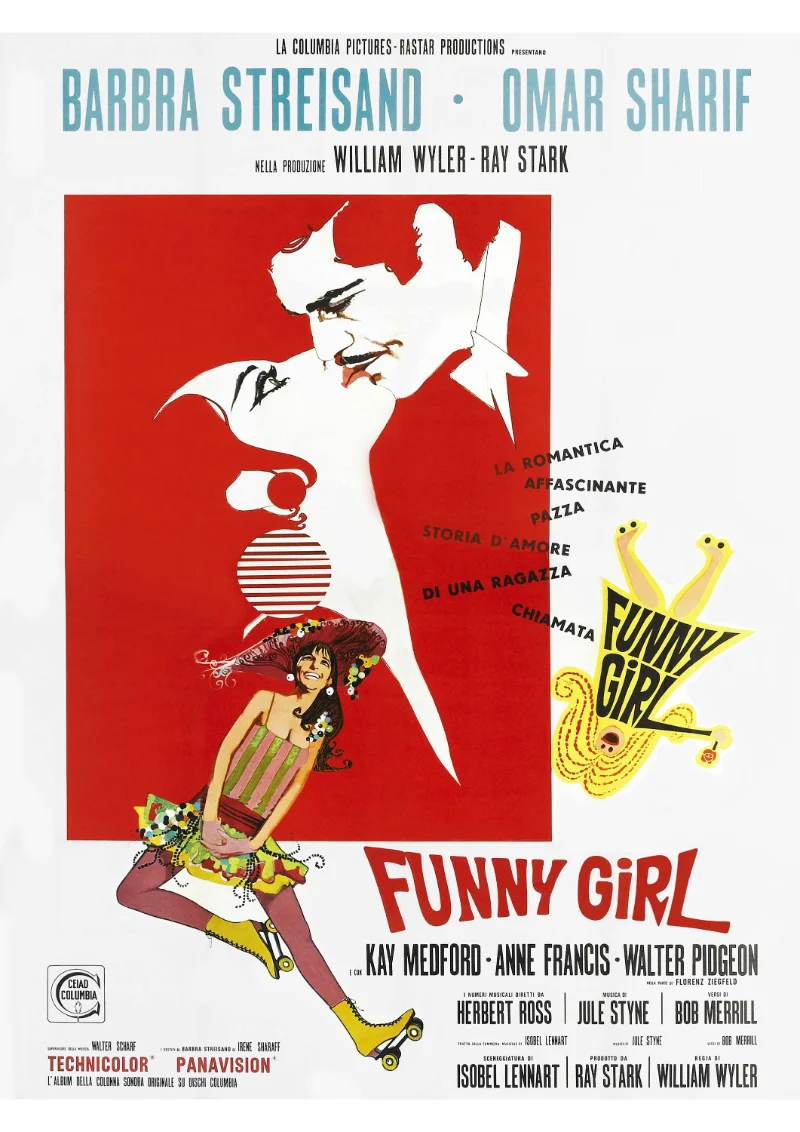
Funny Girl, directed by William Wyler in 1968, stands as a hallmark of the biographical musical genre, intertwining the life story of Fanny Brice with the splendor of Hollywood craftsmanship. This film not only marked Barbra Streisand’s meteoric rise as a formidable talent in cinema but also captured the essence of showbiz biography, reflecting both the glitz and the emotional tumult associated with fame. Wyler, known for his meticulous directorial style and character-driven narratives, carefully crafts a work that feels both expansive and intimate, incorporating the highs and lows of Brice's life and career intricately.
Critical consensus embraces Funny Girl as both superb and incandescent, yet acknowledges its tendencies toward over-production and over-photography. The film is replete with lavish musical numbers and ornate settings that, while visually stunning, occasionally detract from its pacing, rendering the narrative somewhat over-long. Many viewers appreciate the painstaking restoration that brought Funny Girl back to life, illuminating both the visual and musical splendor that defines its legacy. However, its cinematic artistry is a double-edged sword, with some critics expressing that it veers toward being ungodly in its extravagance, making the narrative itself somewhat secondary to its visual feast.
The performance of Barbra Streisand remains the film's cornerstone, her charisma illuminating every scene. Critics laud her as a luminescent force, effectively channeling Brice's complexities, her comedic genius intertwined with deeper emotional struggles. Streisand embodies a character that is both relatable and larger than life, navigating her tumultuous personal relationships while achieving professional acclaim. This duality resonates throughout the film’s romantic drama, creating a bittersweet narrative that captures the essence of love in the face of ambition.
Though sometimes critiqued for its self-indulgence, Funny Girl also serves as a significant artifact of its time. Through its exploration of female ambition and personal sacrifice, it mirrors the societal changes of the late 1960s, offering insights into the evolving landscape of women in entertainment. The film’s polished aesthetics and rich storytelling underscore a cinematic era where musicals ruled, and strong female leads began to make their indelible mark.
In summary, Funny Girl remains a testament to Wyler’s ability to balance grandeur with poignant storytelling, albeit with moments that may feel excessive. Its enduring legacy lies in its celebration of an iconic figure, a symbol of resilience and talent caught in the glamorous yet often ruthless world of show business. The film is a reminder that behind the rhinestones and applause, there lies a human story filled with heartache, passion, and triumph.