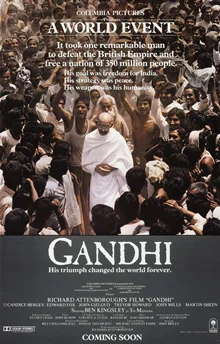
Richard Attenborough’s Gandhi (1982) stands as a monumental work within the canon of biographical epics, offering an expansive portrayal of Mahatma Gandhi's life and his pivotal role in the struggle for Indian independence from British colonial rule. Set against the rich tapestry of early 20th-century India, the film not only delves into Gandhi’s ethos of nonviolent resistance but also reflects the pervasive themes of colonialism and moral leadership. Attenborough’s treatment of this historical drama exemplifies a blend of ambition and humanism, crafting a cinematic experience that resonates with both emotional depth and educational intent.
Critically, Gandhi has been viewed as an inspirational narrative that showcases the transformative power of peaceful protest. The film encapsulates the essence of a man dedicated to his principles and the sacrifices made in the name of freedom. Reviewers often describe it as beautiful and compelling, with its striking visuals and polished storytelling drawing audiences into the high stakes of Gandhi’s life and ideology. However, some critiques note that the film can feel somewhat antiseptic, presenting a sanitized version of history that, at times, may lack the raw emotional weight one might expect from such a momentous narrative, leaving a somewhat lackluster impression on a modern audience.
Attenborough’s direction has been both celebrated and critiqued for its straightforward approach to a complex character. While many applaud the film’s earnest portrayal of Gandhi, the tension between the epic scope of his achievements and the personal struggles he faced sometimes leads to a sentiment of superficiality. Despite the cautionary notes surrounding its historical accuracy and depth, Gandhi remains a beloved illustration of the pioneering spirit that characterized a turbulent era in Indian history. The film steadies its focus on the moral leader's conviction, and the layers of his character unfold in a manner that is both absorbing and educational.
In the context of Attenborough's body of work, Gandhi signifies a culmination of his lifelong interest in storytelling that highlights the human condition and social justice. The director’s ability to create a film that is as much a historical document as it is a compelling drama underscores his commitment to narrative integrity. The choice of Ben Kingsley in the titular role contributed significantly to the film’s authenticity, earning widespread acclaim for a performance that deftly balanced Gandhi’s complexity, charm, and moral fortitude.
Ultimately, Gandhi serves not only as a recounting of a pivotal historical figure but also as a reflection on the moral imperatives that drive social change. The film’s legacy lies in its ability to inspire discourse on issues of justice, peace, and the importance of steadfast moral leadership in the face of overwhelming adversity. Through its beautifully crafted narrative and striking imagery, Attenborough presents a compelling and educational examination of one of history's most significant figures, elevating Gandhi to a revered status in cinematic history.