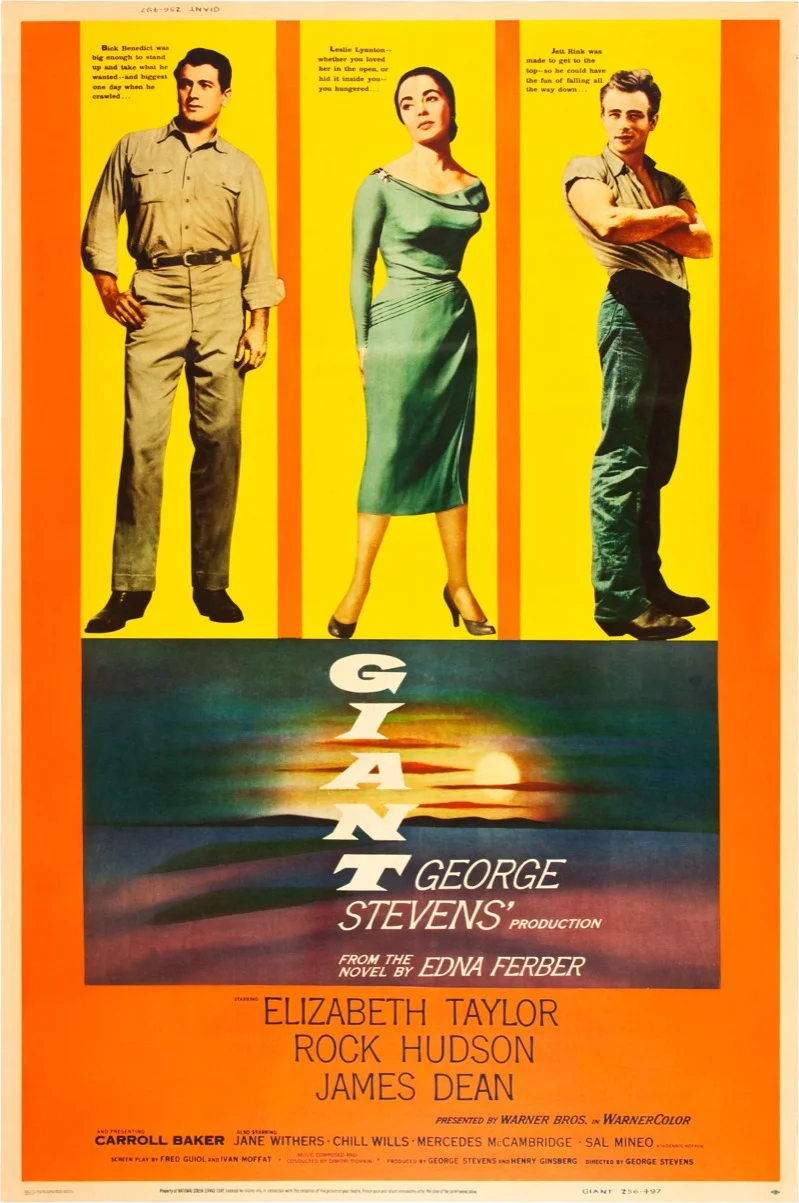
Directed by George Stevens, Giant (1956) stands as an ambitious portrayal of Texas life that unfolds over multiple generations. The film, notable for its length and grand scope, reflects Stevens' skill in managing large narratives, a hallmark of his directorial style. Positioned within the annals of cinema history, Giant is often characterized as a hallmark of mid-century American epic cinema, providing a canvas to explore themes of wealth, power, and the evolving cultural landscape of the American Southwest. This work is emblematic of a period where films not only entertained but also engaged critically with the societal issues of the time.
Critically, Giant has been recognized for its emotional depth, traversing the complex dynamics of family amidst the backdrop of a rapidly changing Texas. What emerges from the story is a vivid generational saga, as the interactions between characters reflect broader societal transformations. The informal intimacy of family life contrasts sharply with themes of racial prejudice and economic ambition, showcasing how personal aspirations intertwine with societal expectations. This resulting tension provides a narrative richness that elevates the film beyond mere spectacle, inviting viewers into a deeper contemplation of Texan identity.
The film's nostalgic lens offers a reflection on the past that resonates in modern times, echoing sentiments of loss and the inexorable passage of time. Critics have often described Giant as emotional and earnest, imparting a sense of longing for an idealized version of the American experience. Yet, it is precisely this nostalgia that complicates the film's depiction of Texas life; the grand landscapes and sweeping vistas are matched with the harsh realities of racial inequality and economic disparity. The film's emotional weight is amplified by its deeply layered characters, who embody the conflicting values of their time.
In terms of technical achievement, Giant is as noteworthy as it is lengthy, showcasing Stevens' meticulous craftsmanship. The cinematography captures the sprawling Texan wilderness with a sense of grandeur that mirrors the film’s ambitious narrative scope. However, this ambition can also be seen as a double-edged sword, critics have pointed to moments where the film feels arbitrary, stretching its narrative threads in service of a broader tapestry that occasionally lacks focus. This challenge often leaves audiences pondering the coherence of its messaging amid its sweeping thematic aspirations.
Ultimately, Giant continues to occupy a significant place in cinematic history, not only as a representation of its era but also as a profound exploration of the American experience. Through its generational saga, the film invites audiences to reflect on the legacies of family, identity, and prejudice that resonate far beyond the screen. As a cultural artifact, it inspires conversations around the continuous evolution of societal norms and serves as a reminder of the complexities inherent in the American narrative. With its combination of nostalgia, ambition, and emotional resonance, Giant remains a cinematic milestone that challenges and honors the multifaceted experience of Texas life.