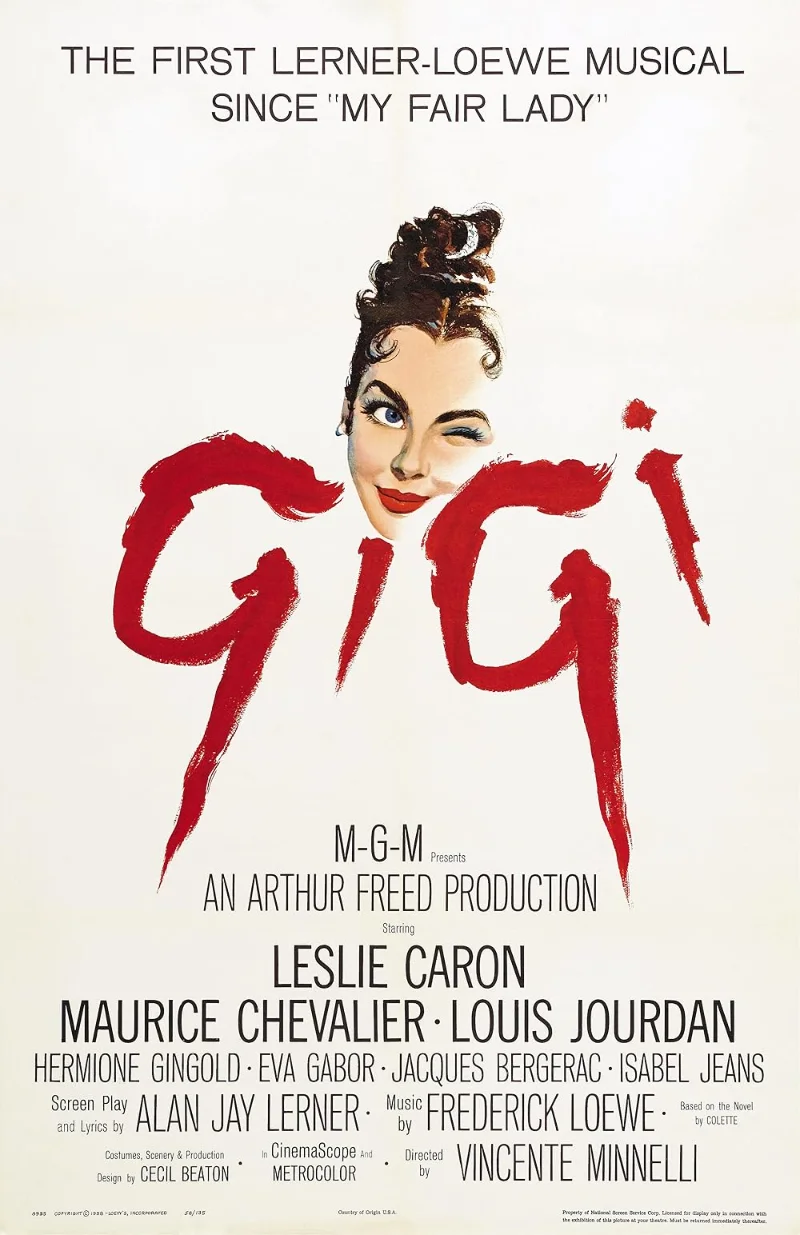
In the vibrant tapestry of 1950s American cinema, Vincente Minnelli's Gigi emerges as a remarkable blend of romance and social commentary, encapsulating the cultural tensions between tradition and modernity. Based on the novella by Colette, this musical tells the coming-of-age story of a young Parisian girl grappling with her identity and societal expectations. The film's lavish production, illustrated through spirited choreography and stunning visuals, invites viewers into a world that feels both enchanted and fraught with nostalgia. Gigi contrasts the innocence of youth against the backdrop of love affairs that hint at the risqué undercurrents of adult relationships, making it a classic cultural artifact of its time.
Central to the film's themes is the poignant juxtaposition of traditional values versus the evolving desires of a post-war society. The title character's journey from child to woman reflects a broader societal shift, challenging the expectations placed upon young women in her world. Reviews often underline the film as a dated adaptation of Colette's work, yet the essence of its narrative, the nuances of love, the complexities of personal freedom, and the pangs of growing up, resonate with audiences, crafting a delicate balance between the familiar and the innovative, the stagnant and the evolving.
Critical reception of Gigi has been notably mixed, revealing a polarizing legacy. While some laud its brisk pacing and glorious musical numbers, others point to its controversial reputation, particularly in how it presents themes of romance and the complexities of budding sexuality. The depiction of Gigi's transition into womanhood is both enchanting and discomforting, showcasing the duality of societal expectations, further complicated by the film's lavish style that contrasts sharply with the more ribald aspects of Parisian life. Critics describe the central characters, world-weary Gaston and the spirited Gigi, as performances that provide a study in contradictions, marked by a carefree exuberance that belies deeper implications.
In the context of Minnelli’s prolific career, Gigi stands out as a definitive entry, highlighting his ability to craft emotionally charged narratives amid visually stunning facilitates. His collaboration with top stars of the era, particularly Leslie Caron and Louis Jourdan, instills the film with a palpable chemistry that contributes to its enduring appeal. Their performances are often highlighted as some of the most memorable in musical history, capturing the intricacies of love, longing, and societal pressures with an authentic touch that elevates the film beyond mere entertainment.
Ultimately, Gigi remains a fascinating exploration of life at the crossroads, a reflection on both the frivolities and serious implications of romance set against an opulent Parisian backdrop. The film's cultural impact is undeniable, serving as a mirror to the evolving attitudes towards gender roles and relationships in mid-20th-century America. Even as perspectives shift, Minnelli’s adaptation reflects a uniquely layered interpretation of Colette’s work, embedding itself deeply within the canon of cinematic history, its legacy resonating with each generation anew.