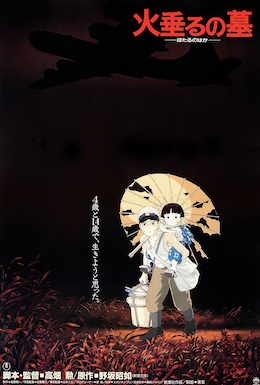
Grave of the Fireflies, directed by Isao Takahata, stands as a remarkable entry in the canon of war cinema, where animation transcends its traditional boundaries to deliver an intensely sobering narrative. Released in 1988, this film diverges from many of its contemporaries, focusing not on the glorification of battle but rather on the profound human suffering that accompanies war. Takahata, a co-founder of Studio Ghibli, is celebrated for his ability to tackle heavy themes with a sincere touch, and in this work, he showcases his unique approach to storytelling, which prioritizes emotional authenticity over spectacle.
The critical consensus around Grave of the Fireflies is one of deep admiration, with many describing the film as haunting and deeply moving. Viewers are presented with a wrenching tale centered on two siblings, Seita and Setsuko, whose desperate struggle for survival amid the horrors of World War II serves as a devastating anti-war statement. The film unfolds in a beautifully constructed manner, blending poignant imagery with a minimalist narrative style that evokes empathy without resorting to unsentimental melodrama. This unapologetic portrayal of loss and survival remains starkly relevant even decades after its release, allowing audiences to engage with the brutal realities of conflict.
At its core, Grave of the Fireflies deals with themes of survival and loss, central tenets that resonate powerfully throughout the film's runtime. As war ravages their surroundings, Seita and Setsuko's once idyllic childhood is stripped away, revealing the harrowing impact of societal collapse. Each moment of their journey is laced with heartbreak, as they grapple not just with the external chaos of bombings and food shortages but also with the inner disintegration of familial bonds under the weight of despair. The film’s emotional potency lies in its ability to capture these nuanced experiences with a subtlety that leaves audiences contemplating long after the credits roll.
Takahata’s masterwork challenges viewers to confront the sobering consequences of war, not through grand historical narratives but through the intimate lens of personal loss. The devastating imagery and heartfelt performances are crafted with uncompromising honesty, ensuring that the viewer feels every heart-stab of sorrow that the characters endure. Each frame reveals the fragility of life and the indifference of war, creating a profound meditation on humanity's capacity for resilience and suffering.
Ultimately, Grave of the Fireflies remains an essential film for understanding the emotional landscapes shaped by conflict. It speaks to the universal experiences of loss and survival, tapping into a raw emotional core that transcends cultural boundaries. In this way, Takahata has not only left a critical legacy within the realm of animation but has also cemented his place as a powerful storyteller whose works continue to resonate across generations. This film serves as a reminder of the costs associated with war, inviting audiences to reflect on the lives often marginalized in grand historical narratives.