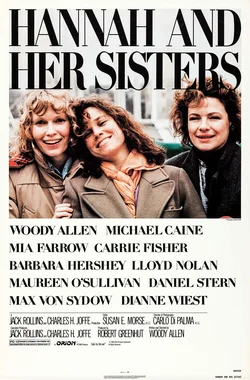
Released in 1986, Woody Allen's Hannah and Her Sisters remains a noteworthy entry in the director's oeuvre, encapsulating his signature blend of incisive dialogue and exploration of complex emotional landscapes. This film not only resonates with personal touches from Allen's own life but also stands as a pivotal example of 1980s American cinema, reflecting prevalent themes of love, infidelity, and the intricate layers of family dynamics. It was a time when audiences were eager for narrative depth and psychological nuance, and the film delivered both with grace and humor, establishing a template for future ensemble dramas.
Critics generally praise Hannah and Her Sisters for its rich emotional complexity and its multifaceted exploration of relationships. The film deftly weaves the lives of its central characters, Hannah, her sisters Lee and Holly, and their assorted partners, against a vibrant New York City backdrop. Themes of existential questioning and self-discovery unfold through numerous personal interactions, depicting the characters' struggles with loyalty, desire, and the search for meaning. Relationships are portrayed with a candid honesty that reveals the malaise and joy residing within family bonds, creating a bittersweet tapestry that resonates with audiences on multiple levels.
At the core of Hannah and Her Sisters lies an exploration of love's labyrinthine paths and the inevitabilities of infidelity. Each character grapples with their own desires and insecurities, leading to moments that are both heart-wrenching and profoundly funny. This juxtaposition of comedy and drama highlights the film's emotional depth, providing a kaleidoscopic view of human relationships. Critics have labeled the film as beautifully mellow, rich with an ironic sensibility that captures the absurdities of life, making it a standout narrative in bicameral emotions.
The film expertly navigates the turbulent waters of romantic relationships while delving into the dynamics of family ties. Each character's journey reflects a form of personal growth, often leading to fluctuations between heartbreak and reconciliation. The blend of self-discovery and the complexities of urban life further enriches the film, as characters navigate their relationships within the bustling scenery of New York City. This urban setting serves not only as a backdrop but also as a character itself, influencing the lives of all who inhabit it and intensifying the emotional stakes of each encounter.
Ultimately, Hannah and Her Sisters is a testament to Woody Allen's enduring ability to craft stories that are both touching and relatable, brimming with love and humor. Its exploration of life's inherent complexities resonates long after the credits roll, positioning it as not merely a film but an exploration of the human condition. As part of Allen's iconic catalog, it showcases his ability to blend the personal with the universal, reflecting his keen understanding of the agonizingly beautiful intricacies of human relationships.