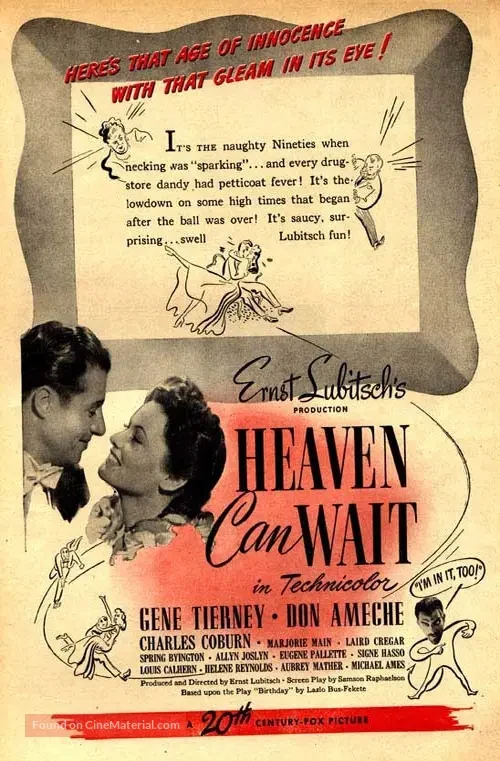
Directed by Ernst Lubitsch, Heaven Can Wait (1943) stands as a luminous testament to the filmmaker's signature blend of charm and sophistication in storytelling. As a notable work within Lubitsch's oeuvre, which often reflected social issues of his time through a lens of humor and romance, this film encapsulates themes of morality and mortality set against the backdrop of the tumultuous 1890s. The director's deft hand in navigating the complexities of love and life is evident as he presents the protagonist's devious yet enchanting journey through the afterlife and back to the pivotal moments of his existence.
Critical consensus points to the film's dual nature, revealing a world filled with romantic longing and guiding reflections on betrayal. It masterfully intertwines the lighthearted with the weighty, showcasing characters who grapple with moral dilemmas while navigating a society steeped in dated ideals. The film's charm lies not only in its witty dialogue and whimsically crafted scenes but also in its ability to resonate with audiences on profound emotional levels. This balance between the devious and the charming, in particular, underscores the film's exploration of human desires and the consequences that accompany them.
The social issues of the 1890s play an intrinsic role in shaping the film's narrative. The characters embody the anxieties and aspirations of their era, reflecting tensions between societal expectations and personal fulfillment. Lubitsch's exploration of class dynamics and romantic entanglements reiterates the often downbeat reality of human relationships, even amidst the alleviating laughter that his comedic touch typically produces. This insight into societal frameworks adds a layer of depth to the story, prompting viewers to consider the era's moral fabric alongside the characters' quest for love.
Furthermore, the film navigates the intertwined themes of love and mortality with elegance. The journey of the deceased protagonist resonates universally, inviting reflections on life choices and the consequences that linger long after one's passing. The luminous aesthetic of the film enhances its exploration of feelings, allowing audiences to engage with the bittersweet nature of the characters’ experiences. Lubitsch's touch, marked by a blend of poignancy and humor, gives Heaven Can Wait its distinctive character and enduring appeal.
In conclusion, Heaven Can Wait serves as a captivating exploration of morality and romantic longing, framed by the societal challenges of the 1890s. Lubitsch's film is not merely a charming comedy; it is a thought-provoking narrative that delves deep into the essence of human connection. The critical descriptors of charm and deviousness encapsulate the film's dualities, making it a rich subject for analysis and a significant part of cinematic history.