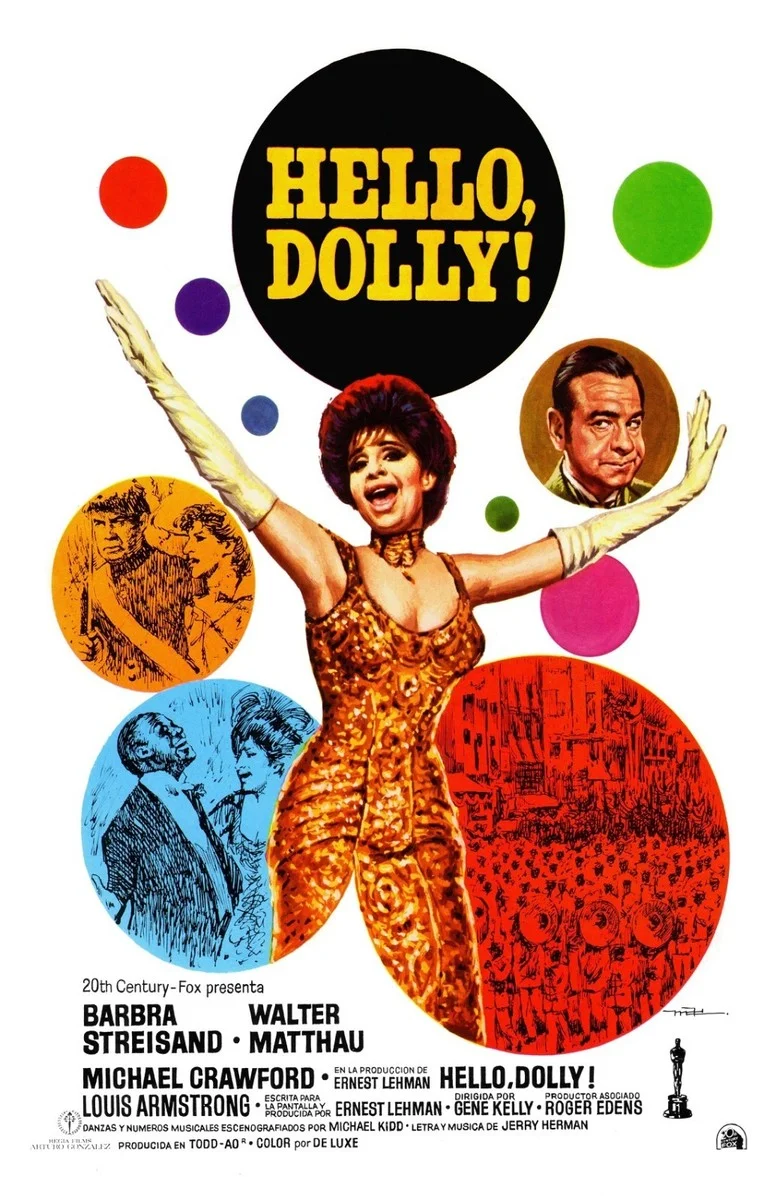
When Hello, Dolly! debuted in 1969, it emerged as an ambitious adaptation of the Broadway musical that sought to capture the exuberance of its stage roots while translating it to the big screen. Directed by Gene Kelly, a renowned choreographer and director known for his innovative contributions to musical films, Hello, Dolly! was met with both enthusiasm and criticism. In a cinematic landscape full of experimental films, this extravagant musical was positioned as a nostalgic return to the genre’s golden age. However, its intended lavishness ultimately led to a financial disaster, leaving viewers questioning whether the grandiosity was justified.
Critically, Hello, Dolly! has been described in a variety of ways, from campy and over the top to wooden and self-satisfied. The film’s musical score, featuring classic show tunes, had moments of brilliance that reminded audiences of Broadway's vibrant charm. Nonetheless, the directorial focus seemed at odds with its content, as the performances occasionally evoked a sense of nostalgia yet occasionally came off as curiously disconnected. Barbra Streisand’s portrayal of the titular character was described as both exuberant and polarizing, capturing the spirit of Dolly Gallagher Levi while also intensifying the film’s tendency toward theatrical excess.
Kelly's direction infused the film with his signature style, characterized by ambitious choreography and vibrant visuals; however, this same directorial approach could be seen as a double-edged sword. The extravagant set pieces and elaborate dance sequences, while visually impressive, sometimes overshadowed the narrative, leading to a disjointed viewing experience. Critics noted that some sequences felt wayward, as if the film was caught in a struggle between sincerity and sheer spectacle, leaving an overall impression that lingered somewhere between admiration and ambivalence.
The casting choices, particularly Streisand's, highlighted the film's defining tension. While she brought a unique energy and charisma to the role, many felt it clashed with the more traditional expectations of a period piece romantic comedy. As a result, her performance polarized audiences, eliciting both fervent approval and bemusement as her contemporary style manifested within a nostalgic setting. Ultimately, these characteristics contributed to the film’s overall reception, often portraying it as a lost venture rather than a definitive triumph in musical cinema.
In the scope of Gene Kelly's illustrious career, Hello, Dolly! stands as both a glittering highlight and a cautionary tale. Its financial failure, despite the lavish ambition, reinforces a key lesson in the delicate balance of artistic vision versus commercial viability. Looking back, the film serves as a reminder of how the awe of musical cinema can both uplift and entangle, creating a lasting legacy that, while flawed, continues to provoke discussion and analysis. As we reflect on its place in film history, Hello, Dolly! remains a bittersweet example of the extravagant hopes and pitfalls that can accompany the quest for cinematic grandeur.