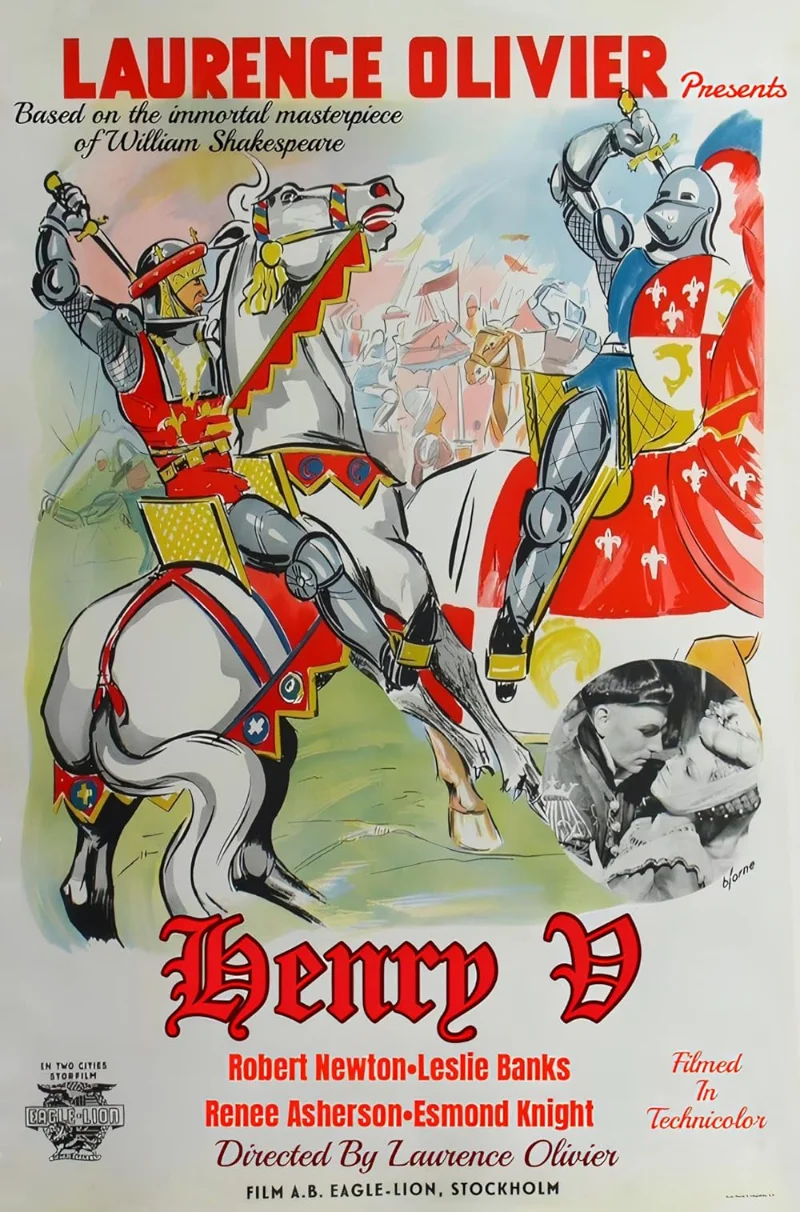
Laurence Olivier's Henry V (1944) stands as a significant cinematic work that deftly intertwines the realms of Shakespearean adaptation and wartime propaganda, encapsulating the spirit of its era while celebrating national identity. This film marked the actor-director’s directorial debut, presenting a bold reinterpretation of Shakespeare's play at a time when Britain was embroiled in the struggles of World War II. Olivier’s work not only revived the Bard for the silver screen but also served as a morale booster, infusing his portrayal of King Henry with a sense of patriotism and resilience that resonated with wartime audiences. The film’s historical context cannot be understated; it was a time when the United Kingdom needed to embrace its past glories to inspire a hopeful future, making Olivier's adaptation feel both timely and timeless.
Critics have lauded Henry V for its exhilarating execution and charismatic performances, particularly Olivier’s commanding presence in the title role. The film immerses viewers in the gritty reality of war while maintaining a reverence for Shakespeare's language. Olivier’s interpretation dances between moments of grand spectacle and intimate character development, striking a balance that enhances the narrative's dramatic tension. His ability to convey the humanity of Henry, caught between the burdens of kingship and the realities of battle, is at the core of the film’s emotional impact, drawing audiences into the king's personal experience as he navigates the complexities of leadership during conflict.
The critical consensus acknowledges Henry V as a definitive piece of wartime cinema, characterized by its bold visual style and sweeping compositions that evoke both the magic of live theater and the immediacy of film. Olivier’s use of rich colors and dynamic cinematography transports viewers to the battlefields of Agincourt, where the harshness of war is faithfully depicted amidst Shakespeare's poetic dialogue. This immersive approach not only showcases the historical realism of the narrative but also underlines the film's role as a cultural touchstone that interrogates themes of honor, bravery, and patriotism in the face of adversity.
Furthermore, Olivier's film carries a legacy that extends beyond its immediate historical context. Subsequent adaptations of Shakespeare's works often reference Henry V as a benchmark for how to blend rigorous artistic interpretation with popular cinematic appeal. The film's success paved the way for other Shakespeare adaptations, exemplifying how classical texts can be revitalized to retain their relevance for modern audiences. Critics have noted that despite the film's overt patriotic sentiments, it does not shy away from the savage realities of war, presenting a nuanced view that undercuts the glorification of battle with moments of stark humanity and somber reflection.
In conclusion, Henry V is not merely a film of its time; it is an enduring piece of art that invites us to reflect on the interplay of history and literature, leadership and sacrifice, and the transformative power of storytelling. Olivier's bold vision and mastery of the medium create a work that remains exhilarating, significant, and magical, leaving an indelible mark on both the cinematic landscape and the legacy of Shakespearean adaptations.