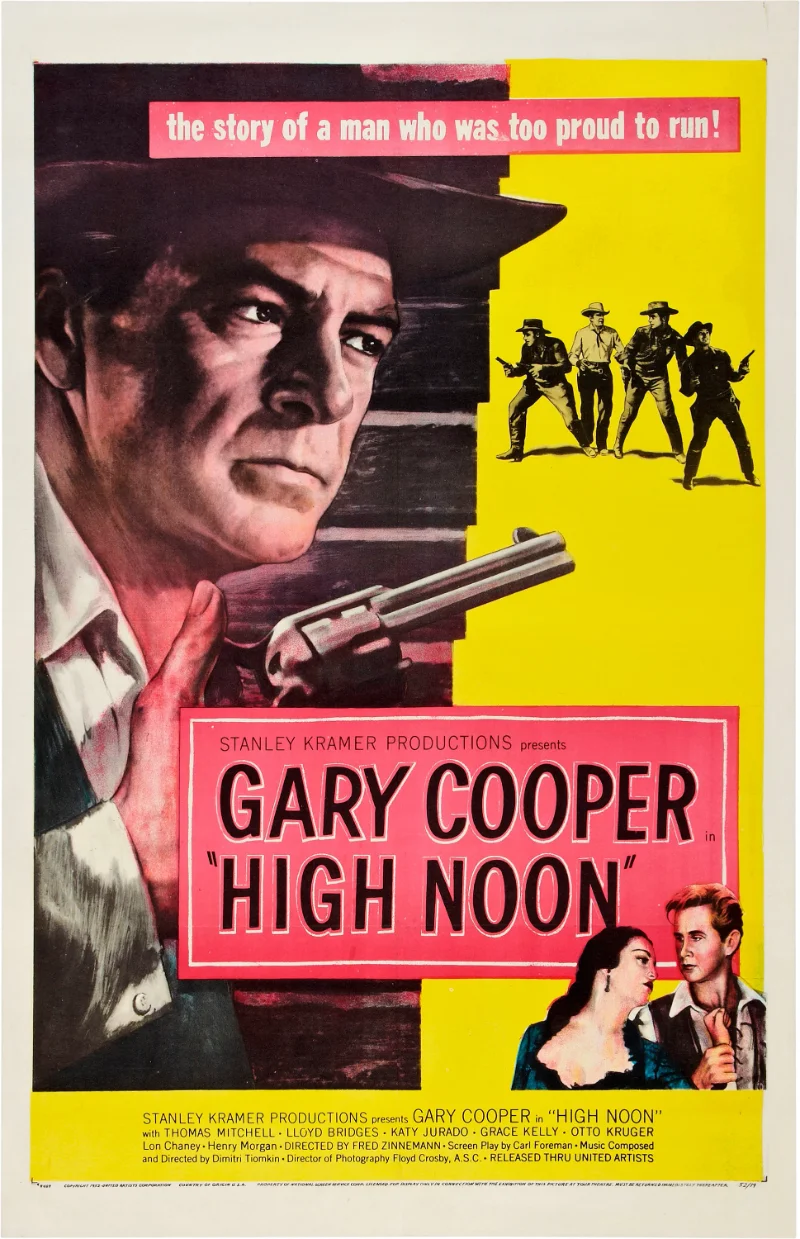
In the canon of American cinema, High Noon (1952), directed by Fred Zinnemann, stands as a pivotal work that transcends the confines of the Western genre. Considered a classic, it embodies a meticulous blend of storytelling and visual aesthetic that delves deep into themes of civic duty and moral obligation. This film is not merely a tale of gunfights and sheriffs; it presents a psychological wrestling match between the ideals of individualism and the collective responsibility of a community. Set against a backdrop that resembles a starkly realistic depiction of a small town, High Noon challenges the conventions of its genre, marking it as a proto anti-Western that invites reflection on personal integrity in the face of adversity.
Critics lauded the film for its unique real-time narrative, which unfolds in a mere hour as the aging Marshal Will Kane, portrayed with understated intensity, prepares to confront a vicious outlaw on his wedding day. The linear plot serves not only as a suspenseful countdown but also escalates the psychological tension inherent in Kane's moral dilemma: whether to abandon his post or stand up for the principles he has sworn to uphold. This central choice resonates with audiences at a fundamental level, emphasizing the weight of personal conviction against societal expectations, a theme that remains relevant in contemporary discourse.
Zinnemann's direction, marked by a keen eye for expressionist cinematography, channels the film's emotional undercurrents through stark imagery and close-ups that capture the anxiety and isolation of the protagonist. The implicit critique of political and social dynamics of the era, designed amidst the backdrop of McCarthyism and Hollywood blacklisting, adds layers of complexity to the narrative. The film acts almost as a revealing letter of its time, articulating the fears and societal tensions that many faced, making it a crucial piece in understanding not just cinematic history but also American cultural conversations.
Furthermore, High Noon invites various interpretations, often serving as a Rorschach test for its viewers, pulling them into a suite of philosophical queries about the nature of heroism and the responsibilities of individuals in society. It stands as essential viewing not just for its suspenseful narrative but also for its big ideas that challenge conventional notions of heroism in Westerns. By framing the conflict in real-time, the film remains a powerful commentary on the choices we must make when confronted with moral crises, offering a timeless reflection that engages both heart and intellect.
As an intersection of genre innovation and political critique, High Noon remains a touchstone for filmmakers and audiences alike. Its influence can be traced through the evolution of the Western genre, signaling a shift from simplistic narratives of good versus evil to intricate explorations of personal and communal ethics. Zinnemann's masterful construction of suspense and his profound engagement with themes of duty and betrayal resonate strongly today, making High Noon an enduring institution in both cinematic history and the wider scope of American storytelling.