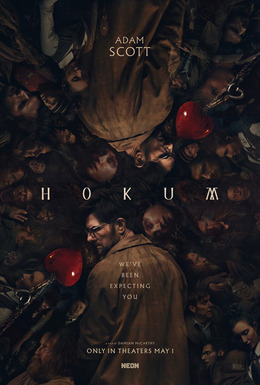
In his latest venture, Hokum, director Damian McCarthy delves into the unsettling realm of folk horror, expanding on the successful themes established in his prior works. Known for his atmospheric storytelling and unsettling encounters, McCarthy weaves a narrative that explores the darker aspects of human nature, often manifesting in haunted rural settings. With a burgeoning reputation in contemporary horror cinema, Hokum represents a natural evolution in McCarthy's artistic expression, taking his audience deeper into the uncanny while expertly blending supernatural elements with psychological introspection.
Critics have uniformly praised Hokum for its rich, eerie ambiance that permeates each scene, creating a sense of looming dread that's both suffocating and engrossing. The film brings to the forefront the theme of isolation, juxtaposing haunting landscapes with the protagonist's personal demons. The characters grapple with guilt stemming from a haunted past, a narrative twist that adds layers to the typical rural horror trope. McCarthy's use of supernatural reckoning serves not only as a plot device but also as a metaphor for the inescapable nature of one's own conscience.
At its core, Hokum is about facing personal terrors and reconciling with deeply buried truths. This haunting journey is both a literal and figurative exploration of how isolation can twist the psyche, prompting grotesque and terrifying manifestations of guilt and regret. McCarthy employs suspenseful pacing and disturbing imagery that unsettles the viewer, echoing classic horror while incorporating a modern sensibility. The film's critique of the human condition, though laced with black-comic moments, never relinquishes its grip on the audience's emotional and psychological engagement.
In summation, Hokum has cemented McCarthy's place in the canon of folk horror, carving out a niche that emphasizes character-driven storytelling amidst supernatural chaos. The horrifying events unfurl against the backdrop of rural isolation, cleverly evoking a sense of shared experience even in loneliness. As the protagonist spirals into despair confronted by the guilt of their actions, McCarthy's film questions the very essence of horror: is it the supernatural that terrifies, or are we ultimately haunted by our choices? With Hokum, audiences are invited to witness a masterclass in atmospheric storytelling, a truly suspenseful and harrowing ride into the human heart's darkest corners.