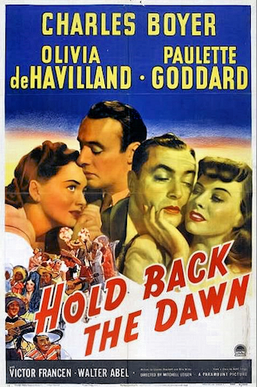
Directed by Mitchell Leisen in 1941, Hold Back the Dawn emerges as a fascinating piece within the complex tapestry of early 20th-century cinema. Positioned in a post-World War II landscape, the film captures the zeitgeist of a nation grappling with the ideal of the American dream and the stark realities of immigration. Leisen, known for his deft handling of romantic drama, combines elements of charm and poignancy, seamlessly intertwining love, deception, and identity in a narrative that continues to resonate with contemporary audiences. While not as widely celebrated as his other works, this film exemplifies Leisen's ability to craft stories that challenge social norms while remaining deeply engaging.
At the heart of Hold Back the Dawn lies a poignant exploration of the immigrant experience in America. Set against the backdrop of a border town, it follows the story of a Romanian refugee, played by Charles Boyer, as he schemes to secure his passage to the United States through marriage. The film deftly navigates the complexities of identity and aspiration, portraying the lengths to which individuals will go to grasp the elusive promise of a new life. Critics have often highlighted the film's richly layered narrative, which sheds light on the theme of deception, a necessary apparition in pursuit of the idealized American existence. In this context, the relationship between Boyer’s character and his American bride, embodied by Olivia de Havilland, becomes a microcosm of the broader struggle faced by immigrants.
The romantic tension that unfolds in Hold Back the Dawn is draped in a cloak of charm and drama, tempering the film's darker themes with moments of levity and beauty. Critics have tended to describe the film as underrated yet brilliantly romantic, a testament to Leisen's unique directorial vision that marries the dramatic with the delicate. The chemistry between the leads is palpable, and their journey evokes not just personal struggles but a collective narrative shared by millions who have sought refuge in a foreign land. Leisen’s distinctive style and ability to evoke deep emotion through visual storytelling set this film apart, despite its muted place in cinematic history.
The film ultimately serves as a reflection on identity and belonging, asking viewers to consider where their loyalties lie. The deception at the film's core questions the morality of actions taken in desperation, raising critical inquiries about the American dream. While it is easy to dismiss Hold Back the Dawn as merely a romantic melodrama, a closer examination reveals its commentary on societal complexities, human aspiration, and the bittersweet nature of love in the face of hardship. It is this multifaceted approach that solidifies the film's status as a classic, one that deserves renewed attention for its rich narrative and emotional depth.
In conclusion, Hold Back the Dawn invites audiences to engage with its themes of immigration, romance, and deception through a lens that is as relevant today as it was in the 1940s. As part of Leisen's oeuvre, it embodies a blend of charm and drama that not only entertains but also enlightens, challenging viewers to reflect on the intricate dance between the pursuit of dreams and the sacrifices made along the way. Its underrated status in the annals of film history belies the powerful storytelling and rich thematic undertones that define this remarkable work.