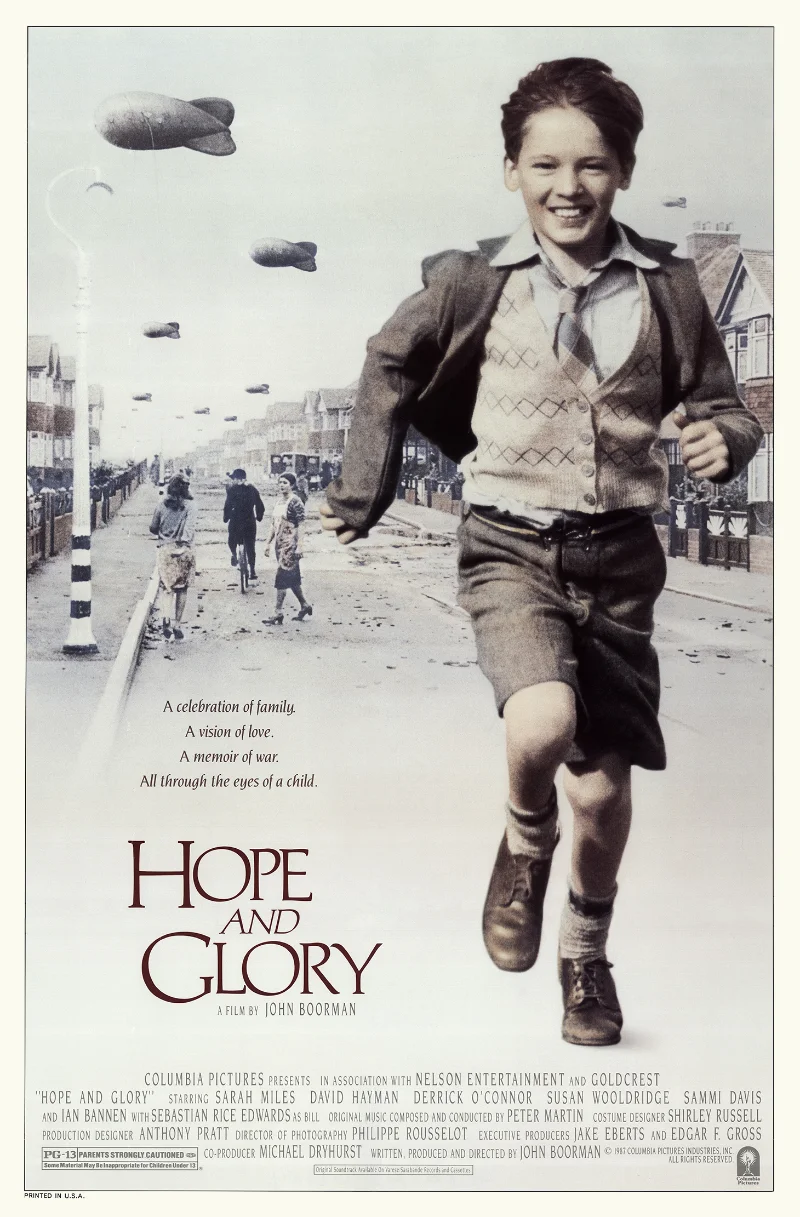
In the realm of British cinema, John Boorman's Hope and Glory stands out as a poignant exploration of childhood amid the chaos of World War II. Released in 1987, the film marks a significant chapter in Boorman's celebrated career, blending his autobiographical elements with a broader commentary on family life during turbulent times. Known for delving into the psyche of his characters with both depth and sensitivity, Boorman utilizes the canvas of his own childhood experiences, ultimately crafting a semi-autobiographical tale that resonates on multiple levels. This film remains a vital piece of cinema history, capturing the innocence and resilience of youth against a backdrop of conflict.
Critics have widely praised Hope and Glory for its evocative portrayal of childhood during war, highlighting its nostalgic aesthetic and heartfelt narrative. The film navigates the intricate family dynamics impacted by external turmoil, depicting the lovable yet chaotic life of a young boy named Bill Rohan. Through Bill's eyes, viewers are invited to witness the ironies of growing up, how war can simultaneously inspire fear and foster a sense of adventure. This duality paints a compelling picture of coming-of-age, suggesting that in the face of adversity, familial bonds can inspire strength and resilience.
At its core, Hope and Glory underscores the universal themes of nostalgia and idealization. It reflects upon how childhood memories are often tinged with sweetness, even in the face of hardship. The film’s portrayal of family life intertwines both the struggles and the joyous moments of everyday existence. Critics have recognized this authentic representation as both engaging and relatable, demonstrating that Boorman's narrative transcends time, speaking directly to anyone who has navigated the bittersweet journey of growing up. Each character, from Bill’s loving mother to the eccentric neighbors, is rendered with nuance and warmth, making their experiences both personal and universal.
Despite some critiques pointing to an idealistic lens, the film’s emotional truths resonate profoundly. Reviewers have noted the delicate balance it strikes between sentimentality and authenticity, delivering a narrative that is at once heartfelt and engaging. Moments of joy and laughter juxtapose the harsh realities of war, reminding viewers that even in darkness, the light of childhood can shine brightly. The charming depiction of Bill’s escapades ultimately encapsulates the innate curiosity and resilience of youth, offering a refreshing perspective on a history often dominated by somber reflections of conflict.
In conclusion, Hope and Glory remains a delightful yet thought-provoking exploration of childhood during war, embodying the essence of family bonds and resilience. Its nostalgic lens invites audiences to reflect on their own experiences, reminding them of the beauty that can emerge from hardship. Through this film, Boorman provides more than just a narrative about the impacts of war; he captures the profound, emotional journey of growing up, rendering it both a personal and collective memory that endures well beyond its cinematic confines.