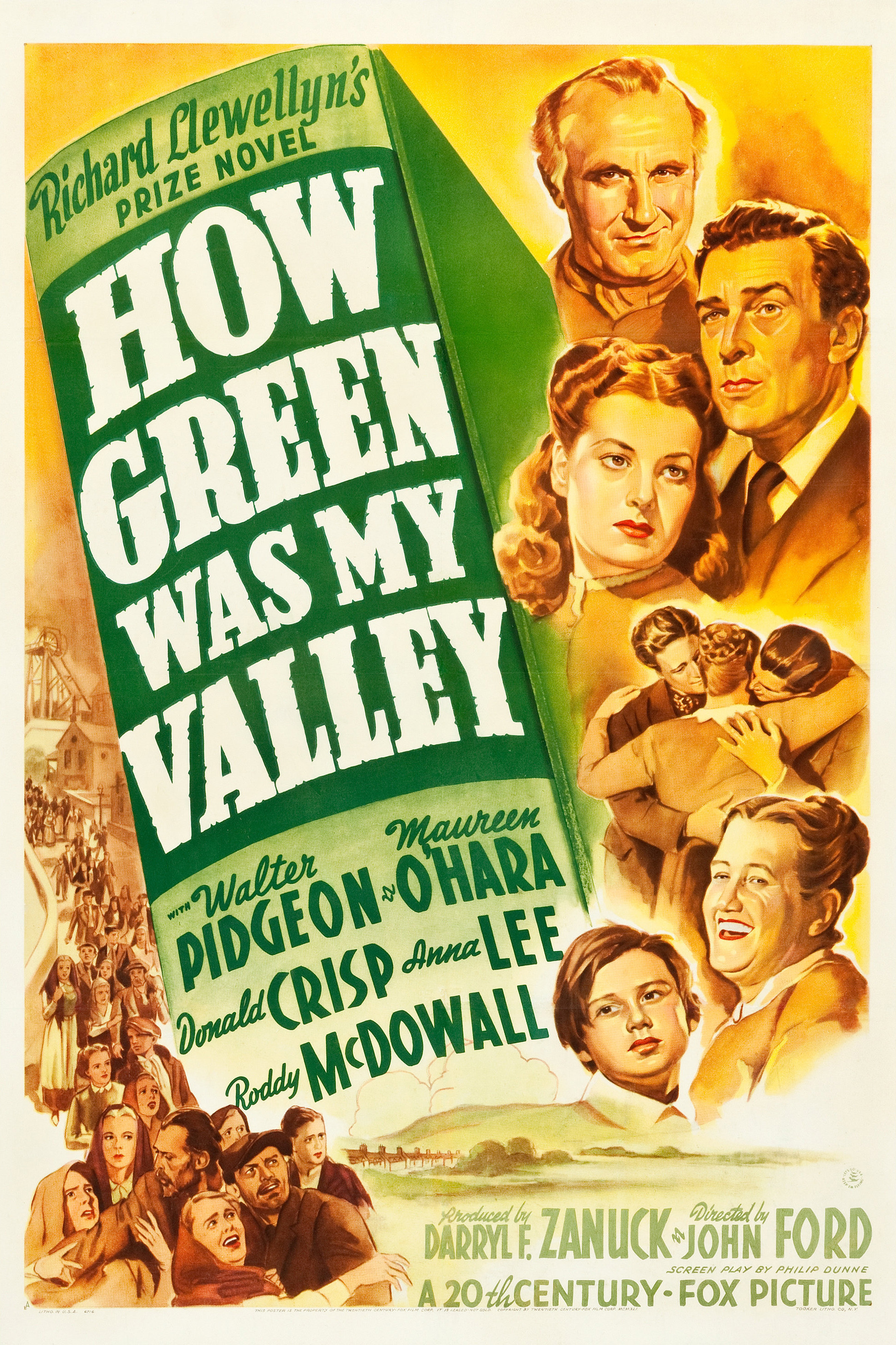
Directed by the masterful John Ford in 1941, How Green Was My Valley stands as a poignant testament to the complexities of family and community life in early 20th century Wales. As one of Ford's most celebrated works, the film encapsulates his ability to weave narratives that are not only visually stunning, but are layered with social consciousness and emotional depth. Ford, renowned for his exploration of American life through grand and sweeping epics, here turns his lens towards the struggles and triumphs of a close-knit mining community, showcasing a sensitivity that resonates deeply with audiences. The film's aesthetic beauty, combined with its thoughtful examination of the impact of industrialization, underscores Ford's genius in capturing the heart of humanity within his stories.
The critical consensus surrounding How Green Was My Valley highlights its rich tapestry of themes such as family bonds, the impact of industrial change, and an underlying sense of nostalgia for a simpler time. Reviewers often describe the film as a masterful reflection on coming-of-age, expertly portraying the journey of its young protagonist, Huw Morgan, as he navigates the complexities of adolescence in a world marred by hardship. This coming-of-age narrative is deeply intertwined with the struggles of a family and community facing decline, capturing the essence of social consciousness that permeates Ford's work. Critics also regard the film as an underrated gem within Ford's oeuvre, recognizing its profound impact on the landscape of cinema history.
Family and community remain at the forefront of How Green Was My Valley, with Ford illustrating the intimate relationships that bind individuals together amidst social upheaval. The film poignantly depicts the joys and sorrows that accompany life in a mining town, where the natural beauty of the valley contrast starkly against the encroaching industrialization that threatens to uproot traditional ways of life. Through the lens of Huw's experiences, audiences are invited to engage with the nostalgia of familial connections and the underlying social issues that shape their existence, all rendered in Ford’s impeccable cinematic style.
Memorable performances, particularly from child actor Roddy McDowall as Huw, enhance the film's timeless qualities, making it a touchstone of emotional storytelling that resonates even today. Critics commend the film's ability to evoke a sense of empathy and understanding toward the struggles faced by working-class communities. As such, How Green Was My Valley exemplifies Ford's adeptness at marrying aesthetic beauty with astute social commentary, crafting a narrative that is as convincing as it is enchanting. In a cinematic landscape often overshadowed by films that focus solely on grandiose themes, Ford's work continues to resonate for its celebration of the human spirit and the enduring power of family and community.