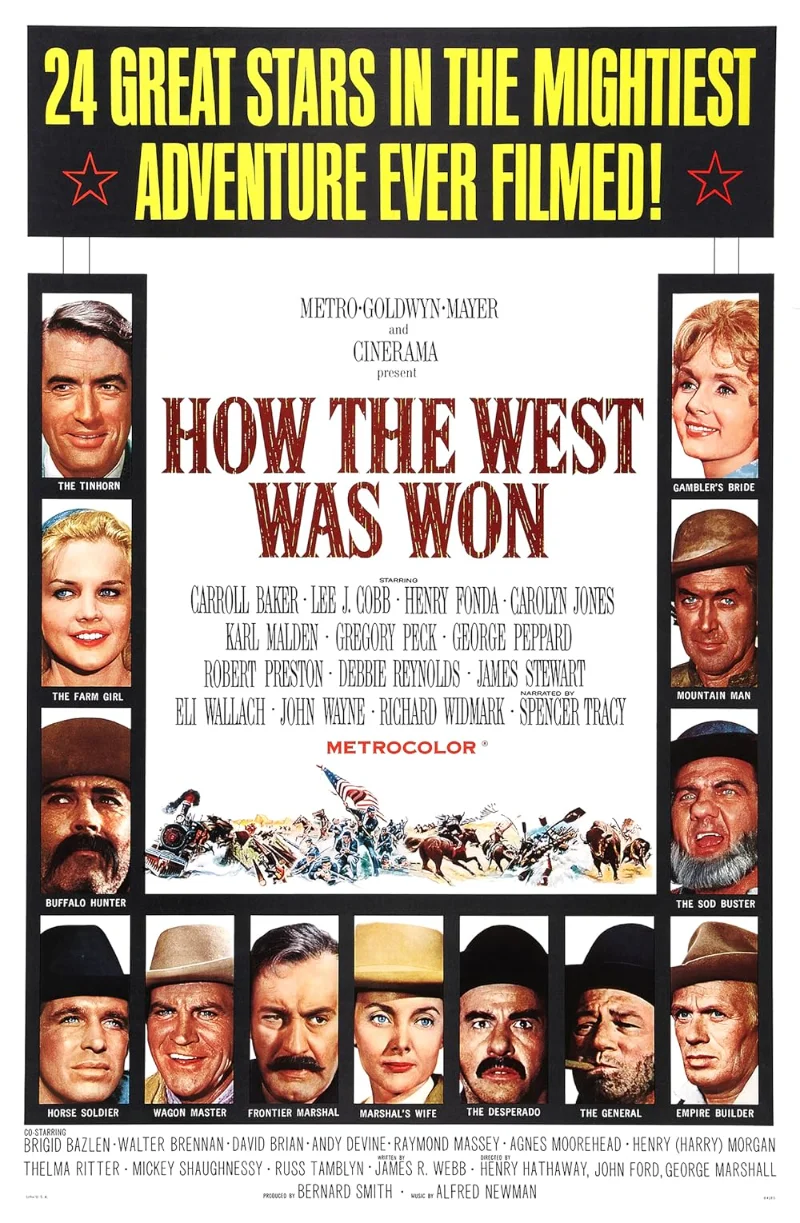
How the West Was Won, directed by the trio of Henry Hathaway, John Ford, and George Marshall, stands out as a significant milestone in the evolution of American cinema. Released in 1962, this epic Western was one of the first films to utilize the groundbreaking Cinerama format, allowing audiences to immerse themselves in the vast landscapes of the American frontier. This technological innovation not only showcased the ambitious scope of the film but also mirrored the expansive themes of Western expansion that defined the narrative. The film's impressive scale and its blend of multiple directorial visions create a unique cinematic experience that reflects the grand ambitions of its era.
At its heart, How the West Was Won traces the trials and adventures endured by a pioneer family, charting their journey across a tumultuous and often unforgiving landscape. The film encapsulates the spirit of determination and resilience that characterized the American frontier spirit, while also presenting a series of redeemable moments that punctuate the struggles faced by its characters. Narrated by Spencer Tracy, the storytelling serves both as an homage to the hardships of pioneer life and as a historical tapestry that captures the essence of a nation in the process of defining itself through westward expansion.
Critical consensus paints How the West Was Won as an epic endeavor that occasionally veers into the realm of overblown spectacle. Yet, within its grand narrative and sweeping cinematography, there are moments of genuine emotional engagement that resonate with audiences, elevating it above mere spectacle. This juxtaposition invites viewers to reflect on the broader themes of sacrifice and unity that underlie the historical journey of the characters, making the film not just a visual feast but a thoughtful exploration of American identity.
The film is often regarded as an Oscar-winning culmination of the Western genre, blending historical accuracy with dramatic embellishment. Its innovative use of Cinerama not only challenged the conventional approaches to storytelling in cinema but also opened doors for future filmmakers to explore immersive storytelling techniques. By situating How the West Was Won within the context of the directors’ distinguished careers, it becomes evident that this work encapsulates the thematic preoccupations that permeate their legacies. Each director brought their unique perspective, resulting in a multifaceted narrative that reflects the complexities of American history.
Ultimately, How the West Was Won remains a pivotal work in the canon of American film. Its grand scale, technological advancements, and exploration of the pioneer experience converge to create a complex portrait of the West. While some may critique its excesses, the film undeniably offers an immersive experience that captures the imagination, reminding contemporary audiences of the enduring allure of the American frontier.